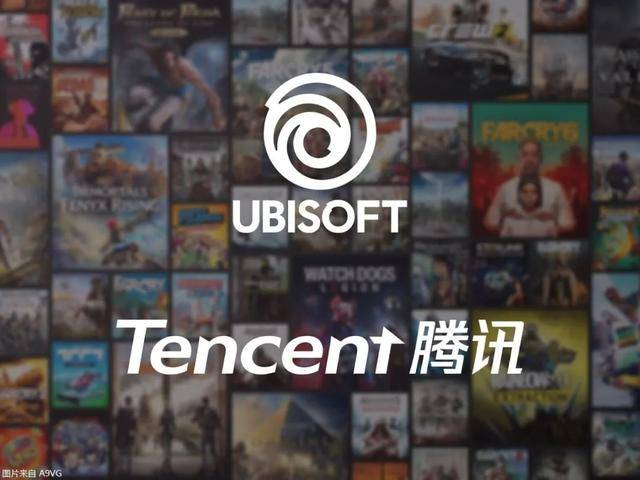
孤岛惊魂

Search documents
育碧重大重组,但股价再创新低
3 6 Ke· 2026-01-23 02:30
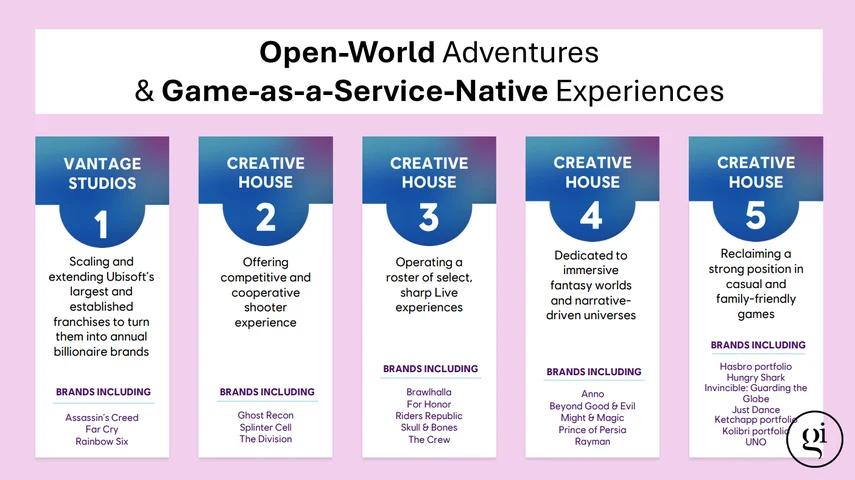
Core Insights - Ubisoft announced a significant organizational restructuring aimed at achieving sustainable growth through the establishment of five Creative Houses, which will be responsible for various IPs and projects [1][3]. Group 1: Organizational Changes - The new operational model will focus on five Creative Studios, with Vantage Studios already established, while the other four are identified by numbers [1][3]. - Each Creative Studio will manage specific segments, IP brands, and sub-studios, operating on a self-sustaining basis [1][3]. Group 2: Focus Areas of Creative Studios - Creative Studio 1 (Vantage Studios) will focus on major IPs like Assassin's Creed, Far Cry, and Rainbow Six [3]. - Creative Studio 2 will target competitive and cooperative shooting projects, including The Division and Ghost Recon [3]. - Creative Studio 3 will handle online service-oriented projects such as For Honor and The Crew [3]. - Creative Studio 4 will create immersive fantasy worlds and narrative-driven projects, including titles like Prince of Persia and Beyond Good and Evil [3]. - Creative Studio 5 will focus on casual and family-friendly projects, including Just Dance and Hungry Shark [3]. Group 3: Project Adjustments - The restructuring includes the announcement of four new IPs, while seven games have been delayed and six projects canceled, including the troubled Prince of Persia: Sands of Time remake [3][5]. - The new structure is set to begin operations in early April 2024 [3]. Group 4: Market Reaction and Challenges - Following the announcement, Ubisoft's stock price fell over 30%, dropping to €4.36, significantly below its historical peak of €100 in 2018 [5]. - The company has faced challenges due to aggressive layoffs and studio closures, with recent legal actions from former employees alleging wrongful termination and union-targeted layoffs [5].

欧洲游戏巨头大跌34%
21世纪经济报道· 2026-01-22 12:56
Core Viewpoint - Ubisoft has announced a major restructuring plan, which includes the cancellation of six games, the postponement of seven games, and a significant downward revision of its performance guidance for the fiscal year 2025-2026, leading to a sharp decline in its stock price by over 34% [1][3]. Group 1: Restructuring Plan - The restructuring plan will involve dividing the company's operations into five Creative Houses, each responsible for unique creative categories, with shared core services and oversight from Ubisoft's headquarters [3][5]. - Each Creative House will have independent financial decision-making authority and will be accountable for its financial performance [5]. Group 2: Creative Houses Breakdown - Creative House 1 (Vantage Studio Group): Focuses on expanding flagship series like Assassin's Creed, Far Cry, and Rainbow Six [5]. - Creative House 2: Responsible for competitive cooperative shooting games, including The Division and Ghost Recon [5]. - Creative House 3: Focuses on distinctive online gaming experiences, including For Honor and The Crew [5]. - Creative House 4: Dedicated to immersive fantasy and narrative-driven games, including Heroes of Might and Magic and Prince of Persia [5]. - Creative House 5: Refocuses on family-friendly casual games, including Just Dance and Hungry Shark [5]. Group 3: Cost-Cutting Measures - Ubisoft plans to cut fixed costs by at least €100 million (approximately ¥814 million) compared to the fiscal year 2024-2025, aiming to achieve this a year earlier than initially planned [6][7]. - The total fixed cost reduction since the fiscal year 2022-2023 is expected to reach approximately €500 million, with a target of reducing annualized fixed costs to about €1.25 billion (approximately ¥1.0173 billion) by March 2028 [7]. Group 4: Product Strategy Changes - Ubisoft will stop six game projects that do not meet the new quality standards or align with the prioritized product mix, including a remake of Prince of Persia: The Sands of Time and four unannounced projects [7][8]. - Seven games will receive additional development time to ensure they meet higher quality benchmarks, with one project postponed from fiscal year 2026 to fiscal year 2027 [7]. Group 5: Financial Performance and Future Outlook - Despite the success of new releases like Assassin's Creed: Mirage, Ubisoft's overall performance remains weak, with a 20.5% year-on-year revenue decline to €1.85 billion (approximately ¥15.055 billion) for the fiscal year 2024-2025 [8][9]. - The company projects net revenue of approximately €1.5 billion (approximately ¥12.215 billion) for the fiscal year 2025-2026, with a forecasted operating loss of about €1 billion [8][9]. Group 6: Employee and Union Response - Unions have expressed opposition to the restructuring plan, calling for a strike and demanding the cessation of cost-cutting measures and the preservation of remote work benefits [8].

腾讯战投Vantage Studios落地,育碧获11.6亿欧“关键输血”
Guo Ji Jin Rong Bao· 2025-11-24 12:22
Core Viewpoint - Ubisoft's recent financial performance shows a significant recovery in net bookings, driven by strong performance from key IPs, while the completion of Tencent's investment is expected to alleviate the company's financial pressures [1][5][8]. Financial Performance - For the first half of the 2025-2026 fiscal year, Ubisoft reported a net booking increase of 20.3% to €772.4 million, with the second quarter seeing a 39% rise to €491 million, surpassing previous guidance [5][6]. - Despite revenue growth, the company still faced operational losses, with an IFRS operating loss of €120.2 million and a net loss of €161.3 million for the same period [7]. Strategic Partnership - Tencent's investment of €11.6 billion in the newly established Vantage Studios gives it a 26.32% stake, while Ubisoft retains exclusive control over the studio [4][5]. - The partnership is expected to provide crucial funding for Ubisoft, aiding in debt reduction and improving the overall financial structure [5][8]. Cost Management - Ubisoft aims to reduce fixed costs by at least €100 million by the end of the 2026-2027 fiscal year, with fixed costs for the first half of 2025-2026 reported at €701 million, down 9% year-over-year [8]. - The company plans to continue cost control measures to enhance financial stability amid ongoing challenges in the gaming market [8].

艺电550亿美元私有化 游戏寡头时代将至?
Zhong Guo Jing Ying Bao· 2025-10-17 20:13
Core Viewpoint - The gaming industry is witnessing a trend towards consolidation, with major acquisitions like the $55 billion buyout of Electronic Arts (EA) by a Saudi-led consortium, marking it as the largest all-cash privatization deal in history and the biggest acquisition in the gaming sector since Microsoft's purchase of Activision Blizzard [3][4][8]. Group 1: Acquisition Details - EA is set to be acquired for a valuation of $55 billion, with shareholders receiving $210 per share in cash [3][4]. - The acquisition has been approved by EA's board and is expected to close in the first quarter of the 2027 fiscal year, pending regulatory approvals and shareholder consent [3][4]. - The buyers include the Saudi Public Investment Fund, Silver Lake Partners, and Affinity Partners, with the Saudi fund playing a leading role [4][6]. Group 2: Financial Implications - The deal will add $20 billion in debt to EA, with funding sourced from the buyers' cash contributions, the extension of existing shares held by the Saudi fund, and $20 billion in debt financing from JPMorgan [6][7]. - Following the acquisition, S&P Global Ratings anticipates downgrading EA's credit rating to "junk" status due to the increased debt burden [7]. Group 3: Industry Trends - The acquisition of EA is part of a broader trend of established gaming companies being bought, as seen with Ubisoft's recent partnership with Tencent to form Vantage Studios, focusing on the development of major IPs like Assassin's Creed [9][10]. - The gaming industry is shifting towards high-return real-time service models, with classic IPs potentially incorporating in-game purchases and subscription models post-acquisition [11][12]. - The consolidation trend aims to address gaps in service-oriented content and cross-platform operations, enhancing the ecosystem of hardware, content, and services [11][12].
腾讯又出手!斥资11.6亿欧元入股育碧子公司
2 1 Shi Ji Jing Ji Bao Dao· 2025-03-28 10:26
Core Viewpoint - Ubisoft has announced the establishment of a dedicated subsidiary based on its major franchises Assassin's Creed, Far Cry, and Rainbow Six, with Tencent investing €1.16 billion for approximately 25% equity [1] Group 1: Company Strategy - The new subsidiary aims to build a gaming ecosystem and develop these franchises into long-lasting brands, aligning with Tencent's strategy of creating "evergreen games" [1] - Ubisoft's pre-financing valuation for the new subsidiary is €4 billion, which is about four times its average annual sales revenue for the fiscal years 2023-2025 [1] - The establishment of the subsidiary is seen as a significant step in Ubisoft's transformation and operational model change, enhancing asset value and supporting long-term brand development [1] Group 2: Investment Details - Tencent will have customary minority shareholder rights and specific consent rights regarding the disposal of important assets of the new subsidiary [2] - Tencent has committed to a five-year lock-up period for its shares in the new subsidiary, unless Ubisoft loses majority voting rights and equity [2] - Prior to this transaction, Tencent had already acquired approximately 10% of Ubisoft's shares, increasing its stake through previous investments [3] Group 3: Market Expansion - Tencent's strategy includes a clear focus on expanding its presence in overseas markets, with investments being a key method for this expansion [4] - Over the past few years, Tencent has made significant investments and acquisitions in various gaming companies globally, including major firms like Activision Blizzard and Epic Games [4] - Tencent's approach to gaming investments has shifted towards longer-term plans, accepting timelines of 5-10 years to develop high-quality games, which aligns with its evergreen strategy [4]
腾讯11.6亿欧元收购育碧新公司25%股权 投资刺客信条等三大IP
Sou Hu Cai Jing· 2025-03-28 09:21
Core Viewpoint - Ubisoft announced the establishment of a new company that will encompass its popular game IPs such as Assassin's Creed, Far Cry, and Rainbow Six, with an estimated valuation of €4 billion (approximately $4.3 billion), and Tencent will invest €1.16 billion for a 25% stake [1][5][6] Group 1: Company Structure and Investment - The new subsidiary will manage the teams behind the aforementioned IPs and oversee other IPs or any games currently in development by Ubisoft [1] - Tencent's investment will strengthen Ubisoft's balance sheet and support the long-term development of key game brands [8][9] - The new company will operate independently with its own management team, focusing on enhancing creative vision and streamlining operations [9] Group 2: Strategic Goals and Future Plans - Ubisoft aims to accelerate its transformation and change its business model by creating a dedicated subsidiary for its major brands [5][6] - The subsidiary will work on building a gaming ecosystem, enhancing single-player narrative quality, and enriching multiplayer experiences through more frequent content releases and social features [5][7] - The company plans to continue investing in classic brands like Ghost Recon and The Division, leveraging innovative technologies to drive their development [6][7] Group 3: Financial and Operational Details - The pre-financing enterprise value is estimated at €4 billion, which is about four times the average annual sales revenue for the fiscal years 2023-2025 [5] - The transaction is expected to be completed by the end of 2025, with Tencent holding customary minority shareholder rights and specific consent rights regarding the disposal of significant assets [9][10] - The agreement includes a five-year lock-up period for Tencent's shares, ensuring that Ubisoft retains majority voting rights and equity in the new subsidiary for at least two years [9][10]