安格斯肉牛

Search documents
智慧市场牲畜交易供销两旺
Xin Lang Cai Jing· 2026-01-07 22:24
Core Viewpoint - The "China Xingyi Livestock Trading Center" in Guizhou province has become a bustling marketplace for livestock, particularly quality beef cattle, since its opening in August 2024, attracting buyers from various regions [1] Group 1: Market Activity - The trading center hosts daily transactions of over 3,000 heads of cattle and horses, indicating a vibrant market environment [1] - Farmers and merchants from Yunnan, Sichuan, Chongqing, Guangxi, Guangdong, and local areas are actively participating in the market [1] Group 2: Infrastructure and Services - The trading center has improved its infrastructure and services to create a smart livestock market, enhancing the overall trading experience [1]
年终话“三农”|“土味”变特色 激发新活力——2025年乡村富民产业发展一线观察
Xin Hua Wang· 2025-12-26 00:59
Core Viewpoint - The key to rural revitalization lies in industrial revitalization, with a focus on developing rural industries to enhance agricultural efficiency and farmer income [1] Group 1: Industry Development - The development of rural industries should be tailored to local conditions, transforming resource advantages into development advantages [3] - In Heilongjiang Province, the introduction of Angus cattle has led to a sales revenue of 625 million yuan and increased farmer income by 150 million yuan [2] - Various regions are experiencing rapid growth in their unique rural industries, such as the expansion of tea planting in Guangxi with over 400,000 acres and an estimated output value exceeding 30 billion yuan [4] Group 2: Technological Innovation - Technological advancements are crucial for the development of rural industries, as seen in the intelligent greenhouse systems in Shandong, which produce over 4.5 million tons of vegetables annually [7] - In Shaanxi, the successful aquaculture of shrimp and crabs in saline-alkali land has generated over 5 million yuan in income [5][6] - The establishment of a comprehensive agricultural technology innovation system in China includes over 800 research institutions and more than 120,000 researchers [10] Group 3: Brand Development - The establishment of unified branding for agricultural products, such as the "Caidian Lotus Root," has significantly increased market influence and value, with an annual output value of 1.8 billion yuan [12] - The "Baoshan Small Coffee" brand in Yunnan has transformed local coffee production, increasing per capita income from 8,000 yuan to 43,000 yuan through integrated development of coffee and tourism [13] - The central government's emphasis on developing rural characteristic industries and implementing brand cultivation plans aims to enhance agricultural industrialization levels [14]
年终话“三农”丨“土味”变特色 激发新活力——2025年乡村富民产业发展一线观察
Xin Hua Wang· 2025-12-25 23:10
Core Viewpoint - The key to rural revitalization lies in industrial revitalization, focusing on developing rural industries to enhance agricultural efficiency and farmer income [1]. Group 1: Industry Development - The central government emphasizes the importance of developing rural industries to improve agricultural comprehensive benefits [1]. - Various regions are showcasing successful rural industry developments, such as smart fruit and vegetable greenhouses in the east and premium beef cattle in the north [1]. - The "14th Five-Year Plan" supports the establishment of 210 characteristic industrial clusters and 250 modern agricultural parks, enhancing local economies [4]. Group 2: Local Adaptation - The Angus cattle breeding in Heilongjiang province demonstrates a successful adaptation to local climate, generating a sales value of 625 million yuan and increasing farmer income by 150 million yuan [2]. - The development of local specialties, such as tea in Guangxi and bamboo shoots in Jiangxi, highlights the importance of leveraging regional advantages for industrial growth [4]. Group 3: Technological Innovation - Technological advancements are crucial for transforming traditional agricultural practices, as seen in the smart greenhouses in Shandong, which produce over 450 million tons of vegetables annually [7]. - The introduction of new production techniques in oil tea processing in Henan enhances product quality and creates additional revenue streams from by-products [9][10]. - Collaboration between local governments and educational institutions is fostering innovation in challenging environments, such as salt-alkali land in Shaanxi [5]. Group 4: Branding and Market Expansion - The establishment of unified branding for agricultural products, like "Caidian Lotus Root," is enhancing market competitiveness and increasing the overall industry value [12][13]. - The integration of tourism with agricultural production, as seen in the coffee industry in Yunnan, is transforming local economies and increasing farmer incomes significantly [13].
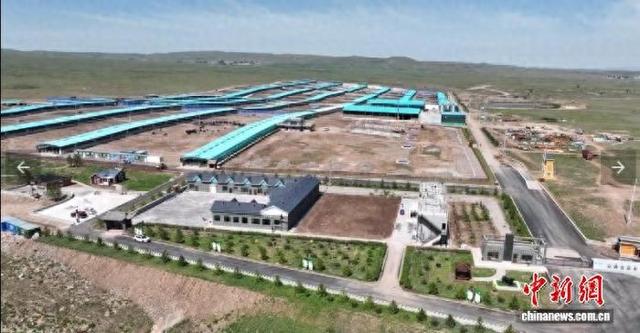
(乡村行·看振兴)乌兰察布草原新牧歌:“牛”劲十足 “玉”见未来
Zhong Guo Xin Wen Wang· 2025-08-05 09:25
Core Insights - Ulanqab City is leveraging its unique agricultural resources, particularly beef cattle breeding and corn planting, to drive economic growth and rural revitalization [1][3][7] Group 1: Beef Cattle Industry - The introduction of automated feeding systems in beef cattle farming has significantly improved efficiency, allowing farmers to focus on more skilled tasks [3] - The central kitchen model in beef cattle farming has led to a breeding stock of 11,500 cattle and an annual output of 10,000 fattened cattle, creating over 40 jobs with an average annual income of 16,000 yuan per person [3][5] - The integration of tourism with the beef cattle industry has resulted in the establishment of the "Cattle Village Tribe," attracting over 70,000 visitors in 2024 and generating diverse income streams for local communities [5] Group 2: Corn Planting and Agricultural Innovation - The implementation of efficient water-saving irrigation systems in corn farming has enhanced crop yields, with 1,100 acres divided between sweet corn and seed corn [7][8] - The dual-crop strategy of sweet corn for direct sales and seed corn for livestock feed has created a closed-loop system that benefits both crop and livestock sectors, ensuring food security and increased farmer income [8] - Ulanqab's agricultural model emphasizes the synergy between crop cultivation and livestock farming, promoting ecological balance while boosting local economies [8]