
种养循环

Search documents
科技改良让昌邑盐碱地变身“致富田”
Xin Hua She· 2026-01-31 07:03
Core Viewpoint - The article highlights the successful transformation of saline-alkali land in Changyi City, Shandong Province, into productive agricultural land through innovative practices and technology, leading to increased crop yields and improved farmer incomes. Group 1: Agricultural Practices and Innovations - The Qingfu Agricultural Complex has implemented a crop rotation strategy, planting alfalfa for three years followed by cotton and then wheat and corn, utilizing salt-tolerant crops to absorb soil salinity [2] - The complex has transitioned from monoculture to integrated farming, establishing two large cattle farms with over 5,000 cattle, using crop residues as feed and manure as organic fertilizer to enhance soil quality [2][3] - The average grain yield has increased to over 2,700 jin per mu, with the soil salinity in heavily saline-alkali areas reduced from above 10‰ to below 3‰ [3] Group 2: Infrastructure and Investment - The Qingfu Agricultural Complex has invested over 200 million yuan in water management infrastructure, including a 55-kilometer water diversion pipeline to improve irrigation and reduce soil salinity [2] - The complex has acquired over 400 sets of agricultural machinery, including large tractors and smart fertilization machines, to create a fully mechanized operation system for planting, managing, and harvesting crops [3] - The complex's operational model involves shared investment from the management, village collectives, and local farmers, ensuring profit distribution that benefits over 1,600 households [3] Group 3: Economic Impact and Community Development - By 2025, the Qingfu Village is projected to generate over 2 million yuan in collective income, with per capita annual income exceeding 48,000 yuan, contributing to the economic uplift of surrounding villages [3] - The comprehensive approach to land management and community involvement has led to the successful reclamation of 158,000 mu of saline-alkali land, significantly enhancing agricultural productivity and farmer livelihoods [3]
(乡村行·看振兴)晋北小城山西左云大作为:特色产业富农家 科技赋能稳增收
Zhong Guo Xin Wen Wang· 2026-01-23 12:16
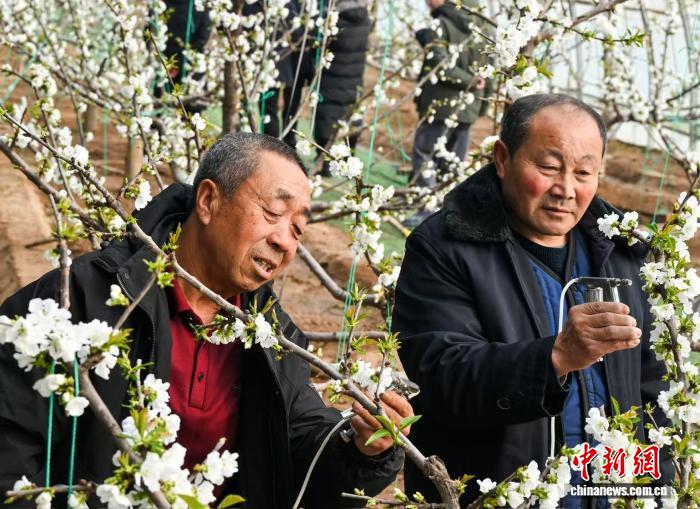
Core Viewpoint - The article highlights the agricultural development in Zuoyun County, Shanxi Province, focusing on the establishment of特色产业 (characteristic industries) and the integration of technology to enhance farmers' income and stabilize agricultural growth [1][2]. Group 1: Agricultural Development - Zuoyun County has invested 1.2 million yuan to build two cherry greenhouses, yielding over 12,000 yuan from 1,300 jin of cherries harvested in a short period [1]. - The county promotes a model of "government guidance, enterprise leadership, and farmer cooperation" to transform resource advantages into industrial strengths, thereby boosting collective village economies and increasing farmers' income [1]. Group 2: Scale and Standardization - The county is transitioning agriculture towards scale, standardization, and precision management, with over 2,600 acres of land being transferred for large-scale farming and more than 4,000 modern greenhouses established [2]. - In Heitokou Village, the introduction of green management measures has led to a single greenhouse producing over 5,000 jin of tomatoes, targeting the mid-to-high-end market [2]. Group 3: Technological Empowerment - Zuoyun County has developed a complete production system for potatoes, producing around 12 million virus-free micro-potato seeds annually, with over 10 million jin of original seeds and more than 24 million jin of first-class seeds [4]. - The county's leading seed breeding company has increased potato yields from 1,000 jin to over 3,000 jin per acre, benefiting farmers with nearly 200 million yuan in increased income [6]. Group 4: Circular Economy - The county explores a "plant-animal cycle" development model, with a company raising over 50,000 bass fish in a water recycling greenhouse, which also irrigates surrounding orchards, achieving ecological sustainability [7]. - The expected revenue from the sale of 50,000 bass fish is projected to be around 1 million yuan [7]. Group 5: Overall Impact - Zuoyun County's focus on特色产业培育 (characteristic industry cultivation),科技赋能 (technology empowerment), and生态循环发展 (ecological circular development) effectively promotes agricultural quality improvement and stable income growth for farmers [9].

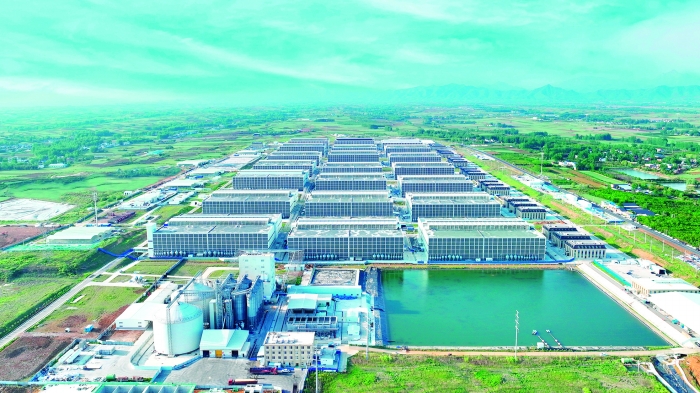
牧原创新打造“会呼吸”的绿色养殖场
Xin Lang Cai Jing· 2025-12-19 09:11
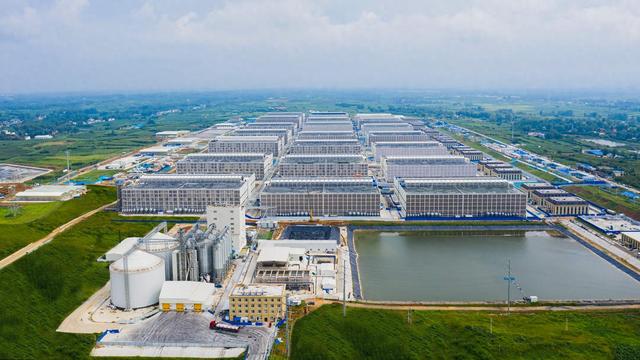
Core Viewpoint - The company has transformed traditional pig farming into a green benchmark through innovation and persistence, emphasizing that environmental protection is essential for survival and development [1]. Group 1: Technological Innovations - The company initiated its journey by developing the first generation of odor removal technology, achieving only a 30% effectiveness, which led to a series of upgrades and innovations [1]. - By 2019, the tenth generation of the filler ball technology achieved a 90% odor removal rate and a 99% sterilization rate, reducing costs from 13 yuan to 6 yuan per pig [2]. - Continuous iterations led to the fifteenth generation of technology, implementing a three-tier purification system to effectively eliminate odor components [2]. Group 2: Environmental Impact - The company aims to reduce ammonia emissions by 31,700 tons in 2024, equivalent to a reduction of 0.8 kg per pig, through an intelligent ammonia reduction process [4]. - The internal "five-step" environmental protection mechanism ensures effective results, transforming odor management from a burden into a driving force for high-quality development [4]. - The company has developed a "pig farming and crop cultivation" circular model, utilizing biogas from manure fermentation to generate electricity and provide quality fertilizers for crops [5]. Group 3: Economic Benefits - In 2024, the company's water and fertilizer solutions will benefit 4.72 million acres of farmland, helping farmers increase income by 1.353 billion yuan, with a cumulative benefit exceeding 5 billion yuan over five years [5]. - The company’s ammonia reduction plan has been recognized as an industry standard and has been implemented in various poultry farms, enhancing the overall environmental standards in the industry [5]. Group 4: Monitoring and Transparency - A third-party regulatory department has been established to ensure transparency in environmental governance, utilizing a smart system for real-time monitoring and feedback [5]. - The dual verification mechanism ensures that data is accurate and traceable, contributing to the credibility of the company's environmental efforts [5].

黄土塬上千余合作社“抱团”引领乡村产业“牛”起来
Zhong Guo Xin Wen Wang· 2025-11-04 07:52
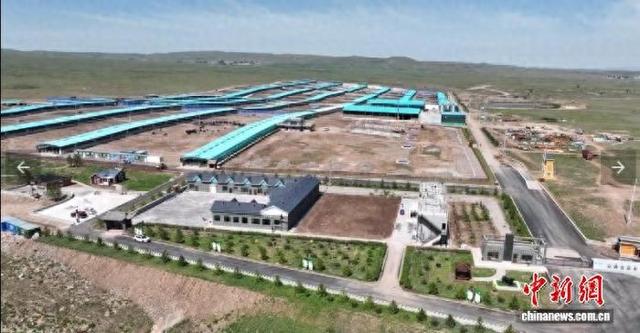
Core Viewpoint - The article highlights the emergence of agricultural cooperatives in Gansu Province, specifically in the Xifeng District, which are driving the development of rural industries and improving the livelihoods of local farmers through collaborative efforts and modern agricultural practices [1][4]. Group 1: Cooperative Development - The Yao Hui Livestock Cooperative currently has a cattle stock of 800, focusing on the Simmental breed, known for its short growth cycle and high meat yield [2]. - The cooperative was established in 2013 and has grown from a few dozen cattle to over 1,000 through a model that integrates cooperatives, bases, and farmers, benefiting over 200 local households [2][4]. - The cooperative expects to produce 1,200 to 1,300 cattle this year, generating a revenue of 17 million to 18 million yuan, while also providing employment opportunities for local villagers [2]. Group 2: Agricultural Practices - The cooperative employs a feed ratio strategy, mixing corn, soybean meal, and other nutrients to ensure the cattle's diet is balanced [2]. - The cooperative has also adopted a circular farming model by using livestock manure to cultivate over 1,000 acres of corn, which serves as both feed and a cost-saving measure [2]. Group 3: Broader Impact on Local Agriculture - The Xifeng District has been actively promoting new agricultural entities, encouraging the establishment of cooperatives that focus on various sectors such as fruits, livestock, and vegetables [4]. - The Wanrunyuan Cooperative has 276 greenhouses and supports 46 farmers in growing specialty fruits and vegetables, with an average income exceeding 20,000 yuan per greenhouse [5]. - The district has a total of 1,295 agricultural cooperatives, benefiting approximately 27,800 farmers and creating 157 demonstration cooperatives, which have transformed the rural economy from fragmented to concentrated [4][8].

果飘香、鱼满仓、特色作物收获忙 绿水青山间奏响“丰收乐章”
Yang Shi Wang· 2025-08-26 01:53
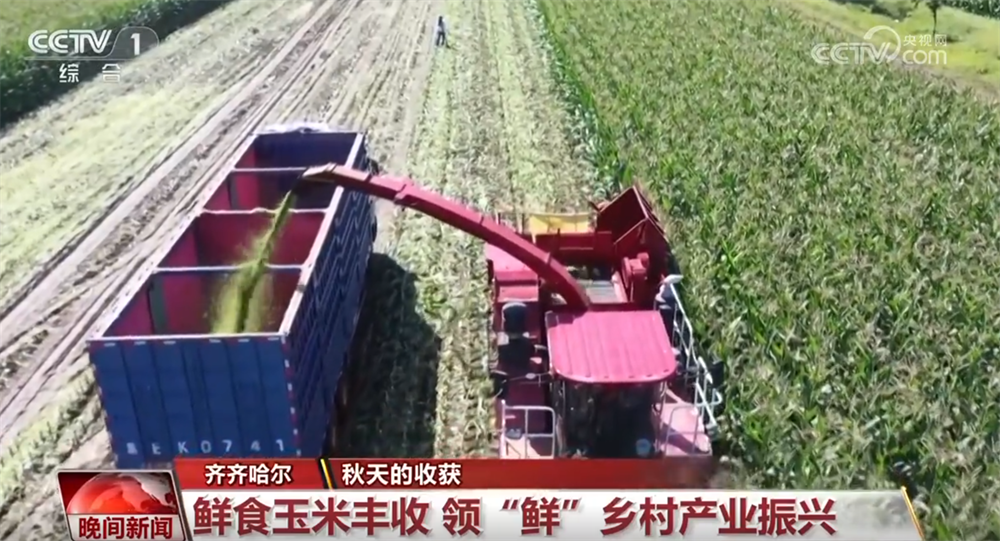
Group 1: Agricultural Harvests - In Heilongjiang, fresh corn is entering the harvest season with 24,000 acres expected to be fully harvested by mid-September, utilizing mechanized harvesting to accelerate the process [1] - The introduction of sweet and glutinous corn varieties in Yian County has led to an increase in yield to 1.5 tons per acre, providing a 60% increase in benefits compared to traditional planting methods [3] - In Hubei, peanut harvesting is also in full swing, with yields of 600-700 pounds per acre, generating over 2,000 yuan per acre in revenue [5] Group 2: Tomato Processing - In Xinjiang, 18,300 acres of processing tomatoes are being harvested, with machines efficiently completing multiple processes from picking to packaging [5] - The yield for processing tomatoes can reach 9 tons per acre, supported by a comprehensive service from processing factories throughout the planting and harvesting stages [7] Group 3: Fishing Industry - The fishing industry in Zhejiang is experiencing a resurgence as fishing boats return with full loads following the lifting of seasonal fishing restrictions [9] - The catch per net has significantly increased, stabilizing at over 3,000 pounds, indicating a substantial growth compared to the same period last year [13]
活力中国调研行 | “国民小菜”涪陵榨菜靠绿色科技闯世界
Zhong Guo Qing Nian Bao· 2025-08-14 09:48
Core Insights - The research and development at Chongqing's agricultural institute is transforming previously discarded vegetable leaves into edible products, enhancing the sustainability of the Fuling pickled vegetable industry [1] - Fuling's pickled vegetable production is innovating waste management by converting brine waste into valuable products, such as pickled vegetable soy sauce, and recycling it back into the production process [1] - Fuling is establishing itself as a global leader in pickled vegetable exports, with sales in over 80 countries and regions, supported by unique climatic and soil conditions and continuous innovation in production techniques [1] Company Developments - The Chongqing agricultural institute has developed a new variety of vegetable that utilizes both stems and leaves, which were previously considered waste [1] - The Fuling pickled vegetable group has adopted vacuum concentration technology to address environmental challenges associated with brine waste [1] - The Fuling pickled vegetable industry is working on establishing international standards for pickled vegetables, aiming to enhance its global market presence [1]

江苏这些成果入选全国农科榜单
Xin Hua Ri Bao· 2025-08-12 23:12
Core Insights - Jiangsu's agricultural innovations have been recognized in the Ministry of Agriculture and Rural Affairs' 2025 list of leading varieties and promoted technologies, showcasing its strength in the "bean-rice-livestock" agricultural technology sector [1] Group 1: Facility Watermelon "Double Reduction" Technology - The "Double Reduction" technology aims to reduce fertilizer usage by 20%-30% and pesticide usage by 15%-20%, successfully included in the 2025 promoted technologies [2] - The technology employs a membrane under micro-drip irrigation system combined with soil moisture sensors, achieving a 30% reduction in water usage and a 20% reduction in fertilizer [2] - The new planting model has been adopted in the Yangtze River Basin and Huang-Huai-Hai regions, leading to significant economic benefits for farmers, with a cost reduction of approximately 350 yuan per acre and an increase in net income of 1500 yuan [3] Group 2: Southern Meat Sheep "All-Shelter Feeding" Technology - The "All-Shelter Feeding" technology addresses challenges in southern regions, such as low efficiency in free-range farming and difficulties in straw utilization, and has been recognized in the 2025 promoted technologies [4] - This technology combines precise breeding, resource utilization of straw, and smart equipment, significantly increasing the number of lambs produced per ewe from one per year to an impressive five over three years [4] - The use of TMR mixing machines converts straw into balanced nutrition, enhancing feed intake and reducing waste, while the system allows for automated feeding, lowering labor costs [5] Group 3: New Green Bean Variety "Su Green 7" - The "Su Green 7" variety, known for its disaster resistance and high yield, has been included in the 2025 list of leading varieties, with an average yield of 165.12 kg per mu and a potential yield of 230.46 kg per mu [6] - This variety was developed through hybridization and has shown superior performance in various regions, including Jiangsu and Anhui, contributing to agricultural production and farmer income [7]
(乡村行·看振兴)乌兰察布草原新牧歌:“牛”劲十足 “玉”见未来
Zhong Guo Xin Wen Wang· 2025-08-05 09:25
Core Insights - Ulanqab City is leveraging its unique agricultural resources, particularly beef cattle breeding and corn planting, to drive economic growth and rural revitalization [1][3][7] Group 1: Beef Cattle Industry - The introduction of automated feeding systems in beef cattle farming has significantly improved efficiency, allowing farmers to focus on more skilled tasks [3] - The central kitchen model in beef cattle farming has led to a breeding stock of 11,500 cattle and an annual output of 10,000 fattened cattle, creating over 40 jobs with an average annual income of 16,000 yuan per person [3][5] - The integration of tourism with the beef cattle industry has resulted in the establishment of the "Cattle Village Tribe," attracting over 70,000 visitors in 2024 and generating diverse income streams for local communities [5] Group 2: Corn Planting and Agricultural Innovation - The implementation of efficient water-saving irrigation systems in corn farming has enhanced crop yields, with 1,100 acres divided between sweet corn and seed corn [7][8] - The dual-crop strategy of sweet corn for direct sales and seed corn for livestock feed has created a closed-loop system that benefits both crop and livestock sectors, ensuring food security and increased farmer income [8] - Ulanqab's agricultural model emphasizes the synergy between crop cultivation and livestock farming, promoting ecological balance while boosting local economies [8]
从22头猪起步到行业龙头 牧原股份的“猪哲学”与“养猪科技”
Shang Hai Zheng Quan Bao· 2025-06-29 19:13
Core Viewpoint - The article highlights the evolution and innovative practices of Muyuan Foods, emphasizing its commitment to sustainable and technologically advanced pig farming, which aligns with its cultural values and social responsibilities [2][8]. Group 1: Company Overview - Muyuan Foods was founded by Qin Yinglin in 1992, starting with 22 piglets and has grown to become a leading player in the industry with an annual output of over 70 million pigs [2]. - In 2024, the company achieved a revenue of 137.947 billion yuan and a net profit of 17.881 billion yuan [2]. Group 2: Technological Innovation - The company has developed a smart pig farming system, including a six-story "pig apartment" that optimizes the living conditions for pigs at different growth stages [3]. - The use of IoT devices allows for precise monitoring of pigs' health and behavior, significantly improving inspection efficiency compared to traditional methods [3][4]. - As of May 2023, the total cost of pig farming has been reduced to 12.2 yuan per kilogram, positioning the company among the industry leaders [4]. Group 3: Sustainable Practices - Muyuan Foods has implemented a "pig-fertilizer-field" ecological chain, converting pig waste into organic fertilizer and liquid fertilizer, which is then used in surrounding farmland [5]. - The company has serviced 4.7208 million acres of farmland in 2024, helping farmers increase their income by 1,314.33 yuan per acre, totaling a reduction in investment and an increase in income of 1.353 billion yuan [5][6]. Group 4: International Expansion - Muyuan Foods has initiated its international strategy by signing a strategic cooperation agreement with BAF Vietnam Agricultural Joint Stock Company in 2024 [7]. - The company has submitted an application for an H-share listing on the Hong Kong Stock Exchange, aiming to raise funds for international supply chain development and smart farming research [7]. Group 5: Vision and Philosophy - The company's philosophy, as articulated by its chairman, emphasizes the importance of giving back to society and creating value, which is reflected in its operational practices [2][8]. - Muyuan Foods aims to leverage its technological advancements to contribute to the global livestock industry, positioning itself as a leader in innovation and sustainability [7][8].
提升养殖废弃物处理效率,广东省农村科技特派员送技到浸潭
Nan Fang Nong Cun Bao· 2025-05-22 06:36
Core Viewpoint - The article discusses the efforts in Guangdong Province to enhance the efficiency of livestock waste treatment, aligning with national policies aimed at improving agricultural pollution management and promoting resource utilization of livestock manure [2][5][32]. Group 1: Technological Implementation - The Guangdong Provincial Rural Science and Technology Special Commissioner team, in collaboration with local agricultural institutions, is providing technical services to improve livestock waste management in Qingtan Town [3][4][30]. - The introduction of the "worm treatment" ecological purification model is highlighted as a key innovation, which offers advantages such as ease of operation, high efficiency, and product value addition [20][21]. Group 2: Current Challenges and Solutions - Qingtan Town's rapid livestock industry development faces challenges such as inadequate waste treatment facilities, leading to high discharge pressure and low resource utilization rates [9][10]. - The resource utilization rate of livestock waste is targeted to increase from 75% to 80.33% through the implementation of new technologies and systematic planning [14][15]. Group 3: Economic and Ecological Benefits - The worm treatment method can achieve a nitrogen removal rate of 75% and reduce the emissions of hydrogen sulfide and ammonia by 80-90%, thus providing both economic and ecological benefits [23][25]. - The establishment of a closed-loop system integrating chicken farming, worm cultivation, and organic fertilizer planting is being explored to enhance sustainability [26][30]. Group 4: Future Directions - The special commissioner team plans to continue monitoring the effectiveness of the worm treatment system and aims to develop replicable and scalable technical standards and management mechanisms [31][32]. - The initiative is positioned to support the green development of livestock farming and the prevention of agricultural pollution in Guangdong, contributing to rural revitalization and high-quality ecological agriculture [32][34].
