
定期票

Search documents
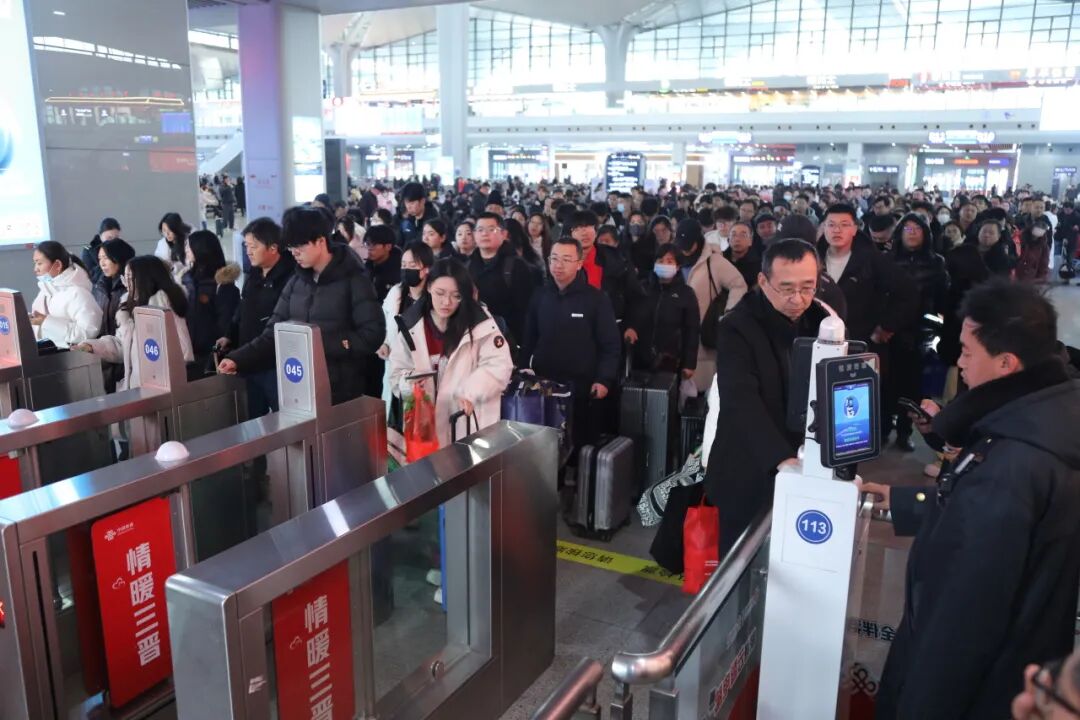
春运开启!太原铁路预计发送旅客980万人次
Xin Lang Cai Jing· 2026-02-02 08:44
Core Insights - The 2026 Spring Festival travel period in China will last from February 2 to March 13, totaling 40 days, with an expected passenger volume of 9.8 million, averaging 245,000 passengers per day, representing a year-on-year increase of 3.5% [1] - The travel demand is expected to be strong due to an extended 9-day holiday, with various passenger flows including students, workers, family visits, and tourism [1] Group 1 - The Taiyuan Railway Bureau plans to operate 88 temporary train pairs during the Spring Festival, the highest number in history, utilizing methods such as train doubling and adding night trains [3] - Daily train operations will include 290 pairs, creating a high-speed travel network centered around Taiyuan, facilitating travel within 1-2 hours for local cities and 3 hours to neighboring provincial capitals [1][3] Group 2 - Service enhancements include optimized ticket purchasing services, expanded fare discounts, and the introduction of new ticket products, providing significant benefits to travelers [3] - Key stations will implement priority services for important passengers, with increased access points and reduced waiting times, aiming to keep queue times under 5 minutes [3] Group 3 - Additional services such as online lost item recovery, "light travel" services, and pet transportation options have been introduced at several key stations to improve convenience for travelers [4]

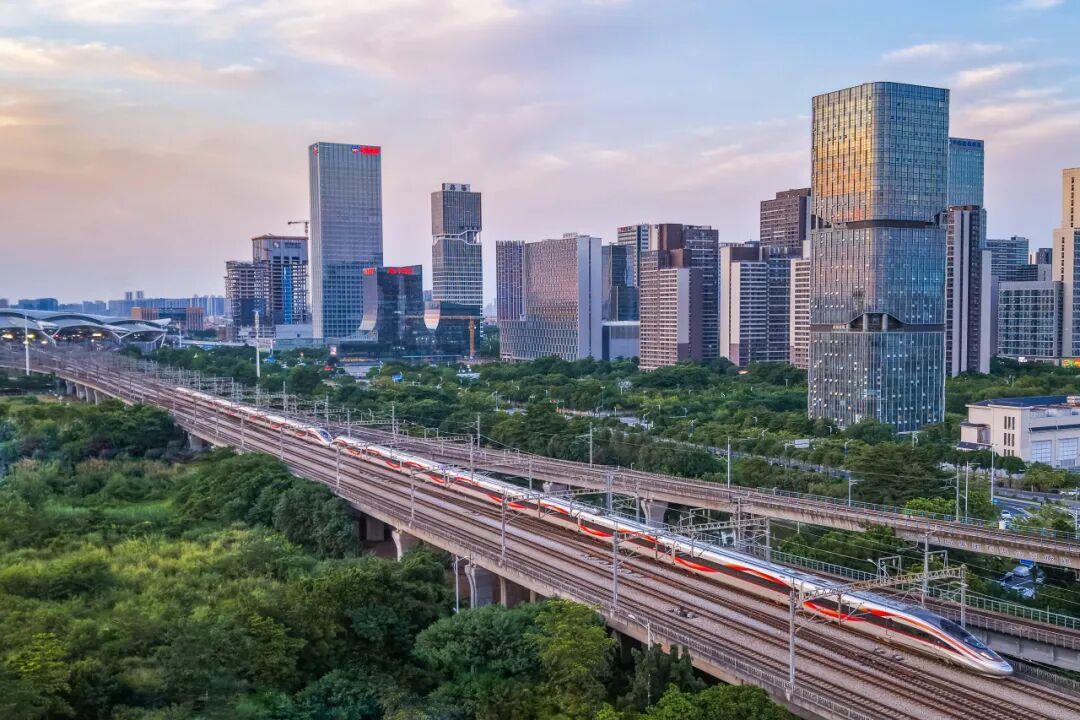
一天跑300多列复兴号!这条高铁调图后到底有多忙?
Yang Shi Xin Wen· 2026-01-28 21:49
Core Insights - The Guangzhou-Shenzhen-Hong Kong High-Speed Rail (GSHK) has seen a significant increase in passenger flow, with 387 train services operating during peak hours, enhancing the overall capacity of the Greater Bay Area [1][14] - The rail service has adopted a "bus-like" operation model, allowing for frequent departures every few minutes, which energizes the "one-hour living circle" in the Greater Bay Area [4] - The introduction of new ticketing products, such as multi-ride and regular tickets, caters to commuters and business travelers, making travel more convenient and cost-effective [9] Group 1 - The GSHK has upgraded its train services to the Fuxing model, improving the travel experience for passengers and increasing the number of stations in mainland China accessible from Hong Kong to over 100 [5] - The railway department has implemented efficient operational models at stations, such as the "single-direction circulation" and "zone control" at Futian Station, significantly enhancing passenger flow efficiency [12] - Customer service has been improved with staff trained in Cantonese and English, providing precise assistance to travelers [11] Group 2 - The GSHK is positioned as a "golden channel" for promoting connectivity within the Greater Bay Area, characterized by its efficiency, convenience, and comfort [14] - The railway department plans to enhance services during peak travel periods, including the Spring Festival, by increasing manual channels and providing "one-stop" services for key passengers [12] - The overall upgrades and service enhancements reflect a commitment to improving the travel experience and facilitating greater economic and personnel exchanges between Hong Kong and mainland China [5][9]
交通票价改革让“流动中国”更幸福
Xin Lang Cai Jing· 2026-01-18 21:31
Core Viewpoint - The ticket price subsidy reform in China's transportation sector is progressing steadily, focusing on enhancing public welfare and resource efficiency through flexible pricing strategies for high-speed rail and urban public transport [1][2][7]. Group 1: High-Speed Rail Pricing Reform - The traditional uniform pricing mechanism for high-speed rail is being replaced by a more flexible, tiered pricing system, allowing for discounts as low as 40% on over 1,300 train services by the end of 2025 [2][3]. - The new pricing strategy, termed "tidal pricing," aims to improve seat occupancy rates, which have increased by over 15% since the implementation of differentiated discounts [3]. - Special groups such as students and disabled individuals will continue to receive additional discounts, enhancing accessibility and affordability for these demographics [2][3]. Group 2: Urban Public Transport Subsidy Mechanism - The urban public transport sector faces challenges due to rising operational costs and stagnant ticket prices, necessitating a shift towards a more scientific and precise subsidy mechanism [4][5]. - The newly established dynamic adjustment mechanism for urban public transport pricing encourages a multi-tiered pricing system based on service quality and operational efficiency [5][6]. - Innovative cases, such as the cost regulation standards in Nanchang, have shown a 20% improvement in operational efficiency for public transport companies, linking subsidies to performance metrics [5][6]. Group 3: Overall Impact and Economic Development - The ticket price reform is not only enhancing transportation access but also acting as a catalyst for regional economic development, with significant increases in passenger volumes and local business activity [8]. - The integration of ticket pricing policies with tourism strategies has led to a notable rise in travel-related economic activity, exemplified by a 91.3% increase in passenger numbers on specific routes [8]. - The reforms aim to balance public service needs with operational sustainability and fiscal responsibility, ultimately enhancing the quality of life for citizens [7][8].
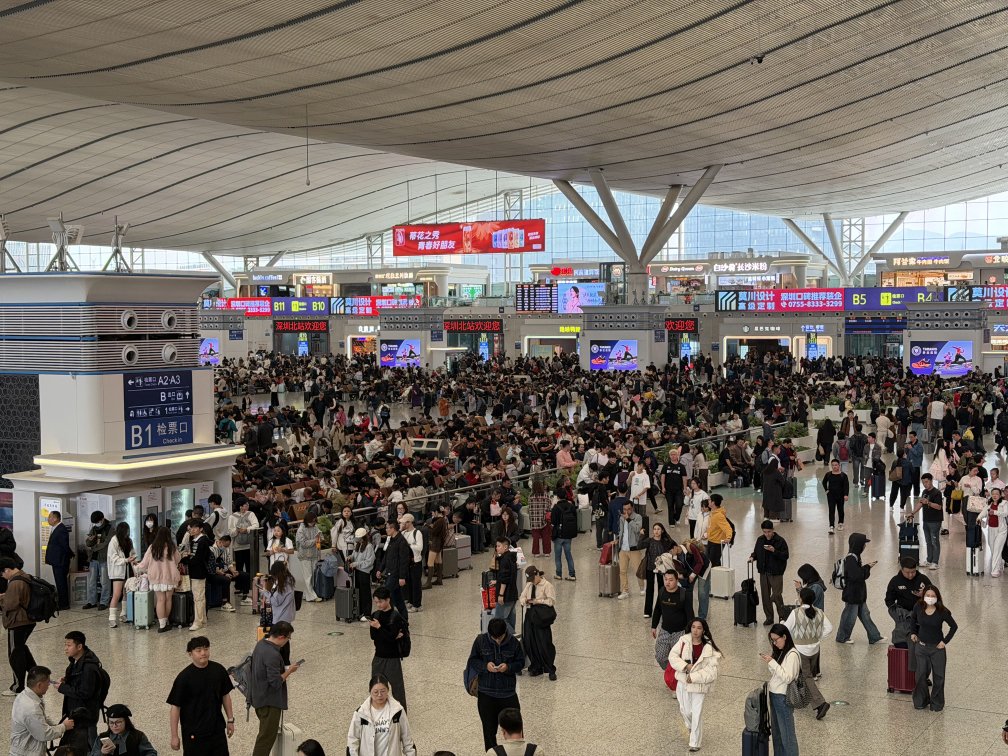
年旅客到发量1.27亿人次!深圳北站跻身全国火车站客流量前三
Xin Lang Cai Jing· 2026-01-05 10:27
Core Insights - Shenzhen North Station has achieved remarkable passenger flow growth, with 116 million passengers expected in 2024, an increase of 10 million compared to 2019, and 127 million in 2025, up by 11 million year-on-year, ranking among the top three in the country for passenger volume [1][2] Group 1: Infrastructure and Capacity - Shenzhen North Station, opened in 2011, faced limitations with its original design, which included only 20 tracks and a two-story station building, leading to a capacity mismatch with the rapid growth of the Guangdong-Hong Kong-Macao Greater Bay Area [2] - The station's original design allowed for a daily capacity of 120,000 passengers, which became inadequate as passenger numbers surged [2] Group 2: Operational Improvements - A comprehensive reform focusing on efficiency has been implemented, including the removal of over 3,000 square meters of ticket inspection barriers, reducing the boarding process from three queues to one, and optimizing waiting areas by reducing commercial space [3] - The station has significantly increased the number of manual verification channels and ticket gates, renovated ticket counters, and established a new 400-square-meter business waiting area equipped with amenities [3] Group 3: Technological Integration - Over 80 million yuan has been invested in 26 quality improvement projects, resulting in the establishment of an efficient smart command center, updated signage, upgraded broadcasting systems, and the addition of over 680 surveillance cameras to enhance passenger convenience [3] Group 4: Marketing and Demand Management - The station has initiated a "reclaiming the Guangzhou-Shenzhen intercity passenger flow" campaign, utilizing local advertising to promote efficient passenger distribution and offering various ticket discounts to encourage travel [3] - In 2025, the station is expected to facilitate smooth travel for 205,200 group ticket passengers and has introduced special trains for events like concerts, enhancing the travel experience for attendees [4] Group 5: Connectivity and Service Expansion - Shenzhen North Station operates over 1,500 trains daily, with an average departure every 1.5 minutes, connecting to 146 cities nationwide, thereby supporting Shenzhen's development as a modern international metropolis [6]
我国高铁营业里程突破5万公里
Xin Lang Cai Jing· 2025-12-26 23:07
Core Insights - The opening of the Xi'an to Yan'an high-speed railway marks a significant milestone, pushing China's high-speed rail operational mileage to over 50,000 kilometers, a 32% increase since the end of 2020 [1] - During the 14th Five-Year Plan period, China has completed and put into operation 12,000 kilometers of high-speed rail, bringing 128 counties into the "high-speed rail era" [1] Group 1: High-Speed Rail Development - The construction of high-speed rail has been efficient, with major projects like the Beijing to Shenyang and Zhengzhou to Chongqing lines becoming operational, enhancing the "eight vertical and eight horizontal" high-speed rail network [2] - High-speed rail now covers 97% of cities with populations over 500,000, with daily operations of 9,346 high-speed trains, transporting approximately 9.36 million passengers daily [2][3] - The peak day for high-speed train operations can exceed 10,000 trains, sending over 16 million passengers, significantly alleviating pressure during peak travel periods [2] Group 2: Passenger and Freight Services - During the 14th Five-Year Plan, high-speed rail has transported 12.8 billion passengers, a 39.2% increase from the previous five-year period [3] - The new 12306 ticketing system has a daily ticket sales capacity exceeding 20 million, and high-speed rail services have expanded to include "high-speed express" delivery to 182 cities [3] - High-speed rail's energy efficiency is notable, with energy consumption per 100 kilometers being only 18% of that of airplanes and 50% of that of buses, leading to a significant reduction in carbon emissions [3] Group 3: International Influence and Standards - China's railway technology standards have been established, with 1,219 technical standards set by the China Railway Group, enhancing its international influence [4] - The CR450 train model, set to be released by the end of 2024, is expected to lead in operational speed and energy efficiency, further solidifying China's leadership in high-speed rail technology [4] - The Jakarta-Bandung high-speed railway in Indonesia has significantly reduced travel time and increased train frequency, demonstrating the international reach of China's high-speed rail technology [4][5]
沪苏湖高铁苏州南站、盛泽站一年累计安全运送旅客324.49万人次
Su Zhou Ri Bao· 2025-12-26 22:59
Core Insights - The opening of the Hu-Su-Hu High-Speed Railway marks a significant milestone in the integration of the Yangtze River Delta region, with a steady increase in passenger flow over the past year, totaling 3.2449 million passengers [1][3] Group 1: Operational Performance - The Hu-Su-Hu High-Speed Railway officially commenced operations on December 26, 2022, with the first train departing from Suzhou South Station [2] - In its first year, Suzhou South Station served 2.2157 million passengers, averaging 6,100 passengers daily, while Shengze Station served 1.0292 million passengers, averaging 2,800 passengers daily [3] - On October 1, 2023, Suzhou South Station set a new single-day record by sending 19,600 passengers, while Shengze Station sent 8,300 passengers [3] Group 2: Connectivity and Service Enhancements - Travel times have significantly decreased, with the fastest journey from Suzhou South Station to Nanjing South Station taking only 90 minutes, reducing travel time by nearly 90 minutes compared to previous driving times [2] - The number of passenger trains from Suzhou South Station is set to increase from 20 to 132 by 2025, while Shengze Station will increase from 22 to 68, expanding service to over 10 provincial-level regions [2] Group 3: Cultural and Economic Impact - The railway's opening has boosted local tourism, with promotional campaigns offering discounts for train ticket holders at attractions like Lili Ancient Town and Zhenze Ancient Town [4] - During the May Day holiday, passenger numbers at Suzhou South Station increased by 180% compared to regular days [4] - The upcoming 2025 Spring Festival will be the first for Suzhou South and Shengze Stations since the railway's opening, featuring cultural performances to enhance the travel experience [4] Group 4: Customer Service Initiatives - The railway has introduced various ticketing options, including regular and multi-use tickets, to cater to diverse travel needs [6] - Suzhou South Station will implement priority services for vulnerable passengers starting in 2025, ensuring smoother travel experiences [6] - Over the past year, the "Su Xin" service initiative has assisted more than 1,500 key passengers, receiving numerous commendations for service quality [6]
创新高!长三角铁路2025年发送旅客已突破9亿人次
Xin Jing Bao· 2025-12-19 04:05
Core Insights - The Shanghai Railway Group reported that the Yangtze River Delta railway has sent over 900 million passengers since 2025, an increase of over 38 million passengers compared to last year, marking a growth rate of over 4% and setting a historical record for annual passenger volume [1] Group 1: Passenger Services - The Shanghai Railway Group has operated 96 special trains and chartered services for events such as sports and concerts this year [1] - The company has introduced various ticket pricing strategies, including a fare reduction for 581 high-speed trains starting from November 1, with the lowest fare being 40% of the published price [1] Group 2: Ticket Products - The Yangtze River Delta railway has launched 13 new ticket products aimed at business travel, short-term project work, and regular commuting, offering discounts on fares [1] - These new ticket products include options for 30-day passes with 10, 15, 20, and up to 60 trips, as well as 10-trip and 20-trip tickets valid for 90 days, covering multiple high-speed rail lines [1]
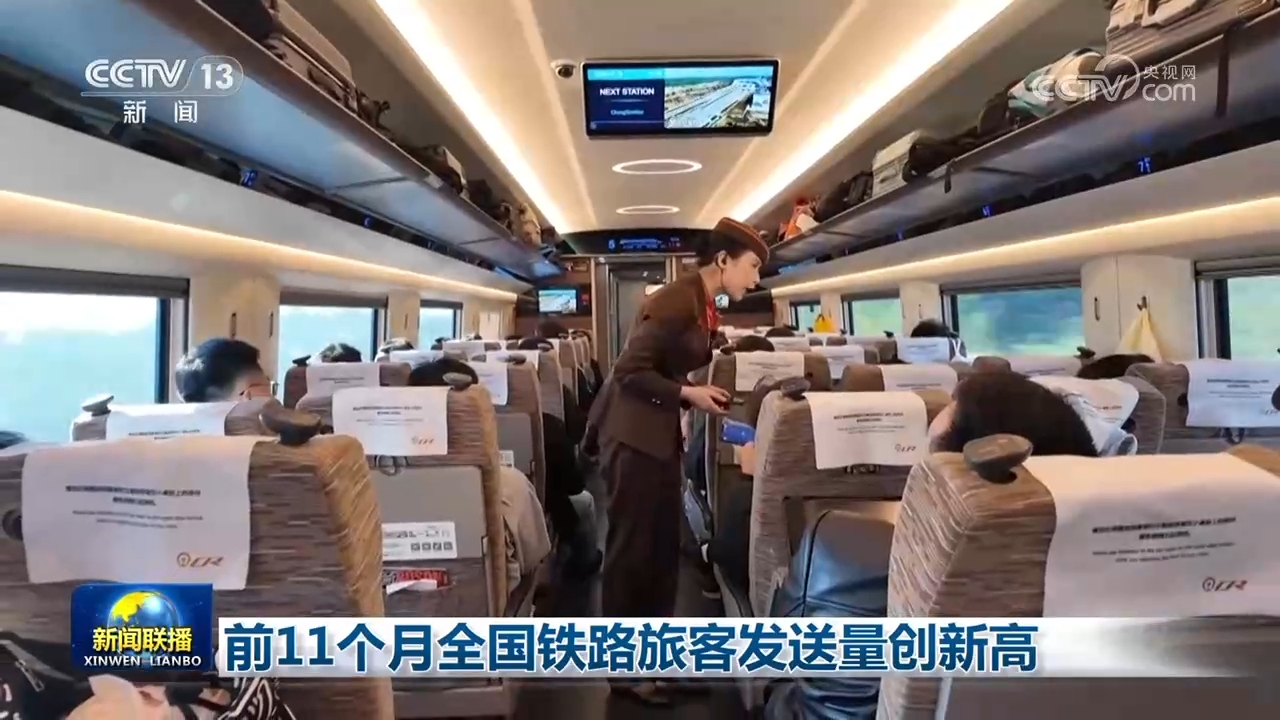
前11个月全国铁路旅客发送量创新高
Yang Shi Wang· 2025-12-17 12:25
Core Insights - The national railway system in China has achieved a record high in passenger volume, with 4.28 billion trips made from January to November, reflecting a year-on-year growth of 6.6% [1] Group 1: Passenger Volume - From January to November, the national railway sent 4.28 billion passengers, marking a historical peak for the same period [1] - The average daily operation of passenger trains increased to 11,258, which is a 7.1% year-on-year increase [3] Group 2: Capacity Supply - The railway system has optimized train operation plans and utilized both new and existing line resources to meet the strong travel demand [3] - The Guangzhou-Shenzhen-Hong Kong high-speed railway and the China-Laos railway facilitated cross-border travel, with 28.94 million and 244,000 passengers respectively [3] Group 3: Service Upgrades - The railway has introduced new products and services tailored to seasonal travel needs, including winter tourism trains and new ticket options [5] - As of now, the new ticketing options have been implemented across 73 high-speed rail lines, enhancing travel flexibility and boosting the cultural tourism market [5]
1至11月全国铁路发送旅客量创新高 彰显流动中国繁荣活力
Yang Guang Wang· 2025-12-17 01:34
Group 1 - The core point of the articles highlights the significant growth in passenger traffic on China's railways, with a total of 4.28 billion passengers transported from January to November, marking a year-on-year increase of 6.6%, setting a historical record for the same period [1] - The average daily operation of passenger trains reached 11,258, reflecting a year-on-year increase of 7.1%, further indicating the robust demand for rail travel [1] - The introduction of new ticketing products, including flexible travel options and enhanced customer service features, has contributed to the increased passenger volume, catering to group travel needs [1][2] Group 2 - The launch of the new tourism ticket product allows travelers to purchase tickets for 2 to 10 segments of travel within a 15-day validity period, enhancing convenience for passengers [2] - The railway sector is implementing various initiatives to promote winter tourism and sports, such as the "snow gear convenience service" trial on the Beijing-Zhangjiakou high-speed railway, facilitating easier travel for winter sports enthusiasts [2]
前11月全国铁路发送旅客42.8亿人次
Zhong Guo Zheng Quan Bao· 2025-12-16 20:19
Group 1 - The core viewpoint of the article highlights the significant growth in passenger traffic on China's railways, with 4.28 billion passengers transported from January to November, marking a year-on-year increase of 6.6%, setting a historical record for the same period [1] - The China National Railway Group has optimized train operation plans and improved service quality, resulting in an average of 11,258 passenger trains operated daily, which is a 7.1% increase year-on-year [1] - The railway department has enhanced cross-border passenger services, facilitating international travel with 28.94 million and 244,000 passengers transported via the Guangzhou-Shenzhen-Hong Kong High-Speed Rail and the China-Laos Railway, respectively [1] Group 2 - The railway department is actively promoting new ticketing products such as the "count ticket," "regular ticket," and "tourism count ticket," which have been implemented on 73 high-speed rail lines, making travel more flexible and economical for passengers [2] - Starting from November 27, a new version of the tourism count ticket was launched at 212 stations nationwide, allowing passengers to choose between 2 to 10 segments of travel within specified departure and arrival stations, with options for "advance seat reservation" and "direct boarding with ID" [2]