
宝可梦简体中文版卡牌

Search documents
LABUBU卡牌带火“纸片经济”,二手平台溢价约30%
Mei Ri Jing Ji Xin Wen· 2025-10-22 13:45
Core Insights - The focus of the "Double 11" shopping festival has unexpectedly shifted to collectible cards, particularly the TOPPS X THE MONSTERS/LABUBU series, which sold out quickly despite high purchase limits and pre-sale conditions [1][2] - The collectible card market in China is experiencing significant growth, with major players like Pokémon and various entertainment giants entering the space, leading to a competitive landscape [1][6] - Bubble Mart, a leading player in the trendy toy industry, reported a projected revenue growth of 245%-250% year-on-year for Q3 2025, indicating strong performance in the collectible market [1][4] Market Dynamics - The overlap between trendy toy users and card users is significant, with many card players also engaging with Bubble Mart products, although marketing strategies differ [2][5] - The traditional IP-licensed cards are facing challenges as the market becomes saturated, leading to increased competition primarily based on price and volume [2][5] - The LABUBU card's appeal lies in its unique scarcity and artistic value, featuring limited edition items that enhance its collectible nature [3][5] Competitive Landscape - The global collectible trading card market is projected to grow from $7.267 billion in 2025 to $15.433 billion by 2032, with a compound annual growth rate of 11.36% [3][4] - China has emerged as one of the largest trading card markets, with significant growth potential as consumer spending is still relatively low compared to markets like Japan and the U.S. [4][6] - Major companies in the first tier of the market include Pokémon, Konami, and Topps, with a clear competitive hierarchy forming [4][6] Industry Trends - The Chinese card market is witnessing an influx of new players, with over 2,000 card-related companies currently operating, primarily concentrated in Guangdong, Liaoning, and Hainan [6][7] - The market is evolving towards a more mature and diversified structure, with a broader age demographic engaging with various IPs [7][8] - The future of the card market may hinge on the development of trading card games (TCG) that offer gameplay and competitive events, moving away from purely collectible cards [8]

遭疯抢,售罄,这个行业突然爆火,多路巨头杀入
Hu Xiu· 2025-10-22 00:47
Core Insights - The LABUBU card series launched by TOPPS has seen significant demand, selling out quickly despite a high price point of 469 yuan, with resale prices reaching up to 600 yuan, indicating a 30% premium [1][6][12] - The card market in China is experiencing rapid growth, with major players like Pokémon and various entertainment giants entering the space, leading to increased competition and market dynamics [4][9][10] Group 1: Market Dynamics - The card market is characterized by a high overlap between users of collectible cards and trendy toys, with both demographics often being adults [5][12] - The traditional IP licensing model for cards is becoming saturated, leading to increased competition primarily based on price and volume, which may harm market stability [5][12] - The global collectible trading card market is projected to grow significantly, reaching $7.267 billion by 2025 and $15.433 billion by 2032, with a compound annual growth rate of 11.36% [6][9] Group 2: Company Performance - Bubble Mart reported a substantial increase in revenue, with a projected growth of 245%-250% year-on-year for Q3 2025, driven by both domestic and international sales [4][9] - The LABUBU card series is a collaboration with TOPPS, and while it has generated initial excitement, the long-term success of such products remains uncertain [7][12] Group 3: Consumer Behavior - The current Chinese card market is primarily driven by hobbyists, with a younger demographic and less focus on investment potential compared to international markets [11][12] - The sustainability of the card market relies on maintaining scarcity and managing supply effectively to avoid oversaturation [12][13] Group 4: Future Trends - The industry is expected to evolve towards trading card games (TCG) that offer gameplay and competitive events, which could enhance user engagement and market longevity [13][14] - As adult players become the main consumer group, the card industry is transitioning from a "toy economy" to an "interest asset" economy, emphasizing the collectible and investment aspects of cards [14]

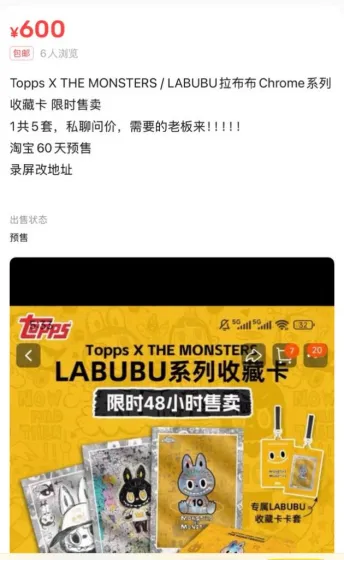
遭疯抢售罄!这个行业突然爆火,多路巨头杀入
Mei Ri Jing Ji Xin Wen· 2025-10-21 22:25
Core Insights - The focus of the "Double 11" shopping festival has unexpectedly shifted to collectible cards, particularly the TOPPS X THE MONSTERS/LABUBU series, which sold out quickly despite a high price point and purchase limits [1][5] - The collectible card market in China is experiencing significant growth, with major players like Pokémon and various entertainment giants entering the space, leading to increased competition and market dynamics [4][8] Market Dynamics - The LABUBU card's popularity reflects a broader trend in the collectible card market, which is heating up with various companies competing for market share [4][6] - The collectible card market is projected to reach $7.267 billion by 2025 and $15.433 billion by 2032, with a compound annual growth rate of 11.36% [6] - China is becoming the largest market for collectible cards, with a projected market size of 263 billion yuan in 2024, significantly lower per capita spending compared to Japan and the U.S., indicating potential for growth [6][8] Company Performance - Bubble Mart reported a projected revenue increase of 245%-250% year-on-year for Q3 2025, with domestic revenue up 185%-190% and overseas revenue up 365%-370% [4] - The LABUBU card's appeal is attributed to its limited availability and artistic value, including signed cards and unique designs, which resonate with collectors [5][11] Competitive Landscape - The card market is becoming increasingly competitive, with over 2,000 card-related companies in China, and major players like 卡游 (Kawoo) and others vying for dominance [7][8] - The entry of entertainment companies like iQIYI and阅文 (Yuewen) into the card market is driving innovation and cross-industry collaboration [8][9] Consumer Behavior - The current consumer base for collectible cards in China is primarily younger, with a shift towards a more balanced age demographic as the market matures [11] - The transition from a hobbyist market to an investment-oriented market is hindered by a lack of infrastructure, including rating agencies and standardized quality control [11] Future Outlook - Analysts suggest that the future of the card market in China may lean towards trading card games (TCG) that offer gameplay and competitive events, which could sustain consumer interest longer than traditional collectible cards [7][11] - The market is expected to evolve from a "toy economy" to an "interest asset" economy as adult players become the main consumer group [11]
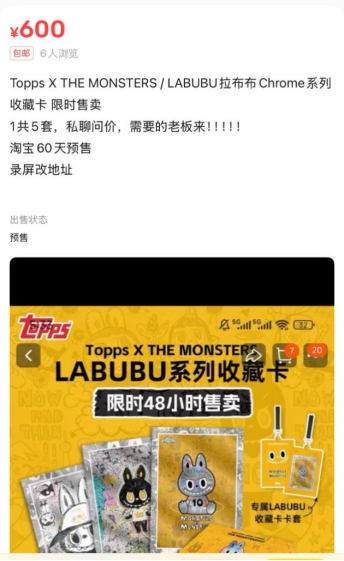
遭疯抢,售罄!这个行业突然爆火,多路巨头杀入
Mei Ri Jing Ji Xin Wen· 2025-10-21 16:42
Core Insights - The focus of the "Double 11" shopping festival has unexpectedly shifted to collectible cards, particularly the TOPPS X THE MONSTERS/LABUBU series, which sold out quickly despite a high price point and purchase limits [1][5] - The collectible card market in China is experiencing significant growth, with major players like Pokémon and various entertainment giants entering the space, leading to increased competition and market dynamics [4][8] Market Dynamics - The LABUBU card's popularity reflects a broader trend in the collectible card market, with a notable increase in sales and interest from consumers [4][5] - The collectible card market is projected to reach $7.267 billion by 2025 and $15.433 billion by 2032, with a compound annual growth rate of 11.36% [6] - China is becoming a major player in the global card market, with projected market sizes of 26.3 billion yuan in 2024, indicating substantial growth potential [6] Consumer Behavior - There is a significant overlap between the user bases of collectible cards and other products like those from Pop Mart, challenging the perception that card users are primarily students [4][7] - The current demographic of card consumers is shifting, with a growing number of adult collectors, although the market still primarily caters to younger audiences [11] Competitive Landscape - The competitive landscape is intensifying, with over 2,000 card-related companies in China, and major brands like Pokémon actively expanding their presence [7][8] - The market is characterized by a mix of traditional IP-based cards and newer, more dynamic offerings that include gameplay elements, which are essential for long-term engagement [7][11] Future Trends - Analysts suggest that the future of the card market in China may lean towards trading card games (TCG) that incorporate gameplay and competitive elements, as opposed to purely collectible cards [11] - The transition from a hobbyist market to one with investment potential will require improved infrastructure, including credible grading systems and secondary market platforms [11]