
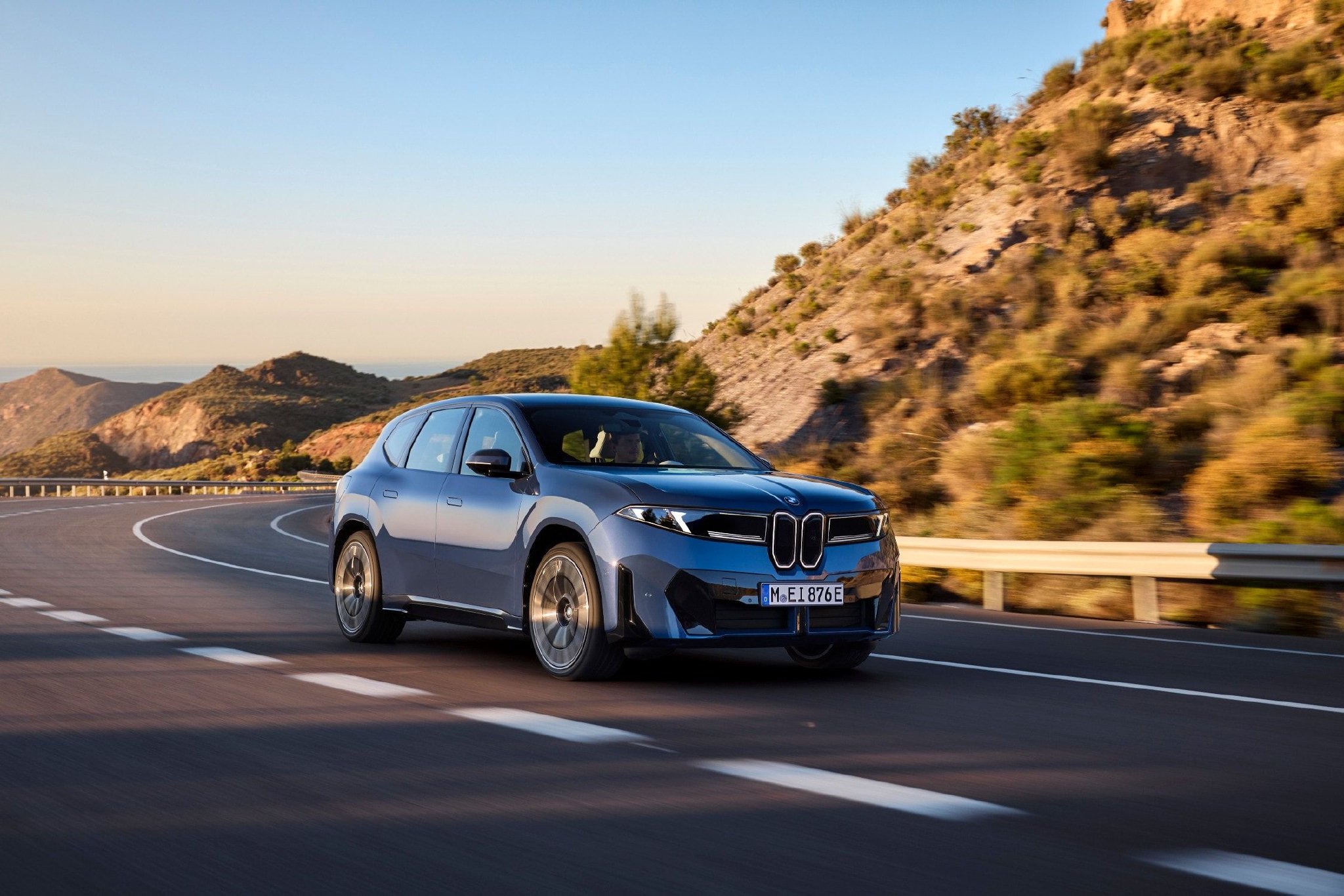
宝马“新世代”车型

Search documents
宝马集团设定2035年减排新目标 约200家中国核心供应商承诺使用绿电
Xin Lang Cai Jing· 2025-12-12 04:22
Core Insights - BMW Group has announced a new emission reduction target, aiming to cut at least 60 million tons of CO2 equivalent by 2035 compared to 2019 levels, which is an increase of approximately 20 million tons from the previous 2030 target [2][7] - The company is committed to achieving net-zero emissions by 2050, aligning its actions with the Paris Agreement [4][10] Emission Reduction Strategy - BMW's strategy focuses on a full lifecycle carbon reduction approach, with a goal to reduce lifecycle CO2 emissions by at least 40 million tons by 2030 compared to 2019 [4][10] - By 2035, the company aims to halve the CO2 emissions per euro of revenue compared to 2019 levels [4][10] Key Initiatives - Core initiatives to achieve these targets include increasing the use of renewable energy in production and supply chains, enhancing the utilization of recycled materials, optimizing energy efficiency during the usage phase, and advancing product and technology innovation [4][10] - BMW plans to expand its electric product lineup as part of its multi-technology strategy [4][10] Production and Sustainability Efforts - Since 2020, all BMW factories globally have sourced 100% of their electricity from renewable sources [5][11] - The Shenyang production base has been recognized as a national green factory for nine consecutive years and is set to generate 91.86 GWh of solar power by 2024, equivalent to the annual electricity consumption of about 30,000 households [5][11] - A geothermal heating project will begin operations in 2025, utilizing renewable geothermal energy to reduce carbon emissions by approximately 18,000 tons annually [5][11] Supplier Engagement and Recycling - BMW is actively engaging local suppliers, with around 200 core suppliers in China committing to use green electricity for producing BMW components, aiming for a reduction of about 1 million tons in supply chain carbon emissions by 2024 compared to 2019 [6][12] - The company has achieved 100% recycling of retired power batteries in China, with over 2,100 tons of recycled battery materials expected to be reused by 2024 [6][12] New Product Launch - The upcoming "new generation" models in China will feature the sixth-generation BMW eDrive technology, designed to minimize energy loss while enhancing electric driving enjoyment [6][12]

加速迈向2050年“净零”愿景 宝马集团以创新驱动绿色未来
Yang Zi Wan Bao Wang· 2025-12-09 07:15
Core Insights - BMW Group has set a new emission reduction target to cut at least 60 million tons of CO2 equivalent by 2035 compared to 2019, increasing the previous 2030 target by approximately 20 million tons [1] - The company aims for net-zero emissions by 2050, aligning with the Paris Agreement, and has established a clear roadmap for reducing lifecycle CO2 emissions by at least 40 million tons by 2030 [1] - Key initiatives include increasing the use of renewable energy in production and supply chains, enhancing the utilization of recycled materials, and optimizing energy efficiency during vehicle usage [1] Emission Reduction Strategy - BMW's carbon reduction actions span the entire lifecycle of vehicles, from raw material supply to production, usage, and recycling [3] - The company focuses on expanding the use of recycled materials and renewable energy in its supply chain, particularly targeting high-carbon materials like battery components, aluminum, and steel [3] - Since 2020, all BMW factories globally have sourced 100% of their electricity from renewable sources [3] Sustainable Practices in China - BMW's Shenyang production base serves as a benchmark for sustainable development, utilizing 100% renewable energy since 2019 and continuously exploring energy innovations [4] - The Shenyang facility will generate 91.86 GWh of solar power in 2024, equivalent to the annual electricity consumption of about 30,000 households [4] - A geothermal heating project at the Shenyang plant utilizes renewable geothermal energy, reducing carbon emissions by approximately 18,000 tons annually [4] Supply Chain Collaboration - BMW is actively engaging local suppliers in China to transition towards sustainability, with around 200 core suppliers committing to using green electricity for BMW component production [4] - The company aims to reduce the total supply chain carbon emissions by about 1 million tons by 2024 compared to 2019 [4] - BMW has achieved 100% recycling of retired battery materials in China, with over 2,100 tons of recycled battery materials recovered by 2024 [4] Next-Generation Products - The upcoming "New Generation" models in China will feature the sixth-generation BMW eDrive technology, designed for lower energy consumption and enhanced electric driving pleasure [5] Green Charging Solutions - BMW is collaborating with partners like State Grid to promote renewable energy in public charging networks, with its joint venture charging brand "Yianqi" already using 100% green electricity for charging services [6] Commitment to Sustainability - BMW's clear emission reduction blueprint for 2035 relies on innovative technologies and concrete actions in every market, particularly in China [7] - The company aims to transform its sustainability strategy into tangible industry actions and appealing products, fostering a responsible lifestyle for consumers [7]
“深耕”可持续,真正“接地气”——华晨宝马地热项目创造能源转型新范本
第一财经· 2025-11-18 09:11
Core Viewpoint - The Huachen BMW geothermal energy project represents a significant advancement in BMW Group's long-standing commitment to clean energy and sustainability, showcasing the collaborative vision of Chinese and German enterprises in sustainable development [2][17]. Group 1: Project Overview - The Huachen BMW geothermal energy project commenced operations on October 31, enabling the powertrain factory to achieve 100% non-fossil energy heating, with an expected annual carbon reduction of 18,000 tons, thereby lowering the carbon footprint of BMW's "New Generation" models from the source [4][8]. - This project is part of BMW's extensive sustainability efforts over the past 50 years, marking a breakthrough in their commitment to environmental protection and sustainable practices [5][17]. Group 2: Technological Innovation - The project involves drilling 28 deep geothermal wells to a depth of approximately 2,900 meters, utilizing a "heat extraction without water" method, which enhances environmental protection while ensuring stable and efficient geothermal energy collection [9][11]. - The innovative approach of using coaxial heat exchangers for thermal exchange with underground rock layers represents a significant advancement in geothermal energy utilization, particularly in the context of China's automotive industry [11][12]. Group 3: Collaborative Efforts - The project is a collaborative effort involving Huachen BMW, China Huaneng Group, Wanjing New Energy Co., Ltd., and Shenyang Sino-German Development Zone Construction Group, with the Shenyang municipal government providing crucial support [12][14]. - The project employs a contract energy management model, allowing for shared investment, construction, and operation among the partners, which enhances its commercial sustainability [12][14]. Group 4: Future Potential - BMW plans to expand geothermal energy applications in its factories and potentially throughout the Shenyang Iron West District, with expectations of further reducing costs while achieving 100% non-fossil energy heating [14][16]. - The project serves as a model for clean energy applications in industrial regions, providing valuable insights for broader adoption of geothermal energy in similar contexts [12][17].

宝马“向外卷”:供应链减碳百万吨 探索咖啡渣、茶叶等可回收性材料
Zhong Guo Jing Ying Bao· 2025-06-28 04:02
Core Viewpoint - The sustainable development has become a crucial requirement for automotive companies, not just an additional topic, as they navigate the global green transition [1] Group 1: Sustainable Development Initiatives - BMW's 2024 sustainability report highlights significant achievements in green transformation, including commitments from approximately 200 local suppliers to use renewable energy, resulting in a reduction of about 1 million tons of carbon emissions compared to 2019 [1][4] - The company has made breakthroughs in material innovation, successfully applying new bio-based composite nylon materials in the BMW X3 model and exploring the use of tea leaves for new bio-based materials [1][3] - BMW aims to enhance the use of recycled materials, planning to increase the proportion of recycled aluminum in new model wheels to 70%-75% to further reduce carbon footprint [3][5] Group 2: High-Quality Development Strategies - BMW's core experiences in high-quality development include focusing on core technologies for R&D, adhering to strict product testing, and continuously improving a "smart, efficient, low-carbon" production system [2] - The company emphasizes the importance of collaboration across the entire value chain to achieve sustainable development, with a focus on long-term value creation and innovation [1][4] Group 3: Circular Economy and Resource Efficiency - BMW has implemented effective water resource management, reducing water consumption per vehicle to 1.57 cubic meters and achieving a total recycled water usage of 400,000 cubic meters [5] - The company has achieved zero landfill waste at its Shenyang plant and is actively collaborating with local partners to integrate renewable energy and circular economy practices throughout its value chain [5][4] Group 4: Future Outlook - BMW is committed to leading the transition to sustainable mobility, with the upcoming "New Generation" models set to enhance vehicle efficiency by 20%, charging speed by 30%, and range by 30% [3][6] - The company envisions future mobility as a harmonious coexistence of people, society, and nature, continuing to prioritize responsibility in its operations [6]