宽带套餐

Search documents
为什么总有私人号码给你打电话,让你免费升级话费套餐?
3 6 Ke· 2025-08-26 03:04
Core Viewpoint - The article highlights the ongoing issue of deceptive marketing practices by telecom operators in China, where consumers are misled into upgrading their service plans under the guise of "free upgrades," resulting in increased monthly charges [1][3][7]. Group 1: Telecom Operators' Response - The three major telecom operators in China have announced a unified approach to combat misleading marketing calls by using official numbers for promotions, aiming to help consumers identify legitimate marketing channels [1][2]. - Despite the operators' statements, complaints related to telecom service plans continue to rise, with over 65,000 complaints recorded on consumer platforms regarding issues with service charges and plan changes [2]. Group 2: Nature of Deceptive Practices - Consumers often receive calls claiming to offer lower-cost plans, but these calls frequently result in higher charges due to hidden fees or changes in service plans that are not clearly communicated [3][4]. - A common tactic involves presenting a plan that appears cheaper but actually increases the total monthly cost when additional services are included, effectively manipulating consumer perceptions [3][4]. Group 3: Structure of Marketing Practices - The telecom industry is structured into three main components: the company headquarters, retail stores, and third-party channel partners, with the latter often responsible for aggressive marketing tactics [4][5]. - External call agents, who are under pressure to meet sales targets, typically lack comprehensive knowledge of the plans they are selling, focusing solely on pushing sales rather than providing accurate information [5][6]. Group 4: Consumer Experience and Challenges - Consumers face significant challenges in canceling or downgrading plans, as the process is often complicated and time-consuming, leading to frustration and increased costs [3][6]. - The system is designed in such a way that external agents can only increase service plans, while retail staff have limited authority to reduce plans, creating a barrier for consumers seeking to lower their expenses [6][7]. Group 5: Implications for the Industry - The article suggests that the telecom operators are aware of these deceptive practices but continue to allow them to persist, effectively placing the burden of accountability on consumers [7][8]. - The ongoing issue of unsolicited marketing calls indicates that these practices are likely to continue, as the operators gamble on consumers' ability to recognize and report such tactics [8].



让你免费升套餐的私人电话,到底是谁在打?
Hu Xiu· 2025-08-25 10:50
Core Viewpoint - The article highlights the deceptive practices of telecom operators in China regarding unsolicited calls promoting "free upgrades" to service plans, which often lead to increased monthly charges for consumers [1][2][3]. Group 1: Consumer Experience - A consumer reported that after a "free upgrade" call, her monthly bill increased from 33 yuan to over 80 yuan [2]. - Complaints related to "service packages" on consumer platforms have exceeded 65,000, indicating widespread dissatisfaction [2]. - Consumers often find themselves trapped in contracts that lead to higher charges after promotional periods end, complicating cancellation processes [5]. Group 2: Telecom Operators' Response - In response to the issue, the three major telecom operators in China announced a unified approach to use official marketing numbers for outbound calls to enhance consumer recognition [2]. - Despite this announcement, the prevalence of unsolicited marketing calls has not diminished significantly [3]. Group 3: Marketing Practices - The article explains that telecom operators utilize a tiered structure involving headquarters, retail stores, and third-party channel vendors, with the latter often making unsolicited calls [6][7]. - Third-party callers are primarily focused on meeting sales targets and may not fully understand the products they are promoting, leading to misleading information [8][9]. - These external callers are restricted to increasing service plans and lack the authority to downgrade them, creating a system that favors upselling [9][10]. Group 4: Operational Dynamics - The operational pressure on external callers results in aggressive sales tactics, as they are incentivized to complete sales regardless of the consumer's best interests [11][12]. - The article suggests that telecom companies are aware of these practices but choose to maintain the status quo, betting on consumers' inability to recognize or report the issues [12][13].
账单“膨胀”三连跳,315余波未平,投诉潮又起!三大运营商“透明消费”承诺遭遇落地拷问
Sou Hu Cai Jing· 2025-08-05 02:37
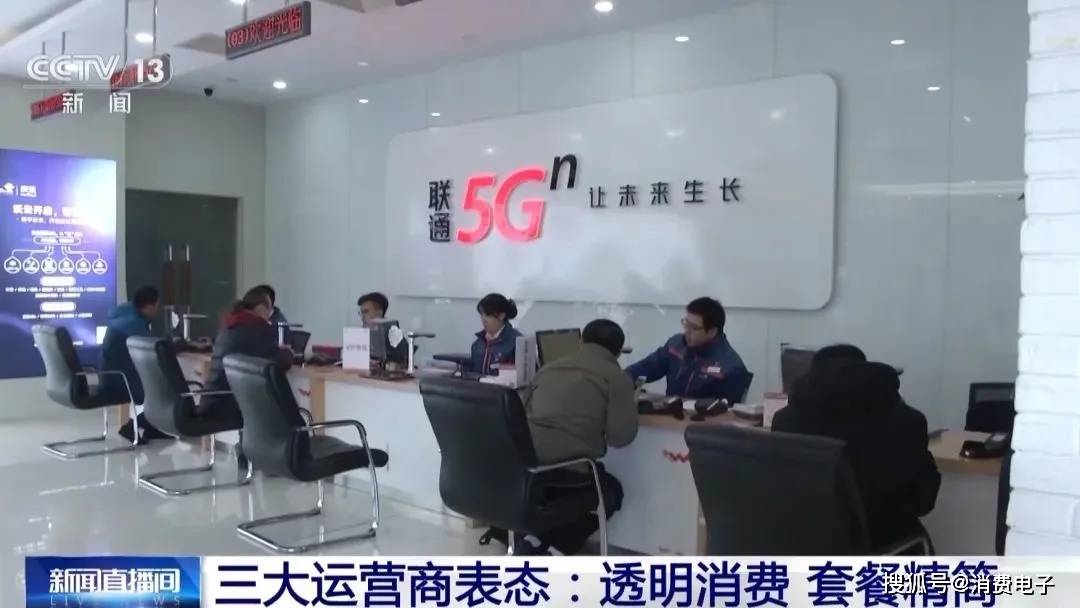
Core Viewpoint - The three major telecom operators in China (China Mobile, China Unicom, China Telecom) have made commitments to improve transparency and simplify their service packages in response to consumer complaints and regulatory scrutiny [1][3][27] Group 1: Operator Commitments - China Mobile announced ten service commitments, including requiring explicit customer consent for service orders and sending notification messages after service completion [1] - China Telecom introduced nine measures to ensure user consent before activating telecom services and to standardize the service cancellation process [1] - China Unicom plans to significantly reduce the variety and number of service packages, ensuring clear and categorized pricing information [1] Group 2: Consumer Complaints - Consumer complaints against the three operators have been rising sharply, with complaints increasing from 3,125 in 2022 to over 13,000 in 2023, marking a 316.99% increase [3][5] - By July 2025, complaints had reached 21,148, nearing the total for the previous year, with involved amounts exceeding 23.96 million yuan [5] - China Mobile led in complaints with 15,233 cases in the first half of 2025, but also had the highest resolution rate at 93.36% [7] Group 3: Key Complaint Issues - The main issues leading to complaints include unclear pricing (21.34%), package disputes (15.11%), and poor service attitude (13.80%) [9] - Specific complaints against China Mobile highlighted issues with unclear pricing and package disputes, while China Unicom faced complaints regarding recharge disputes and service attitude [9] Group 4: Consumer Experiences - Individual cases illustrate ongoing issues, such as a consumer being misled about broadband fees and another facing unexpected charges after a supposed "free upgrade" [11][17] - Consumers have reported that marketing tactics often obscure critical information about minimum charges and contract terms, leading to confusion and dissatisfaction [20] Group 5: Complaint Statistics - Complaints involving amounts over 100 yuan account for over half of all complaints, indicating significant financial impact on consumers [23] - The cities with the highest complaint rates are Guangzhou, Dongguan, and Beijing, reflecting regional disparities in consumer experiences [25] Group 6: Industry Outlook - The operators' recent commitments to transparency and simplification are seen as positive steps, but the effectiveness of these measures in addressing long-standing issues remains to be seen [27]



套餐退订流程详解:如何操作及注意事项?
Sou Hu Cai Jing· 2025-04-05 05:12
Core Points - The article discusses the process, considerations, and recommendations for canceling service packages, which have become a part of daily consumption in modern life [1] Group 1: Basic Information on Package Cancellation - Different service providers and package types have varying cancellation policies, including minimum usage periods and potential penalties for early cancellation [5] - Key aspects of cancellation include cancellation time, method, and refund policies for prepaid fees [5] Group 2: Steps for Cancellation - Preparation of relevant information is crucial, including account details, package information, and identification proof if required [6][7] - Users are advised to review the cancellation policy on the service provider's official website for detailed guidelines [8] - Users can choose from various cancellation methods such as online cancellation, customer service hotline, or in-person at service centers [9][10][11] - After selecting a cancellation method, users must submit their application accurately to avoid issues [12] Group 3: Post-Cancellation Considerations - Users should confirm the status of their cancellation and keep track of any notifications from the service provider [13] - Important considerations include understanding penalty clauses, retaining evidence of the cancellation request, and carefully selecting a new package to avoid future mismatches [14][15] - Users should be aware of potential service interruptions after cancellation and plan accordingly [16]