
射频消融设备

Search documents
中国慢病疼痛医疗器械市场现状研究分析与发展前景预测报告
QYResearch· 2025-12-30 09:59
Core Viewpoint - The chronic pain medical device market in China is expected to grow significantly, driven by factors such as an aging population, increasing prevalence of chronic diseases, improved policy and insurance environments, and technological advancements [5][11]. Market Overview - The sales revenue of China's chronic pain medical device market is projected to reach $386.51 million in 2024 and $720 million by 2031, with a compound annual growth rate (CAGR) of 9.29% from 2025 to 2031 [5]. Industry Concentration and Competition - Major players in the Chinese market include Medtronic, Xiangyu Medical, Boston Scientific, Abbott, and OMRON, with the top three companies holding approximately 55.9% of the market share in 2024 [9]. Development Drivers - The market is primarily driven by three factors: 1. Aging population and high incidence of chronic diseases, leading to increased demand for pain management devices [11]. 2. Improved policies and insurance frameworks that facilitate multi-disciplinary management of pain [11]. 3. Technological advancements, including wearable devices and smart pain management solutions, enhancing personalized treatment options [11]. Challenges - The industry faces several challenges: 1. Fragmented market competition, with international brands dominating high-end segments while domestic companies focus on mid to low-end markets [11]. 2. High regulatory and clinical entry barriers, increasing pressure on small and medium enterprises [11]. 3. Incomplete payment systems, limiting the adoption of certain pain management devices in primary care and home settings [11]. 4. Insufficient awareness among patients and doctors regarding non-drug pain treatments, necessitating further market education [11]. Future Trends - The market is expected to trend towards smart and home-based solutions, with advancements in AI, big data, and IoT enabling remote monitoring and personalized treatment [12]. - The demand for portable and easy-to-use devices is rising, shifting the market focus from hospital-centric to a dual "hospital + home" model [12]. - Domestic innovation and international expansion are anticipated to be key trends, with policies supporting local manufacturers and new market opportunities emerging in regions like Southeast Asia and the Middle East [12]. Policy Framework - The Chinese government emphasizes the development of the medical device sector through various policies aimed at enhancing innovation and competitiveness [13][15]. - Key policies include the "Healthy China 2030" initiative and the "Made in China 2025" plan, which focus on improving the innovation capabilities of medical devices [13][15]. Supply Chain Analysis - The supply chain for chronic pain medical devices includes upstream raw material suppliers such as Nippon Steel and SABIC, and downstream markets comprising hospitals, home care, and rehabilitation centers [19][20]. - The hospital sector is the primary market for high-end devices, while the home care segment is rapidly growing, particularly for non-invasive devices like TENS units [20].


面对大健康产业广阔机遇,中欧之间该如何深化合作与资源对接?
Huan Qiu Wang· 2025-07-04 02:00
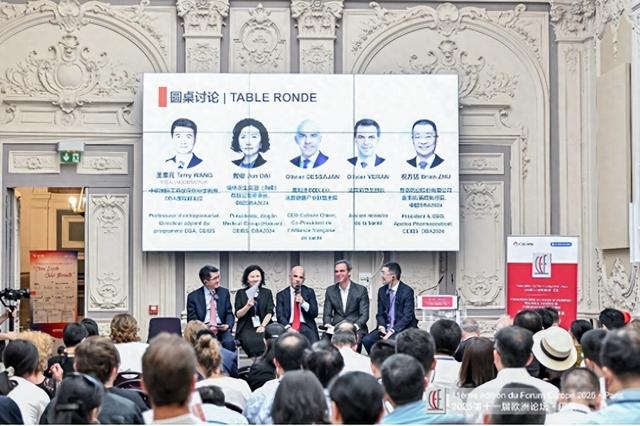
Group 1 - The core viewpoint of the article highlights the opportunities for the health consumption sector in China due to the aging population and supportive government policies, as outlined in the "Action Plan for Promoting Healthy Consumption" released by 12 departments including the Ministry of Commerce and the National Health Commission [1] - The discussion at the "European Forum" in Paris emphasized the rapid development of China's medical innovation sector and the unique opportunities for Sino-European cooperation in healthcare, as stated by former French Health Minister Olivier Véran [1][3] - Véran noted that cooperation between China and Europe could lead to both regions becoming long-term partners and global leaders in healthcare, with China needing access to European markets and Europe seeking to deepen connections with Chinese innovation resources [1][3] Group 2 - Olivier Dessajan, CEO of High Life China and President of the French Health Industry Alliance, expressed the importance of collaboration with China, stating that not engaging with China would be a mistake [3] - The establishment of high-end medical service nursing homes in cities like Guangzhou, Hangzhou, and Shenzhen by High Life China reflects the adaptation to local regulations while incorporating French operational mechanisms [3] - The CEO of Pro Pharma, Zhu Fangmeng, emphasized the significance of Sino-European cooperation in innovation and manufacturing, noting that nearly one-third of their overseas market is in Europe [3] Group 3 - The discussion highlighted the advanced technologies available in France and Europe, such as confocal endoscopy and radiofrequency ablation devices, while China leads in AI-assisted treatments and clinical trial results [4] - Véran pointed out the important reforms China has made to facilitate the entry of biopharmaceutical companies into the European market, particularly in modernizing drug regulations and accelerating clinical trials [4] - The strategy for AI application in healthcare should balance caution and innovation to promote harmonious economic relations and public interest between China and Europe, according to Véran [4]
集采扩围下的电生理市场:国产企业能否弯道超车
2 1 Shi Ji Jing Ji Bao Dao· 2025-04-22 07:56
Core Insights - The expansion of bulk purchasing for electrophysiological medical consumables in Sichuan Province is expected to stimulate market growth and increase competition among domestic companies [1][2][3] Group 1: Market Dynamics - The Sichuan bulk purchasing program requires companies to quote prices not exceeding historical minimum winning prices, which is seen as a moderate and positive signal for the industry [2] - The domestic electrophysiology market is experiencing growth due to increased patient screening rates and advancements in electrophysiological techniques, with the number of procedures expected to rise significantly by 2032 [3][6] - The average price reduction of 49.35% for selected products in previous bulk purchasing initiatives has made electrophysiological procedures more accessible, thereby increasing demand [3][5] Group 2: Company Performance - Microelectrophysiology reported a revenue of 413 million yuan in 2024, a year-on-year increase of 25.51%, with a net profit of 52.07 million yuan, reflecting a significant growth trajectory [4][5] - Huatai Medical achieved a revenue of 2.066 billion yuan in 2024, up 25.18% year-on-year, with net profit growth driven by increased sales and improved product profitability [5] - Domestic companies are gaining market share in the electrophysiology sector, particularly in the context of bulk purchasing, which has opened doors for more hospitals to adopt domestic products [3][5] Group 3: Technological Advancements - The emergence of Pulsed Field Ablation (PFA) technology is reshaping the electrophysiology market, with expectations that it will dominate atrial fibrillation procedures by 2025 [6][7] - Domestic brands are showing competitive performance in the PFA sector, with products tailored for three-dimensional electrophysiological procedures, which are becoming the mainstream in China [7] - The potential market for PFA procedures in China is estimated to reach 800,000 cases, representing a significant market opportunity valued at over 10 billion yuan [7]