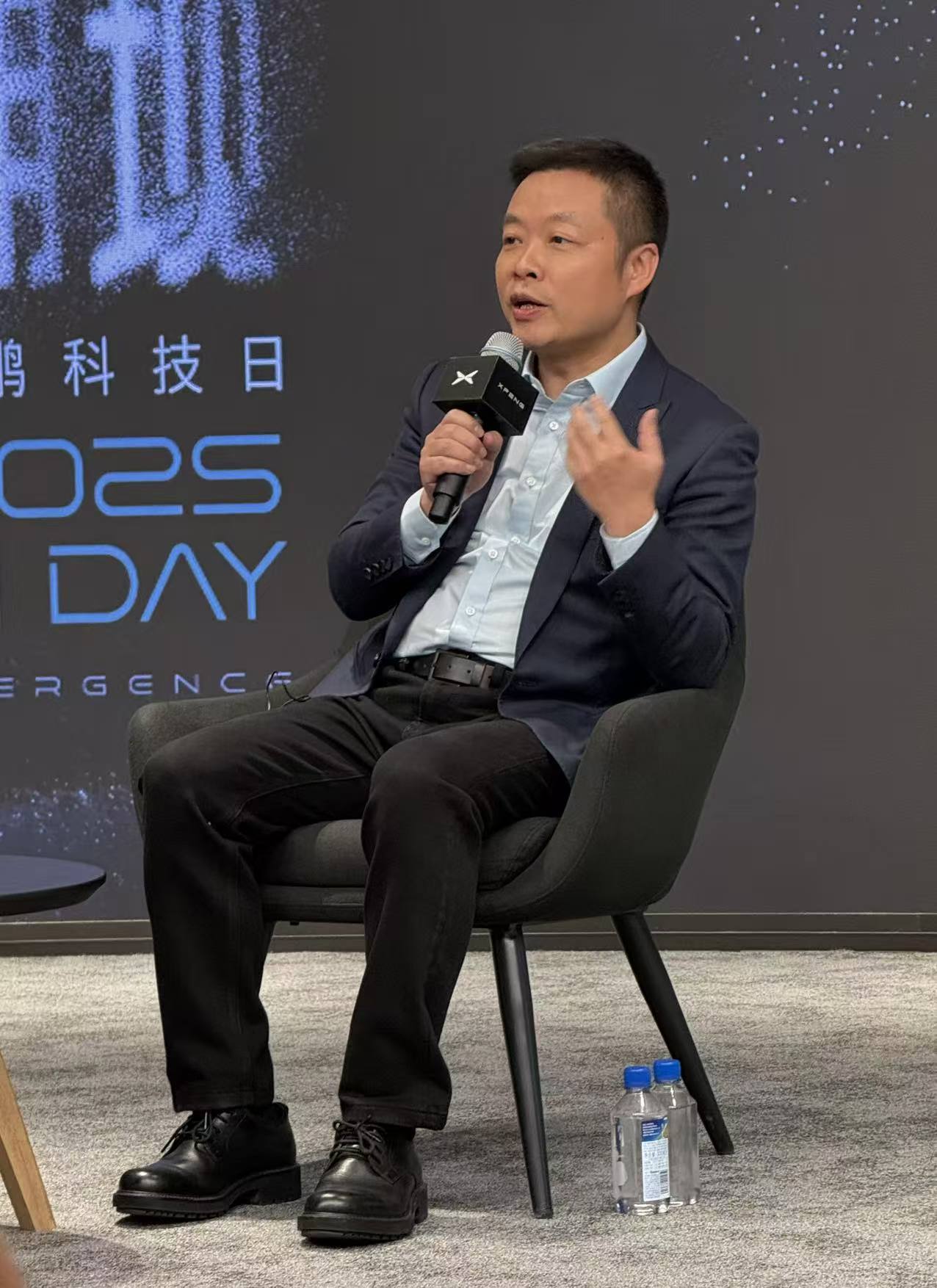
小鹏全新一代IRON机器人

Search documents
广汽、小鹏,“造人”新消息
Zhong Guo Ji Jin Bao· 2026-02-26 15:09
Core Insights - The automotive industry is increasingly venturing into robotics, with significant developments from companies like GAC Group and Xpeng Motors [2][11] - GAC Group has established Guangdong Huilun Technology Co., Ltd. to independently develop and scale its robotics business [7][9] - Xpeng Motors is aggressively pursuing the production of advanced humanoid robots, aiming for mass production by the end of 2026 [11][12] GAC Group Developments - GAC Group's Huilun Technology will operate independently, focusing on the research, production, and sales of humanoid robots [7][9] - The company has developed its fourth-generation humanoid robot and achieved breakthroughs in key components such as axial flux motors and joint modules [9] - GAC Group's stock price was reported at 8 CNY per share, with a total market capitalization of 68.47 billion CNY as of February 26 [9] Xpeng Motors Developments - Xpeng Motors plans to launch its next-generation IRON robot by the end of 2026, aiming to be the first to achieve mass production of high-end humanoid robots [11][12] - The company is establishing a full-chain production base for humanoid robots in the Guangtang Science and Technology Innovation City [12] - Xpeng Motors' stock price was reported at 67.50 HKD per share, with a total market capitalization of 129 billion HKD as of February 26 [12] Industry Challenges - The humanoid robot industry faces challenges such as insufficient high-quality training data and difficulties in achieving large-scale production [6][9] - There is a lack of a mature software and hardware supply chain, and the design model requires high capabilities in full-stack self-research and cross-industry integration [9]


再次回应“机器人质疑”!何小鹏哽咽:有时候心中的成见是一座大山
Xin Lang Ke Ji· 2025-11-06 13:30
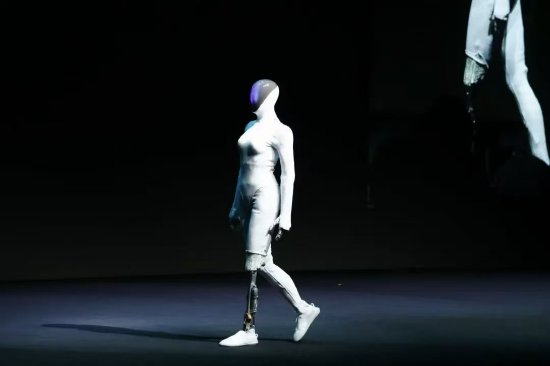
Group 1 - The core message of the news is that XPeng Motors is addressing skepticism regarding its new generation IRON robot, emphasizing the need to prove its authenticity as a robot rather than a human [2][3] - XPeng's CEO, He Xiaopeng, expressed emotional sentiments during the demonstration of the IRON robot, highlighting the challenges faced in gaining public trust in advanced robotics developed by a Chinese company [2][3] - The company showcased the IRON robot's capabilities, including its agile walking motion, while also responding to online criticisms suggesting it resembled a human [2] Group 2 - He Xiaopeng stated that the company aims to achieve mass production of advanced humanoid robots by the end of 2026, indicating a long-term commitment to the robotics sector [3] - The company believes that the future of the robotics industry will involve various companies developing different types of robots, with XPeng focusing on humanoid designs that allow for secondary development [3] - He Xiaopeng acknowledged the challenges of mass-producing robots compared to cars, but affirmed the company's determination to succeed in this endeavor [3]


与高德达成合作!小鹏汽车明年推3款Robotaxi车型 何小鹏:机器人、飞行汽车均计划明年量产
Mei Ri Jing Ji Xin Wen· 2025-11-05 14:50
Core Insights - Xiaopeng Motors plans to launch three Robotaxi models in 2026, featuring different seating capacities to meet diverse needs [1] - The Robotaxi will utilize four Turing AI chips, providing 3000 TOPS of effective computing power and designed for L4 autonomous driving [1][4] - Xiaopeng's strategy involves an open SDK for global partners to build a Robotaxi ecosystem, with Amap as the first partner [2] Group 1: Robotaxi Development - Xiaopeng's Robotaxi will adopt a pre-installed production model rather than the common retrofitting approach [2] - The Robotaxi will feature external interaction capabilities, allowing pedestrians to understand the vehicle's actions [2] - The company aims to balance the production of conventional vehicles and Robotaxi models to share BOM costs and R&D expenses [4] Group 2: Advanced Technology - The second-generation VLA model eliminates the "language translation" step, enabling direct generation of action commands from visual signals [5] - This model can utilize vast amounts of real driving video for training without manual data labeling, enhancing its ability to handle edge cases [5] - The second-generation VLA model will also be open-sourced for global commercial partners, with Volkswagen as the first strategic partner [5] Group 3: Future Products - Xiaopeng plans to introduce personal Robo models that will feature L4 and L2 driving capabilities [4] - The company is also set to mass-produce flying cars and humanoid robots, with the flying car designed for a range of over 500 kilometers and a cruising speed exceeding 360 kilometers per hour [5][7] - The humanoid robot will utilize solid-state batteries and three Turing AI chips, with a goal of mass production by the end of 2026 [7] Group 4: Market Potential - The global automotive market is valued at $10 trillion, while the market for robots is projected to reach $20 trillion, indicating a potentially larger growth trajectory for robotics [7] - Xiaopeng anticipates that the growth rate of flying cars will surpass that of traditional automobiles, suggesting a significant shift in market dynamics [7]