
小鹏第二代VLA模型

Search documents
汽车行业周报:数据中心分布式电源需求上行,产业链有望受益
KAIYUAN SECURITIES· 2026-03-02 00:24
Investment Rating - The investment rating for the automotive industry is "Positive" (maintained) [1] Core Insights - The demand for distributed power sources in North America is increasing due to the mismatch between the expansion of traditional power grids and the rapid construction of data centers, creating opportunities for on-site power generation and backup power equipment [5][16] - The automotive sector is experiencing a shift towards high-end luxury passenger vehicles, with expectations of increased performance as product matrices expand [8] - The automotive parts industry is expected to see an upward trend in profitability due to reduced competition and expansion in downstream markets [8] Summary by Sections 1. Data Center Distributed Power Demand - The power supply gap in North America is widening, leading to increased demand for distributed power sources [16] - Major tech companies are significantly increasing their capital expenditures for data centers, with a total expected expenditure of approximately $650 billion in 2026 [16][17] - The total installed capacity of data centers in the U.S. is projected to grow from about 17 GW in 2025 to approximately 50 GW by 2030 [16] 2. Industry News Highlights - Xiaopeng Motors announced that Volkswagen will be the first customer for its second-generation VLA model [34] - Huawei's autonomous driving system recorded over 470 million kilometers during the Spring Festival, equivalent to 190,000 round trips between Beijing and Shanghai [35] - NIO's chip subsidiary completed its first round of financing, raising over 2.2 billion RMB [37] 3. Market Performance - The automotive sector's performance this week saw the Shanghai Composite Index increase by 1.08%, while the automotive sector rose by 0.59%, ranking 23rd among A-share industries [7][43] - The passenger vehicle sector's PE valuation decreased, while commercial vehicles and automotive parts sectors saw an increase in PE valuations [43][46] 4. Investment Recommendations - For passenger vehicles, the recommendation includes Jianghuai Automobile and Seres, with Geely Automobile as a beneficiary [8] - In the automotive parts sector, recommended companies include Desay SV, Zhejiang Xiantong, and Meili Technology, with beneficiaries such as Weichai Power and Wufeng High-Tech [8]




汽车行业周报:数据中心分布式电源需求上行,产业链有望受益-20260301
KAIYUAN SECURITIES· 2026-03-01 14:15
Investment Rating - The investment rating for the automotive industry is "Positive" (maintained) [1] Core Insights - The demand for distributed power sources in North America is increasing due to the mismatch between the expansion of traditional power grids and the rapid construction of data centers, creating opportunities for on-site power generation and backup power equipment [5][16] - The automotive sector is experiencing a shift towards high-end luxury passenger vehicles, with expectations of increased performance as product matrices expand [8] - The automotive parts industry is expected to see an upward trend in profitability due to reduced competition and expansion in downstream markets [8] Summary by Sections 1. Data Center Distributed Power Demand - The power supply gap in North America is widening, leading to increased demand for distributed power sources [16] - Major tech companies are significantly increasing their capital expenditures for data centers, with a total expected expenditure of approximately $650 billion (about 4.58 trillion RMB) in 2026 [16][17] - The total installed capacity of data centers in the U.S. is projected to grow from about 17 GW in 2025 to approximately 50 GW by 2030 [16] 2. Industry News Highlights - XPeng Motors announced that Volkswagen will be the first customer for its second-generation VLA model [6] - Huawei's autonomous driving system recorded over 470 million kilometers during the Spring Festival, equivalent to 190,000 round trips between Beijing and Shanghai [6] - NIO's chip subsidiary completed its first round of financing, raising over 2.2 billion RMB [6] 3. Market Performance - The automotive sector's performance this week saw the CSI 300 index increase by 1.08%, while the automotive sector rose by 0.59%, ranking 23rd among A-share industries [7][43] - The passenger vehicle index decreased by 1.41%, with GAC Group and NIO leading the gains [7][46] - The commercial vehicle index increased by 1.41%, with Hailun Zhe and Weichai Power leading the gains [7][50] 4. Investment Recommendations - For passenger vehicles, the demand for domestic high-end luxury vehicles is exceeding expectations, with recommended stocks including JAC Motors and Seres, while benefiting stocks include Geely [8] - In the parts sector, companies like Desay SV and Zhejiang Xiantong are recommended due to expected profitability improvements [8]
何小鹏:第二代VLA像“老司机” 大众为其首发客户
Feng Huang Wang· 2026-02-26 07:04
Group 1 - The core point of the article is that XPeng Motors is set to launch its second-generation VLA model, with Volkswagen as its first customer, highlighting advancements in autonomous driving technology [2] - The second-generation VLA model will be showcased at an event on March 2, 2023, in Guangzhou, alongside the release of the 2026 XPeng X9 electric vehicle [2] - The new VLA model is designed to simulate different driving scenarios and includes features such as "Small Road NGP," which increases the average takeover mileage on complex roads by 13 times [2] Group 2 - The second-generation VLA is said to possess capabilities akin to "brain reasoning," allowing it to adapt to various driving conditions [2] - XPeng's Turing AI chip has also been secured by Volkswagen, indicating a strategic partnership in technology development [3]


小鹏汽车何小鹏:全自动驾驶拐点已到
Bei Jing Shang Bao· 2026-02-24 07:52
Core Viewpoint - Xiaopeng Motors is at a historical turning point, aiming to lead in the autonomous driving sector with its "DeepSeek" initiative by 2026, which is defined as the tipping point for fully autonomous driving [1] Group 1: Company Strategy - CEO He Xiaopeng emphasized the importance of 2026 for the company, marking it as the year when physical AI and globalization must be fully integrated [1] - The second-generation VLA (Vehicle Learning Architecture) is positioned as the first version aimed at the L4 fully autonomous driving era, transitioning high-level intelligent driving from niche to mainstream [1] Group 2: Partnerships and Business Development - Volkswagen will be the first customer for Xiaopeng's second-generation VLA model, indicating a significant partnership that could enhance the company's market presence [1] - The exploration in the field of physical AI is driving a qualitative change in the company's business structure, suggesting a shift towards becoming a globally-oriented embodied intelligence company [1]
新势力年终收官:零跑、小鹏全年销量同比增超100% 理想“失速”、蔚来下半年“反弹”
Xin Lang Cai Jing· 2026-01-01 11:41
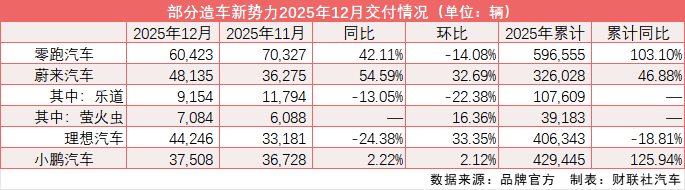
Core Viewpoint - The new energy vehicle market in 2025 did not experience a significant year-end surge, but several companies achieved substantial annual growth in deliveries, with Leap Motor and Xpeng Motors doubling their delivery volumes, while NIO saw a 46.88% year-on-year increase. Li Auto, however, struggled to regain its peak performance due to unmet expectations in its pure electric strategy [1]. Group 1: Company Performance - Leap Motor delivered 60,423 vehicles in December 2025, marking a year-on-year increase of 42.11%, and achieved a total of 596,555 deliveries for the year, a 103.1% increase, setting a new record for new energy vehicle sales [2][3]. - NIO's December deliveries reached 48,135 vehicles, a historical monthly high with a year-on-year growth of 54.59%. The total deliveries for 2025 amounted to 326,028 vehicles, reflecting a 46.88% increase [5]. - Li Auto delivered 44,246 vehicles in December, with a total of 406,343 for the year, representing an 18.81% decline. However, it became the first new energy brand to surpass 1.54 million cumulative deliveries [7]. - Xpeng Motors achieved 429,445 deliveries in 2025, a significant year-on-year increase of 125.94%, although December deliveries were 37,508, falling short of its quarterly guidance [9]. Group 2: Market Trends and Future Outlook - The absence of a year-end surge in the 2025 car market was confirmed by industry analysts, with government policies expected to stabilize the market in 2026 [11]. - Leap Motor aims to reach a delivery target of one million vehicles in 2026, with new models from the A and D series set to launch [3]. - NIO's ES8 model has become a key contributor to sales, with a significant number of orders expected to mitigate performance dips in early 2026 [5]. - Li Auto is focusing on expanding its overseas market presence to alleviate domestic competition pressures [7]. - Xpeng Motors plans to introduce seven new models with advanced configurations in 2026, aiming to significantly expand its market reach [9].



L3只是过渡?小鹏Robotaxi与L4同源,中国车企弯道超车倒计时
Jing Ji Guan Cha Bao· 2026-01-01 02:11
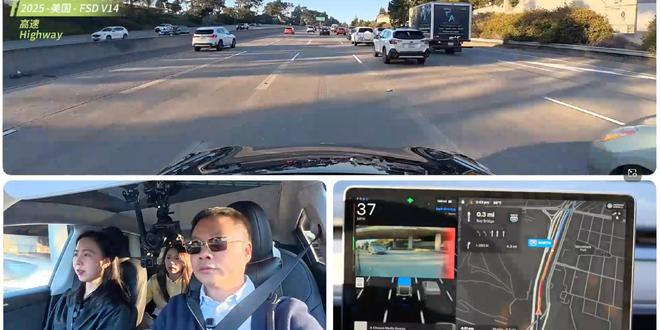
Core Insights - Physical AI is emerging as a new benchmark for assessing the core competitiveness of global tech companies, marking a shift from digital algorithm competition to real-world interactions [2][4] - The competition in autonomous driving, a key battleground for AI and the physical world, is characterized by a bipolar development trend led by the US and China [4][20] Industry Developments - Xiaopeng Motors' CEO He Xiaopeng plans to retest Tesla's FSD V14 in the US in December 2025, highlighting a collaborative dialogue between leading tech firms [2][3] - The second-generation VLA model from Xiaopeng is set to enter mass production, transforming industry consensus into practical momentum for change [3][20] Competitive Landscape - The competition in the physical AI sector is defined by a consensus on technology routes, with Tesla focusing on a pure vision approach and Xiaopeng developing a full-stack self-research system [4][10] - Both companies are moving away from the contentious L3 transitional phase, aiming for L4 capabilities directly, which reflects a collective understanding of the limitations of L3 [13][20] Technological Innovations - Xiaopeng's second-generation VLA model eliminates the language translation step, allowing for direct generation of driving commands from visual signals, significantly enhancing response speed and decision-making accuracy [8][10] - The model's training data volume reaches 100 million clips, equivalent to 65,000 years of human driving experience, enabling it to handle complex scenarios effectively [17][18] Market Positioning - Xiaopeng's full-stack self-research system creates a competitive barrier, allowing for rapid iterations and deployment of advanced models, with a cloud-based model supporting 72 billion parameters [8][18] - The unique challenges of Chinese road conditions have become a strategic asset for local companies, enhancing their AI capabilities and providing a rich training environment [17][20] Future Outlook - 2026 is projected to be a pivotal year for Xiaopeng, with plans to launch L4-level vehicles and Robotaxis, positioning the company as a key player in defining the next generation of AI paradigms [20] - The collaboration and competition between Tesla and Xiaopeng are expected to drive innovation and set industry standards, with both companies aiming for a fair competitive landscape in the global market [9][20]


“AI+生态”双轮驱动 小鹏汽车开拓汽车市场新蓝海
Zheng Quan Ri Bao Wang· 2025-11-18 05:39
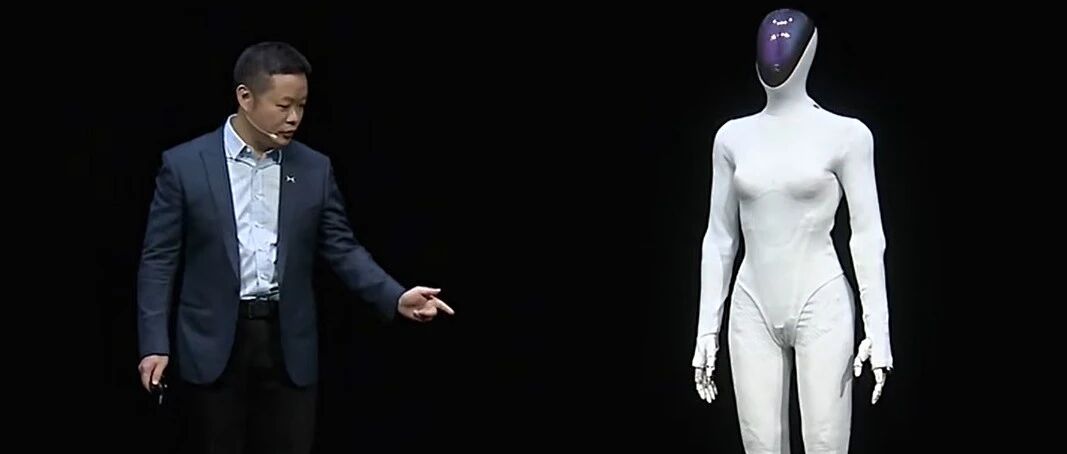
Core Insights - Xiaopeng Motors reported record-high operational metrics for Q3 2025, with deliveries reaching 116,000 units, a year-on-year increase of 149.3%, and revenue of 20.38 billion yuan, up 101.8%, with a gross margin surpassing 20% for the first time at 20.1% [1] Group 1: "One Car, Dual Energy" Strategy - The "One Car, Dual Energy" strategy aims to reshape the electric vehicle product landscape, introducing the Kunpeng Super Range Extender technology to address five key issues faced by traditional range extender users [2] - The Xiaopeng X9 Super Range Extender, the first model featuring this technology, has become the world's longest-range seven-seater vehicle, generating unprecedented user interest and achieving nearly four times the pre-sale orders compared to the last pre-sale [2] - The company plans to launch seven models with Super Range Extender configurations by 2026, including three models in Q1 2026, addressing user pain points with longer electric range and faster charging [2][3] Group 2: Market Performance and Projections - Xiaopeng Motors anticipates a strong growth trajectory, projecting Q4 2025 total deliveries between 125,000 and 132,000 units, representing a year-on-year increase of 36.6% to 44.3%, with expected revenue of 21.5 billion to 23 billion yuan, up approximately 33.5% to 42.8% [3] Group 3: Physical AI Ecosystem - The company is transitioning to a physical AI technology framework, positioning itself as a global explorer in embodied intelligence, with significant investments in AI models, computing power, and data [4] - The second-generation VLA model will have ten times the parameters of its predecessor, enhancing safety and user experience in intelligent driving [4] - Xiaopeng Motors adopts an open ecosystem strategy, with the second-generation VLA model being made available to global partners, including Volkswagen as the first customer [4][5] Group 4: Future Applications and Market Potential - The company views Robotaxi and humanoid robots as the two primary application scenarios for physical AI, planning to launch three Robotaxi models in 2026 and operate trials in China [5] - The new generation IRON robot, designed with a human-like form, is expected to achieve comprehensive capability integration by Q2 2026 and mass production by the end of 2026, with long-term sales potential exceeding 1 million units annually by 2030 [5] - Xiaopeng Motors is confident in becoming a leader in physical AI, aiming to create greater value for global customers and shareholders [5]
小鹏美女机器人自证“非人扮演”,最懂直男心?
首席商业评论· 2025-11-10 06:51
Core Viewpoint - The article discusses the recent launch of the IRON robot by Xiaopeng Motors, highlighting its humanoid design and the significant media attention it has garnered, while also addressing the skepticism surrounding its capabilities and production readiness [3][5][11]. Group 1: Xiaopeng's Robot Launch - Xiaopeng Motors unveiled the IRON robot, which resembles a humanoid figure, generating excitement comparable to major tech events like those of Elon Musk [3][5]. - The launch event led to a surge in Xiaopeng's stock price, increasing by 14%, indicating a positive market reaction and renewed interest from institutional investors [5][9]. - The event was strategically designed to capture public interest, with social media discussions reaching over 200 million views [5][9]. Group 2: Technical Aspects of the IRON Robot - The IRON robot features a fully humanoid structure, including a skeletal system that mimics human spine curvature, allowing for natural movements [14]. - It incorporates innovative materials, such as lattice structures for muscle layers, providing both rigidity and flexibility, and a skin-like covering with tactile sensors for emotional interaction [14][21]. - Xiaopeng's approach to robotics emphasizes the need for humanoid designs to fit into human-centric environments, marking a significant shift from previous four-legged designs [11][14]. Group 3: Industry Context and Competition - The automotive industry is increasingly venturing into humanoid robotics, with companies like Xiaomi and FAW Group also developing their own humanoid robots [16][18]. - Xiaopeng Motors leverages its existing automotive technology and expertise to reduce research and development costs in the robotics sector, as both fields share significant technological overlaps [18][19]. - Despite the advancements, Xiaopeng's automotive business is still facing challenges, including a reported net loss of 1.14 billion yuan in the first half of the year [22][25].
与高德达成合作!小鹏汽车明年推3款Robotaxi车型 何小鹏:机器人、飞行汽车均计划明年量产
Mei Ri Jing Ji Xin Wen· 2025-11-05 14:50
Core Insights - Xiaopeng Motors plans to launch three Robotaxi models in 2026, featuring different seating capacities to meet diverse needs [1] - The Robotaxi will utilize four Turing AI chips, providing 3000 TOPS of effective computing power and designed for L4 autonomous driving [1][4] - Xiaopeng's strategy involves an open SDK for global partners to build a Robotaxi ecosystem, with Amap as the first partner [2] Group 1: Robotaxi Development - Xiaopeng's Robotaxi will adopt a pre-installed production model rather than the common retrofitting approach [2] - The Robotaxi will feature external interaction capabilities, allowing pedestrians to understand the vehicle's actions [2] - The company aims to balance the production of conventional vehicles and Robotaxi models to share BOM costs and R&D expenses [4] Group 2: Advanced Technology - The second-generation VLA model eliminates the "language translation" step, enabling direct generation of action commands from visual signals [5] - This model can utilize vast amounts of real driving video for training without manual data labeling, enhancing its ability to handle edge cases [5] - The second-generation VLA model will also be open-sourced for global commercial partners, with Volkswagen as the first strategic partner [5] Group 3: Future Products - Xiaopeng plans to introduce personal Robo models that will feature L4 and L2 driving capabilities [4] - The company is also set to mass-produce flying cars and humanoid robots, with the flying car designed for a range of over 500 kilometers and a cruising speed exceeding 360 kilometers per hour [5][7] - The humanoid robot will utilize solid-state batteries and three Turing AI chips, with a goal of mass production by the end of 2026 [7] Group 4: Market Potential - The global automotive market is valued at $10 trillion, while the market for robots is projected to reach $20 trillion, indicating a potentially larger growth trajectory for robotics [7] - Xiaopeng anticipates that the growth rate of flying cars will surpass that of traditional automobiles, suggesting a significant shift in market dynamics [7]

大众成为小鹏第二代VLA首发客户
Feng Huang Wang· 2025-11-05 07:53
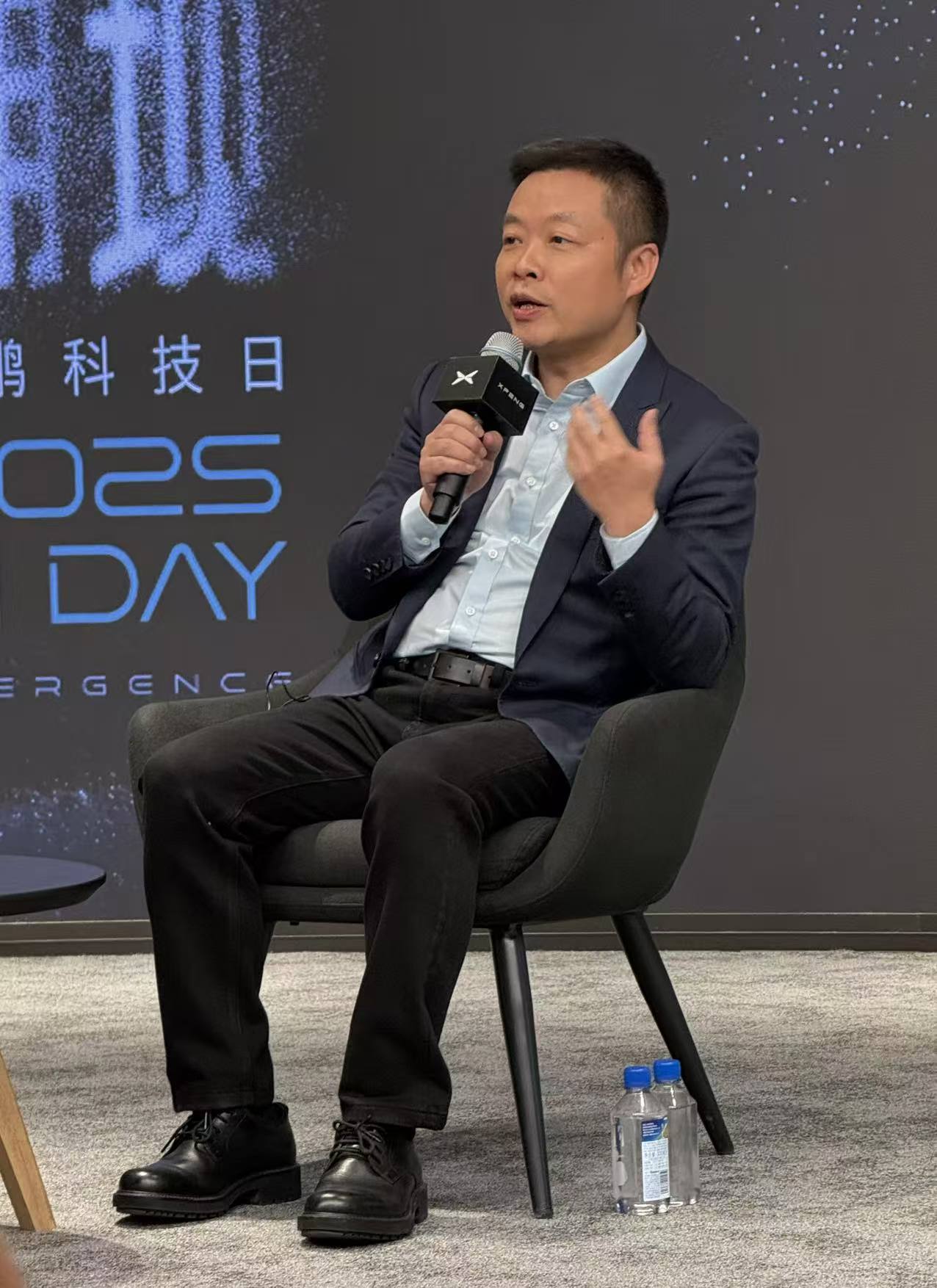
Core Insights - Xiaopeng Motors unveiled its second-generation VLA model at the 2025 Xiaopeng Technology Day, with Volkswagen as the launch customer for this model [1] - The Xiaopeng Turing AI chip has been designated for Volkswagen, indicating a strategic partnership between the two companies [1] Company Developments - The introduction of the second-generation VLA model signifies Xiaopeng Motors' commitment to innovation and expansion in the electric vehicle market [1] - Partnering with Volkswagen as the first customer highlights the growing collaboration between traditional automotive manufacturers and electric vehicle startups [1] Industry Trends - The announcement reflects a broader trend in the automotive industry where established companies are increasingly collaborating with tech-driven firms to enhance their product offerings [1] - The integration of advanced AI technology, such as the Xiaopeng Turing AI chip, showcases the industry's shift towards smarter, more connected vehicles [1]