小黄蜂

Search documents
无人化浪潮下环卫行业变革:盈峰环境的技术落地与市场拓展之路
Zheng Quan Shi Bao Wang· 2025-12-25 10:26
Core Insights - The traditional sanitation industry is facing intensified pain points, while the penetration of automation technology is pushing the industry towards a commercial critical point, with the space for intelligent cleaning gradually being released [1][2] - Yingfeng Environment has launched the "Swarm" intelligent connected cleaning robot series, marking an important exploration direction for the industry's intelligent transformation [1] - The "Swarm" system has achieved large-scale deployment in 40 cities across 21 provinces in China, indicating a new phase of commercial development in the domestic sanitation automation sector [1][8] Industry Trends - The sanitation service market is expanding, with a projected market size of approximately 458.5 billion yuan by 2025, reflecting a year-on-year growth of 7% [2] - The industry is expected to see a compound annual growth rate of 15.56% from 2025 to 2029, reaching 644.2 billion yuan by 2029 [2] - Despite steady overall market growth, the penetration rate of intelligent cleaning remains low, suggesting significant room for growth driven by policy encouragement and cost reduction in sanitation applications [2] Company Performance - Yingfeng Environment has maintained the top position in environmental equipment sales for 24 consecutive years, with a market share of 18.8% in the first half of 2025 [3] - In the new energy sanitation equipment segment, the company holds a market share of 32.6%, reinforcing its leading position [3] - The company signed 31 new city service projects in the first half of 2025, with a total contract value of 2.335 billion yuan, ranking second in the industry [3] Technological Advancements - The "Swarm" system aims to transform sanitation operations from "mechanical replacement" to "intelligent collaboration," enhancing operational efficiency by up to 300% [4] - The series includes three core products designed for various urban scenarios, with the largest model, the 18-ton "Big Bumblebee," filling a gap in high-intensity urban cleaning [4][5] - The system's effective operation relies on the "Hivemind" platform for AI-driven decision-making and a supporting charging station for autonomous energy replenishment [5] Market Validation - The "Swarm" series has achieved a 95% autonomous cleaning coverage rate, addressing common issues in traditional sanitation operations [7] - The economic value of the "Swarm" products has been validated, with a single "Little Bumblebee" robot capable of replacing four sanitation workers [7] - The company has successfully transitioned from pilot projects to large-scale applications, marking a significant milestone in the evolution of its automation services [8]

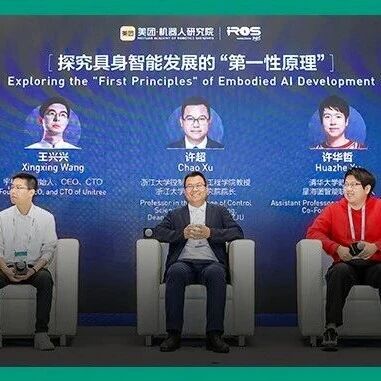
直击IROS现场:宇树禾赛自变量杭州论剑,美团C位攒局
具身智能之心· 2025-10-23 00:03
Core Viewpoint - The article emphasizes the importance of "embodied intelligence" in transforming the retail industry, with Meituan leading the way in integrating technology into real-world scenarios to enhance service efficiency and quality [9][10][11]. Group 1: Meituan's Strategy and Innovations - Meituan's strategic shift from "retail" to "retail + technology" highlights the integration of technology as a means to empower retail scenarios [9][10]. - The company is pioneering in the use of drones and autonomous delivery vehicles, being the only one in China authorized by the Civil Aviation Administration to operate drones nationwide, even at night [16][21]. - Meituan's focus on "autonomy" aims to drive transformation in the retail sector, showcasing innovations like drone delivery of food and rapid delivery services in various environments [14][15][18]. Group 2: Insights from Industry Experts - Various industry leaders at the conference discussed the need for embodied intelligence to address real-world challenges, emphasizing that technology should serve practical purposes rather than being an end in itself [5][6][12]. - The concept of "Generative Adversarial Transduction" (GAT) was introduced, which allows machine learning models to iteratively correct each other, enhancing both learning and stability [25][26]. - The discussion also covered the importance of infrastructure in supporting the robotics industry, with a focus on quality, performance, and cost management in hardware development [38][42][46]. Group 3: Theoretical Frameworks and Future Directions - Theoretical frameworks such as "Non-vector Space Control" and "Perceptive Control" were proposed, suggesting that robots should learn to act based on sensory inputs rather than relying solely on pre-defined paths [29][33]. - The need for a foundational model for embodied intelligence was emphasized, distinguishing it from existing AI applications and highlighting the importance of understanding the physical world [50][51][52]. - The article concludes with a vision for the future of robotics, where machines possess curiosity and the ability to adapt, ultimately leading to a harmonious coexistence with humans [106][108][110].