
山东省古籍数字资源平台

Search documents
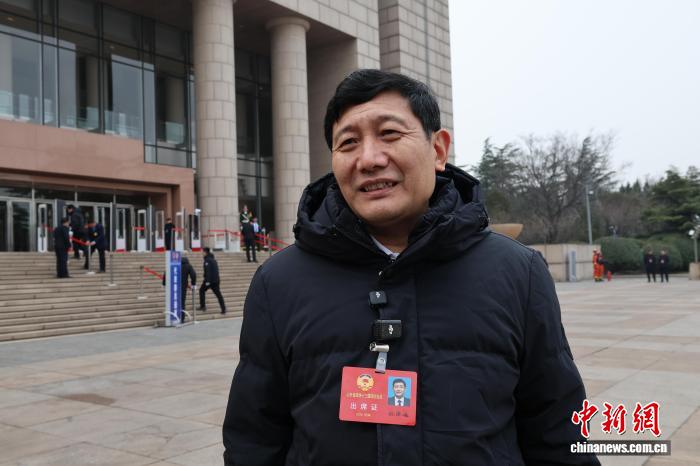
山东省政协委员杜泽逊:数字化赋能古籍“活”在当下
Zhong Guo Xin Wen Wang· 2026-01-28 06:01
Core Viewpoint - The digitization of ancient texts is essential for their preservation and public accessibility, transforming them from dormant artifacts into active cultural resources [1][3]. Group 1: Digitalization Efforts - Shandong Province has approximately 120,000 ancient texts and nearly 2 million volumes, with ongoing efforts to digitize and publicly share these resources through a dedicated digital platform [3]. - The establishment of the digital resource platform aims to break temporal and spatial limitations, allowing more ancient texts to reach the public [3]. Group 2: Specific Projects - The team led by Du Zexun is working on the comprehensive organization and research of the "Yongle Dadian," which consists of over 20,000 volumes and is considered the largest encyclopedia in human history [3]. - Currently, only about 800 volumes and over 400 copies of the "Yongle Dadian" exist, representing only 4% of the original work, with ongoing efforts to complete modern punctuation and editing [3]. - The "Qilu Wenkong" project, initiated in 2022, aims to compile and publish the works of Shandong scholars over a decade, with the first 100 volumes published in 2023 and plans for further releases in 2024 and 2025 [5]. Group 3: Challenges and Discoveries - The manuscript collection process is often challenging, as illustrated by the discovery of a complete manuscript of "Ranzhi Ji," which had been lost for over 300 years, now set for publication in 2026 [5]. - The digitization and publication of these ancient texts are expected to enhance their accessibility and relevance in contemporary society [6].

数智技术重塑版权产业生态
Jing Ji Guan Cha Wang· 2025-10-17 05:29
Core Insights - The 10th China International Copyright Expo showcased the application of AI technology across various copyright sectors, emphasizing its role in creation, protection, and transaction [1] Group 1: AI Empowering Content Creation - Qingdao Lingke Cultural Communication Co., Ltd. introduced "Qingqing Hero's Art Exhibition," highlighting AI as a significant design tool, although human intervention remains crucial for creativity and aesthetics [2] - The AIGC micro-short drama "Coordinates" was launched, demonstrating a fully AI production model that significantly reduces content creation time by over 60% [2] - The online literature giant, Yuewen Group, launched the "Miaobi Tongjian" feature to assist writers by analyzing extensive online literature content in real-time [3] Group 2: Online and Offline Synergy in Copyright Transactions - Digital technologies are enhancing copyright circulation and transactions, exemplified by the Dunhuang Digital Resource Library, which offers over 11,130 elements from Dunhuang murals for user access [4] - The Shandong Province Ancient Books Digital Resource Platform integrates resources from 17 institutions, allowing users to conduct advanced searches and access ancient texts [4] Group 3: Building Copyright Protection Systems - New technologies are being utilized to improve copyright protection and management efficiency, with the China Copyright Association employing blockchain and AI to combat infringement [5][6] - The "China Copyright Chain" has successfully supported copyright protection for major events, including the Beijing Winter Olympics and the Paris Olympics [6] - The Yellow River International Copyright Comprehensive Service Platform aims to provide a one-stop service for copyright registration and transactions across various creative fields [6] Group 4: Legal Challenges in AI Application - The use of AI in creative processes raises legal challenges, with experts advocating for a cautious approach to ensure human authorship remains central [7] - Copyright laws should provide appropriate protection for AI-generated content while maintaining a balance between innovation and legal frameworks [7]

山东打造文化“两创”新标杆,推动文明交流互鉴——儒风传千载,海岱弦歌新
Da Zhong Ri Bao· 2025-09-27 01:33
Core Insights - The 11th Nishan World Civilization Forum was held in July, showcasing a platform for experts and scholars from over 70 countries to exchange ideas [1] - The 2025 China International Confucius Culture Festival, themed "Great Confucius, Harmony and Coexistence," aims to promote cultural heritage and tell China's story to the world [1] Group 1: Cultural Initiatives - Shandong province is deeply engaged in promoting traditional Chinese culture, integrating cultural tourism, and enhancing public cultural services [1][2] - The establishment of a digital resource platform for ancient texts in Shandong allows for easy access and full-text search capabilities, enhancing research opportunities [2] - Shandong has led significant national projects related to ancient texts, showcasing its rich cultural heritage and commitment to preserving traditional literature [2] Group 2: Educational and Research Development - The collaboration between Confucius and Mencius research institutes and 16 renowned universities has resulted in the enrollment of 2,553 graduate students [3] - The establishment of various overseas research centers and the implementation of programs like the "Nishan Scholar" initiative highlight Shandong's commitment to global dialogue on Confucianism [3] Group 3: Community Engagement and Social Governance - Local initiatives, such as community volunteer programs for the elderly, reflect Shandong's efforts to promote traditional virtues and social harmony [4][5] - The "Lake-based Propaganda" initiative in Weishan County exemplifies innovative community engagement strategies that integrate cultural education into local governance [5] Group 4: Cultural Exchange and Tourism - Shandong is leveraging its rich cultural resources to enhance tourism, with initiatives like the "Hello Jining" campaign promoting cultural exchanges and attracting international visitors [7][8] - The province's cultural achievements are not only revitalizing historical artifacts but also creating new products and services that support the local economy [7][8] Group 5: International Collaboration - The Nishan World Civilization Forum serves as a platform for international dialogue, showcasing Chinese culture and enhancing its global influence [8] - Shandong's initiatives to invite international scholars and promote cultural exchanges aim to strengthen mutual understanding and appreciation of diverse civilizations [8]
戴綦宏:为“山东省古籍数字资源平台”点赞
Jing Ji Guan Cha Bao· 2025-06-08 08:01
Core Viewpoint - The "Shandong Province Ancient Books Digital Resource Platform" has gained significant attention since its launch on May 29, showcasing advantages over similar platforms in terms of functionality and resource availability [1][2]. Group 1: Functionality and Features - The platform enables full-text search capabilities, allowing users to easily locate information within ancient texts, which is a significant improvement over previous platforms that only provided image scans [1]. - It features a user-friendly interface with a directory on the left and a full-text search box on the right, facilitating efficient navigation and research [1]. - The platform is expected to become an essential tool for academia as more resources are added in the future [1]. Group 2: Resource Availability - The platform highlights the rich collection of ancient texts from Shandong Province, including contributions from various local libraries, thus showcasing the region's cultural heritage [1][2]. - It includes a variety of local literature that reflects the unique characteristics of Qilu culture, positioning the platform as a key promoter of Shandong's traditional culture [1][2]. Group 3: Quality of Digital Content - The platform provides high-quality, color, and high-definition images of ancient texts, which are crucial for detailed studies in bibliology [2]. - The clarity of the electronic images allows for a comprehensive examination of the physical attributes of the texts, such as paper color and ink density, placing it among the top platforms in the country for image quality [2]. - Future plans include the gradual release of rare ancient texts and the establishment of a unified catalog for ancient books across the province [2].