
巡航摩托车

Search documents
杭州外贸在“一带一路”打开新空间
Mei Ri Shang Bao· 2026-02-12 22:22
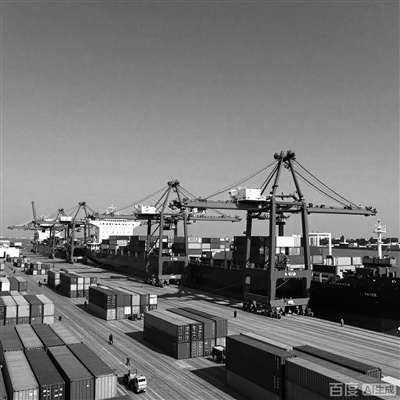
Group 1 - Hangzhou Saturn Power Technology Co., Ltd. has successfully exported a batch of cruising motorcycles and all-terrain vehicles to countries along the Belt and Road Initiative, including Austria and Malaysia [2] - The company, recognized as a national-level specialized and innovative "little giant," focuses on the research and manufacturing of large-displacement motorcycles and all-terrain vehicles, gradually establishing a foothold in the international market [2] - Due to customer customization demands, the company has shifted its import-export business model from general trade to processing trade, effectively reducing operational costs and allowing more resources to be allocated to research and production [2] - By 2025, the company's export volume to Belt and Road countries is expected to reach 390 million yuan, with a year-on-year increase of over 100% [2] Group 2 - Yunda Energy Technology Group Co., Ltd., a national-level "green factory" and high-tech enterprise, has successfully implemented its products in over 600 wind farms globally [2] - The company has capitalized on the low-carbon development trend and seized opportunities in emerging markets along the Belt and Road Initiative [2] - By 2025, the company is projected to export wind power products worth 1.48 billion yuan to Belt and Road countries, representing a year-on-year increase of over 10 times [3] Group 3 - The Qianjiang Customs has implemented a targeted support mechanism to address the challenges faced by companies in exporting large equipment, such as transportation and maintenance difficulties [3] - The customs has provided detailed explanations of national customs integration and transportation policies, optimizing logistics paths to significantly reduce transportation time and costs [3] - By 2025, the total import and export volume of Hangzhou City to Belt and Road countries is expected to reach 467.48 billion yuan, with a year-on-year growth of 10.5% [3]


看好国产液冷链的替代机遇;中国宠食开启黄金时代
Mei Ri Jing Ji Xin Wen· 2025-08-07 01:19
Group 1: Pet Food Industry - The pet food industry in China is entering a golden era, driven by product innovation, brand matrix, and channel iteration [1] - On the product side, general grain innovation is stimulating demand, with popular categories strengthening the deep binding between categories and brands [1] - Functional pet food, such as prescription diets, represents high price, high profitability, and high customer loyalty, with a projected global CR3 of 97% in 2024 [1] - The brand matrix is essential, with a projected global CR5 of 52% for pet food companies/brands in 2024, indicating a shift from single large brands to multiple brands in China [1] - Capital investment is crucial, with Mars and Nestle's cumulative acquisitions reaching $8.3 billion and $16 billion respectively [1] - Local specialty channels are key for the rise of brands in various countries, with a shift from efficiency-driven to a balance of efficiency and experience in domestic channel evolution [1] Group 2: Liquid Cooling Chain - The AIDC liquid cooling sector is expected to see upward investment opportunities due to continuous enhancements in overseas computing power and the iteration of cooling solutions [2] - Domestic liquid cooling chains are poised to leverage new technology windows and decentralized decision-making to penetrate overseas markets [2] - The breakthrough in domestic computing chips is anticipated to create replacement opportunities for domestic liquid cooling chains [2] Group 3: Motorcycle Export - Chinese motorcycle companies are actively expanding overseas, with rapid increases in market share, emphasizing the importance of international expansion [3] - The high cost-performance ratio of certain models, such as scooters and ADV models, has proven effective in capturing market share, while other models have yet to initiate price competition strategies [3] - In the medium to long term, as the product matrix of Chinese companies improves, single Chinese brands could achieve annual sales of 150,000 to 200,000 units in the European and American markets, and approximately 700,000 and 600,000 units in Latin America and ASEAN markets respectively [3]

