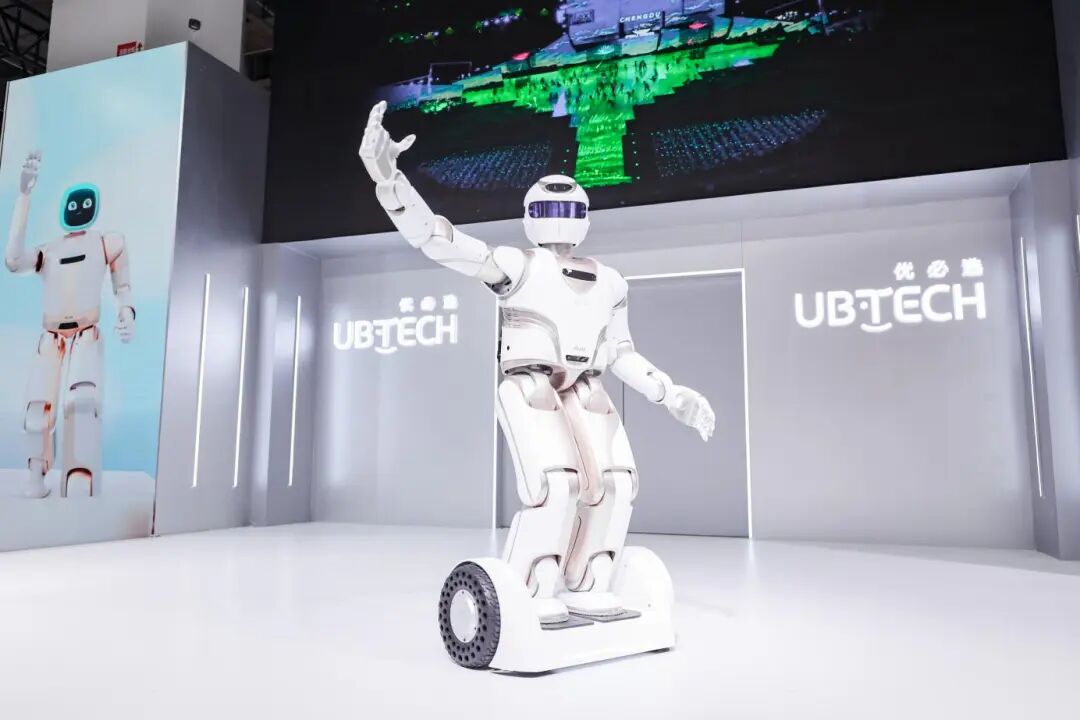
工业人形机器人Walker S

Search documents
谁说中国机器人只会唱歌跳舞?优必选谭旻:没有真正通过商业验证的量产交付都没有意义
Xin Lang Cai Jing· 2025-12-12 09:13
Core Viewpoint - The recent controversy surrounding a video of UBTECH's humanoid robot formation highlights the industry's deep interest in humanoid robot development and the potential for creating commercial value as these robots transition from science fiction to real-world applications [3][15]. Industry Insights - The perception that "Chinese robots only perform while American robots work" is overly simplistic, as over 80% of the world's most advanced factories are newly built in China, providing fertile ground for the humanoid robot industry [3][15]. - The humanoid robot industry is shifting focus from entertainment to practical applications, which is seen as a healthier direction for sustainable development [3][15]. Technological Development - UBTECH has a 13-year history of building an open ecosystem for collaboration with various AI models, indicating a commitment to testing different models' advantages for humanoid robots [4][16]. - The next significant breakthrough in AI models for humanoid robots will likely involve integrating computer vision, as 80% of information exchange occurs visually rather than verbally [5][17]. Competitive Landscape - UBTECH has launched multiple iterations of its industrial humanoid robot, Walker, with the latest model, Walker S2, capable of autonomous battery swapping, showcasing rapid development and adaptation to real-world applications [6][19]. - While American companies focus heavily on AI investment, Chinese humanoid robot companies are rapidly developing practical applications, leveraging the largest smart manufacturing scenarios globally [7][18]. Market Goals - UBTECH aims to deliver between 500 to 1,000 robots this year, with targets of 3,000 to 5,000 next year and 10,000 by 2027, emphasizing the importance of commercial validation before scaling production [9][21]. - The trend of entertainment-focused robots is seen as a temporary phase, with a shift towards real-world applications being encouraged by government policies [10][24]. Future Outlook - The Chinese humanoid robot industry has the potential to become a standard-setting entity, benefiting from advancements in electric motor technology and the largest smart manufacturing applications globally [8][20]. - Embracing challenges and opportunities in the humanoid robot sector could lead to the formation of a new trillion-dollar industry cluster in China [11][24].


10亿美金注资优必选,一条通往中东的“机器人新丝路”
3 6 Ke· 2025-09-16 00:37
Core Insights - UBTECH, known as the "first humanoid robot stock," has secured a strategic partnership agreement worth $1 billion with Infini Capital, marking a significant financial milestone since its listing at the end of 2023 [1][3] - This partnership is not merely a financing deal but a strategic alliance aimed at addressing UBTECH's fundamental challenges, including ongoing substantial losses and cash burn [3][4] Group 1: Strategic Alliance and Financial Structure - The $1 billion agreement features a flexible capital support framework, allowing UBTECH to access funds through various financial instruments, including stock placements and convertible bonds [3][4] - This arrangement provides UBTECH with significant financial flexibility, enabling it to fund large-scale R&D, capacity expansion, and market positioning without resorting to dilutive financing [4][6] - Infini Capital's commitment to potentially increase its stake in UBTECH signals a long-term partnership rather than short-term speculation [4][6] Group 2: Investment Motivation and Market Expansion - Infini Capital aims to connect cutting-edge Chinese technology with substantial Middle Eastern capital, positioning itself as a key player in the Chinese AI industry [6][7] - The partnership will establish a joint venture to promote UBTECH's technology and products in the Middle East, creating a regional headquarters and a "super factory" for humanoid robots [6][7] - This strategic move opens up a new, capital-rich market for UBTECH while diversifying its production and innovation bases to mitigate geopolitical risks [6][7] Group 3: Financial Performance and Challenges - Despite revenue growth, UBTECH faces a significant financial challenge, with a net loss of 439 million RMB in the first half of 2025, although this is an improvement from the previous year's loss [9][11] - The company reported a 27.5% year-on-year increase in revenue, reaching 621 million RMB, but its business model has yet to achieve self-sustainability [9][11] - UBTECH's cash flow remains negative, with a net cash outflow of approximately 884 million RMB in 2024, highlighting the ongoing cash burn issue [13][14] Group 4: Industry Landscape and Competitive Position - The humanoid robotics sector is entering a critical phase, with government support in China driving industry growth and positioning UBTECH as a leader due to its advanced hardware technology [14][16] - UBTECH holds 2,790 authorized patents, providing a competitive edge in the development of humanoid robots, particularly in servo motor technology [14][16] - However, challenges remain, including competition from well-funded startups and tech giants, as well as the need for advancements in software capabilities [16][17]
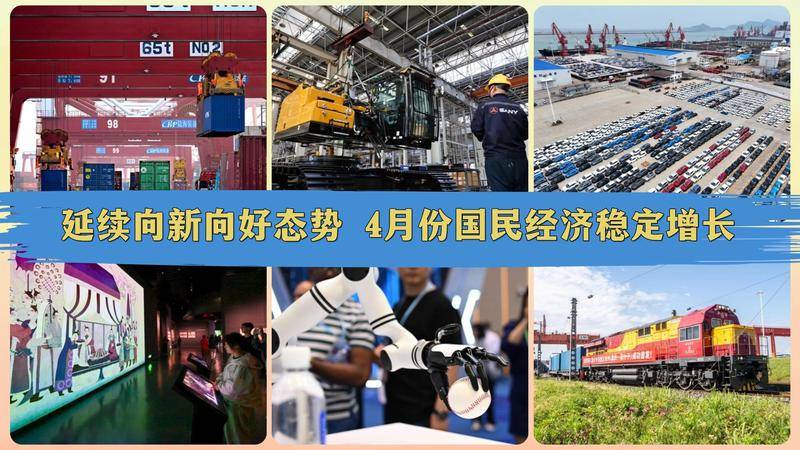
延续向新向好态势 4月份国民经济稳定增长
Sou Hu Cai Jing· 2025-05-20 07:42
Economic Growth and Stability - In April, China's economy demonstrated resilience and stability despite external shocks and internal challenges, with macro policies working in coordination to support growth [3] - The industrial production saw a significant increase, with the industrial added value growing by 6.1% year-on-year, driven by robust performance in equipment manufacturing and high-tech manufacturing sectors [5][13] Industrial Performance - Equipment manufacturing added value increased by 9.8%, while high-tech manufacturing added value grew by 10%, outperforming the overall industrial growth by 3.7 and 3.9 percentage points respectively [5] - Shanghai SANY Heavy Machinery Co. reported a strong sales performance, with expectations to produce over 5,000 medium-sized excavators in the first four months, reflecting a growth of over 10% year-on-year [7] Consumer Market Dynamics - The total retail sales of consumer goods increased by 5.1% year-on-year in April, indicating a recovery in both goods and service consumption [9] - The service retail sector also showed growth, with a 5.1% increase in the first four months, highlighting the effectiveness of government initiatives to boost consumption [9][11] Foreign Trade Resilience - China's total goods import and export value reached 38,391 billion yuan in April, marking a year-on-year growth of 5.6%, with exports increasing by 9.3% and imports by 0.8% [14] - The export performance of private enterprises and high-tech products has been notably strong, showcasing the resilience of China's foreign trade [19] Service Sector Growth - The national service production index grew by 6.0% year-on-year in April, indicating the service sector's critical role in stabilizing economic growth [13] - The expansion of the service industry is expected to enhance employment resilience and improve residents' income expectations, providing a foundation for consumer recovery [13] Export Market Expansion - Zhongtong Bus's overseas business has shown remarkable results, with significant contracts signed for electric buses in various international markets, enhancing the influence of "Made in China" [16]