巨灾险

Search documents
你的房屋买保险了吗?
经济观察报· 2025-11-27 12:37
Core Viewpoint - The article highlights the importance of insurance coverage in residential safety, particularly in light of the recent fire incident at Hong Kong's Hongfuyuan, which resulted in significant casualties and raised concerns about housing safety and risk management [2][3]. Group 1: Incident Overview - On November 26, 2025, a fire broke out in multiple residential buildings at Hongfuyuan, New Territories, Hong Kong, leading to 55 fatalities [2]. - The incident has prompted discussions regarding the adequacy of insurance coverage for residential properties and the need for improved safety measures [3]. Group 2: Insurance Coverage Details - China Taiping Insurance (Hong Kong) Co., Ltd. provided comprehensive insurance for the Hongfuyuan maintenance project, including construction all-risk insurance, employee compensation insurance, third-party liability insurance, property all-risk insurance, and public liability insurance [3][4]. - The insurance plan for the Hongfuyuan estate for the period from January 1, 2025, to December 31, 2026, includes a total premium of HKD 337,700 for four types of insurance [4]. Group 3: Insurance Premium Breakdown - The building and common area property insurance has a coverage limit of HKD 2 billion, with a premium of HKD 240,200 for two years [5]. - Public liability insurance covers third-party personal injury and liability, with limits of HKD 10 million and HKD 200 million, respectively, and corresponding premiums of HKD 20,000 and HKD 70,000 for two years [5]. - Cash insurance covers various scenarios with a total premium of HKD 10,507 for two years, while collective personal accident insurance has a premium of HKD 3,903.9 for two years [5]. Group 4: Broader Insurance Market Context - The article discusses the limited development of home insurance in mainland China compared to Hong Kong, noting that while new housing quality defect insurance is mandatory, there is no compulsory insurance system for existing homes [6]. - Home insurance in China has seen significant growth, with premiums increasing from HKD 1.2 billion in 1998 to HKD 28.5 billion in 2024, but it still represents only 1.7% of the total property insurance market [6]. Group 5: Challenges in Home Insurance - The development of home insurance faces challenges such as a lack of mandatory participation and insufficient supply from the insurance industry, which lacks comprehensive databases for risk assessment [7]. - The traditional home insurance model is characterized by low frequency of claims, leading to a disconnect between consumers and insurance products [7]. Group 6: Innovations in Home Insurance - Recent innovations in home insurance include the introduction of risk reduction services and expanded coverage options, such as plumbing and electrical inspections, fire alarm responsibilities, and pet liability insurance [8]. - These innovations aim to enhance consumer engagement and address emerging risks, such as those associated with electric bicycles and extreme weather events [8].



你的房屋买保险了吗?
Jing Ji Guan Cha Wang· 2025-11-27 11:20
Core Viewpoint - The recent fire incident in Hong Kong's Tai Po district has raised significant concerns regarding housing safety and risk protection, highlighting the importance of insurance coverage for residential properties [2][4]. Insurance Coverage and Response - China Taiping Insurance (Hong Kong) has provided comprehensive insurance coverage for the residential project involved in the fire, including construction all-risk insurance, employee compensation insurance, third-party liability insurance, and property insurance [2]. - Following the incident, Taiping Hong Kong activated its emergency response mechanism to ensure prompt and comprehensive claims processing according to the insurance contract [2][3]. Insurance Premiums and Coverage Details - The total insurance premium for the Tai Po residential complex for the period from January 1, 2025, to December 31, 2026, is HKD 337,700 (approximately USD 43,000) [2]. - Specific insurance details include: - Building and public area property insurance with a coverage amount of HKD 2 billion and a premium of HKD 240,200 [3]. - Public liability insurance covering third-party personal injury with a limit of HKD 10 million per event and a premium of HKD 20,000 [3]. - Cash insurance covering various scenarios with a total premium of HKD 10,507 [3]. Broader Insurance Market Context - In mainland China, there is a lack of mandatory housing insurance for existing properties, although new housing quality defect insurance is compulsory [4]. - Home insurance, particularly household property insurance, has seen rapid growth but remains a small segment of the overall property insurance market, with premiums increasing from HKD 1.2 billion in 1998 to HKD 28.5 billion in 2024, representing a growth of over 24 times [5]. Challenges in Home Insurance Development - The development of household insurance faces challenges such as voluntary participation and insufficient supply, with a lack of mandatory insurance mechanisms similar to those in the U.S. and Europe [6]. - The insurance industry struggles with a lack of comprehensive databases for risk assessment, which hampers accurate pricing and risk classification [6]. Innovations in Household Insurance - Recent innovations in household insurance include the integration of risk reduction services and enhanced coverage options, such as plumbing and electrical inspections, fire alarm responsibilities, and pet liability insurance [7]. - These innovations aim to shift household insurance from a reactive model to a proactive risk management approach, enhancing community safety and engagement [7].

财经眼丨巨灾险扩面提质
Ren Min Ri Bao· 2025-08-25 03:53
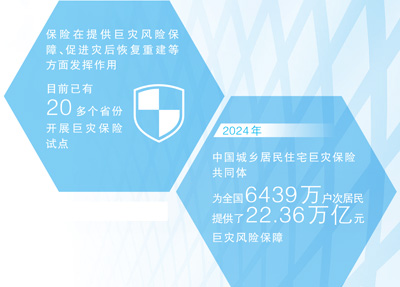
Core Viewpoint - The article emphasizes the importance of catastrophe insurance in providing financial support for disaster recovery and reconstruction, especially in the context of extreme weather events affecting various regions in China [1][2]. Group 1: Catastrophe Insurance Overview - Catastrophe insurance in Hubei province provides coverage for over 20 million households, with a premium funded by the government, offering compensation limits of 200,000 yuan for death, 100,000 yuan for urban housing, and 5,000 yuan for household belongings [2][3]. - The establishment of a catastrophe insurance system for urban and rural residential buildings began in 2016, with recent expansions to cover additional natural disasters such as typhoons and floods [3][6]. - As of 2024, the catastrophe insurance community covers 64.39 million households, providing 22.36 trillion yuan in risk protection, with over 20 provinces participating in pilot programs [3][6]. Group 2: Role in Disaster Recovery - Catastrophe insurance has played a crucial role in disaster recovery, with significant payouts during recent disasters, including 116 billion yuan for the 2021 Henan floods and 126 billion yuan for extreme rainfall in 2023 [5][10]. - In Hunan, the inclusion of ordinary road insurance within the catastrophe insurance framework aims to enhance funding for road repairs post-disaster, addressing traditional funding delays [5][10]. Group 3: Technological Integration and Risk Management - The integration of technology in catastrophe insurance is being explored, with initiatives like agricultural weather index insurance that provide compensation based on weather conditions, enhancing disaster response capabilities [7][8]. - Companies are developing digital platforms for real-time disaster monitoring and risk assessment, improving the efficiency of disaster response and recovery efforts [8][11]. Group 4: Financial Mechanisms and Market Development - The development of catastrophe bonds is highlighted as a means to provide additional funding for disaster risk management, with global issuance exceeding 7 billion USD in early 2025 [10][11]. - The Chinese insurance sector is encouraged to explore catastrophe bonds and other innovative risk transfer mechanisms to enhance the industry's capacity to manage large-scale disaster payouts [10][11].
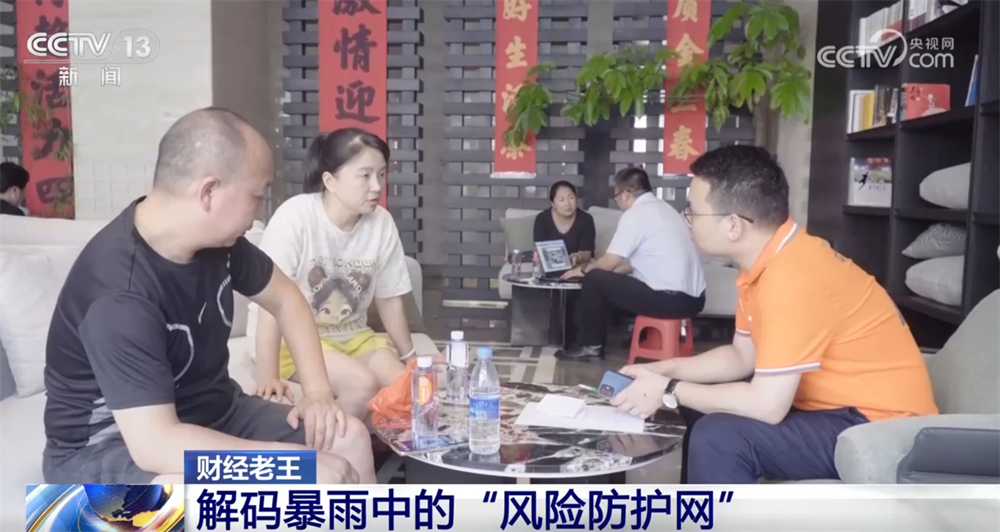
解码暴雨中的“风险防护网” “真金白银”为百姓织密织牢“保障伞”
Yang Shi Wang· 2025-07-04 09:43
Group 1 - The article discusses the activation of a comprehensive "risk protection network" in China during the main flood season, which helps mitigate losses from natural disasters [1] - Insurance payouts are highlighted, with examples such as a supermarket in Guizhou receiving 2 million yuan and a homeowner in Wuhan receiving 50,000 yuan for damages [1][3] - The average annual premium for household property insurance ranges from 200 to 500 yuan, providing coverage for homes, renovations, and appliances [3] Group 2 - Agricultural insurance is also emphasized, with a maximum coverage of 1,100 yuan per mu for major crops like rice, wheat, and corn, and the central government subsidizing over 50 billion yuan annually for agricultural insurance premiums [6] - The article mentions the "catastrophe insurance" purchased by the government, which provided 12 million yuan in advance payments to a county affected by Typhoon "Butterfly" [8] - Insurance companies are proactive in disaster management, offering services such as pre-storm vehicle relocation alerts and using drones for rescue operations, which is referred to as "risk reduction" [8] Group 3 - The article warns that not all damages are covered by insurance, emphasizing the importance of understanding policy terms and retaining evidence for claims [10] - The metaphor of insurance as an umbrella that one hopes to never use is presented, highlighting its role in facilitating quicker recovery from disasters [10]