
应急机器人

Search documents
感知中国活力 机器人擘画生活新场景
Yang Shi Wang· 2025-12-10 23:14
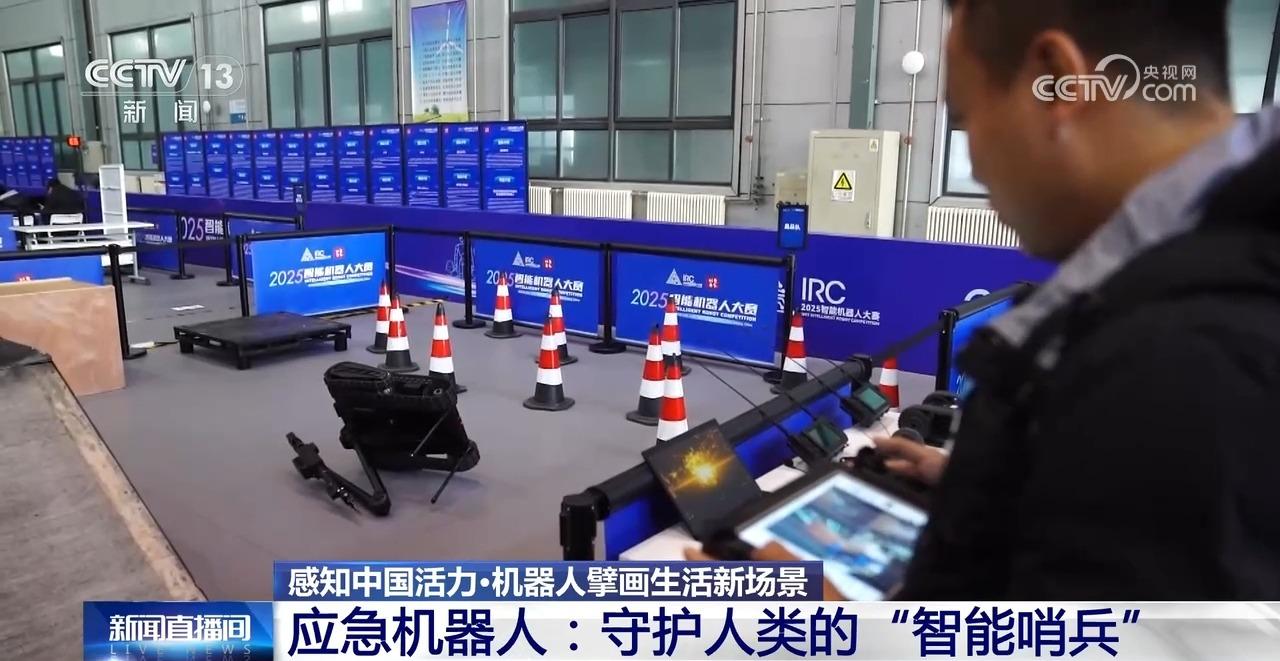
Group 1 - The robot industry has experienced rapid development throughout the year, showcasing advancements from simple performances at the Spring Festival Gala to complex functionalities such as jumping, household chores, and factory operations [1] - The 2025 Intelligent Robot Competition finals were held in Beijing, highlighting new products and applications in the robotics field [1] Group 2 - Emergency robots are being developed as "intelligent sentinels," capable of performing tasks in extreme environments where human presence is limited, such as bomb disposal and high-altitude maintenance [2][4] - A demonstration featured a robot that could autonomously flip itself back to an operational position after tipping over, showcasing resilience and functionality [2] - In high-risk scenarios, robots are performing critical tasks like high-precision spraying on wind turbine models and ice removal from high-voltage transmission lines [4] Group 3 - Rehabilitation and elderly care robots are emerging as valuable assistants in the aging population sector, addressing the growing demand for support in these areas [5] - A mobile robot demonstrated its ability to pick up and categorize scattered items, interact with humans through voice recognition, and operate a microwave, indicating advancements in user-friendly technology [7] - The production of service robots reached 13.5 million units in the first three quarters of the year, surpassing the total expected production for 2024, with expectations for further growth as technology matures and costs decrease [7]


2025智能机器人大赛圆满落幕!31支顶尖团队荣耀加冕
机器人大讲堂· 2025-12-10 13:30
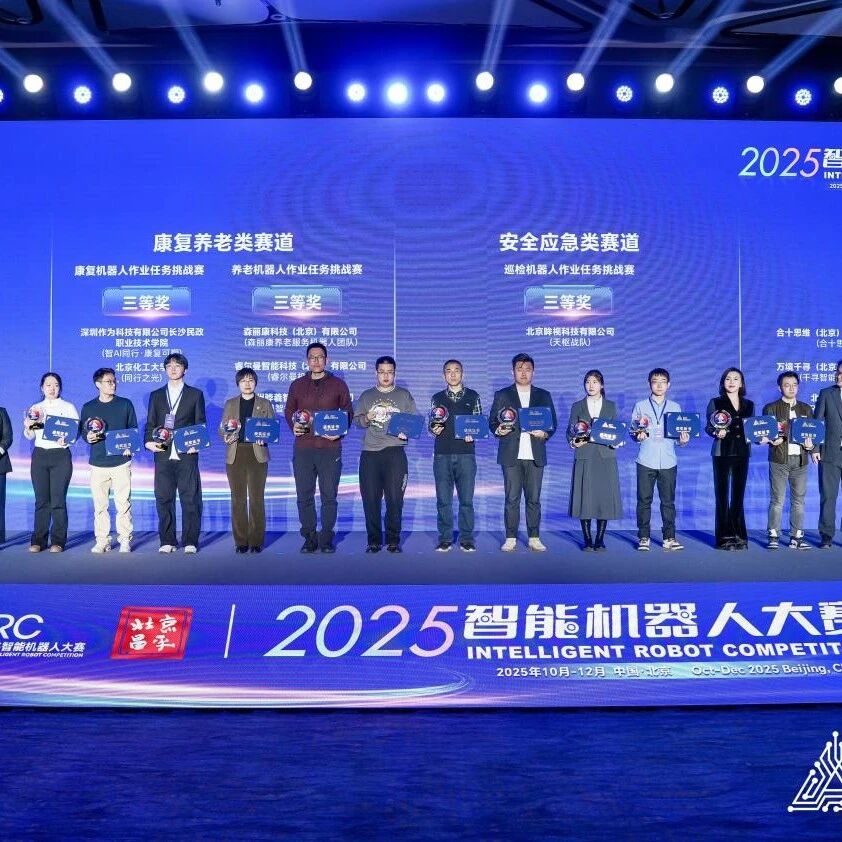
Core Viewpoint - The 2025 Intelligent Robot Competition successfully showcased the potential of the robotics industry, emphasizing the importance of technology innovation and its application in various sectors [1][14]. Group 1: Competition Overview - The competition, themed "Leading Technology, Innovating the Future," was held in Beijing and attracted over 100 teams from across the country, focusing on four main tracks: manufacturing, rehabilitation and elderly care, safety and emergency, and innovation [1]. - A total of 31 outstanding teams emerged as winners, demonstrating significant advancements in robotics technology and its practical applications [1]. Group 2: Awards and Achievements - Third prizes were awarded to several teams, including Beijing Linghe Technology in the manufacturing category and multiple teams in the rehabilitation and elderly care categories, showcasing their technical capabilities and scene adaptability [4][5][6]. - Second prizes highlighted teams with advanced technical solutions, such as the flexible dual-arm assembly robot team and the Xiangyu Medical team, indicating a strong potential for industrial application [9][7]. - First prizes were awarded to top teams like the Chongqing University team and the Dalu Zhiyuan Robot team, recognized for their breakthrough technologies and high-value industrial application potential [12][10]. Group 3: Industry Impact - The competition provided over one million yuan in total prizes to support the winning teams in furthering their technology research and accelerating the commercialization of their innovations [13]. - The event served as a crucial link between technological innovation and industrial application, promoting the integration of cutting-edge technology with real-world scenarios [14].
2025智能机器人大赛落幕 这些突破性进展值得关注
Yang Shi Xin Wen· 2025-12-10 01:24
Core Insights - The 2025 Intelligent Robot Competition concluded, focusing on three main areas: emergency rescue, rehabilitation and elderly care, and all-domain innovation, showcasing significant advancements in technology autonomy, scene diversity, and human-centered services [1] Group 1: Emergency Robots - Emergency robots have achieved breakthroughs in autonomous survival and precise collaboration, exemplified by a robot that can self-right after tipping over during a simulated bomb disposal task, minimizing risks to human operators [2] - These robots are evolving from mere tools to partners, capable of operating independently in extreme environments where human presence is hazardous [2] - The market for emergency robots is expected to grow significantly, with the safety and emergency sector becoming a key growth area within the broader robotics industry, projected to double in size by 2030 [3] Group 2: Rehabilitation and Elderly Care Robots - Rehabilitation robots are increasingly addressing the needs of an aging population, integrating technology that enhances understanding and care, such as a new exoskeleton that uses brainwave signals to predict movement intentions [4] - The focus is on improving the quality of life for the elderly, with robots designed to assist in daily tasks, promoting autonomy and dignity rather than replacing human interaction [4][5] - The production of service robots has surged, with 13.5 million units produced in the first three quarters of the year, surpassing the total for 2024, indicating a growing market for rehabilitation and elderly care robots [6] Group 3: All-Domain Innovation Robots - Robots are expanding their applications beyond traditional settings, entering various sectors including high-altitude and underwater operations, demonstrating versatility and innovation [7] - The competition showcased robots capable of performing high-risk tasks, such as maintenance on wind turbines and ice removal from power lines, highlighting their potential to enhance safety and efficiency in hazardous environments [8] - The robotics industry is transitioning from quantity-driven growth to quality enhancement, with applications now covering 71 major sectors of the national economy, driving manufacturing upgrades and meeting public needs [9]
广东修订突发事件应对条例:拓展无人机救援应用
Zhong Guo Xin Wen Wang· 2025-12-04 13:28
Core Viewpoint - The revised "Regulations on Emergency Response to Sudden Incidents" in Guangdong Province emphasizes the integration of advanced technologies such as the Internet, cloud computing, big data, and artificial intelligence in emergency management, effective from January 1, 2026 [1][2]. Group 1: Technological Integration - The revised regulations mandate the government to enhance the application of modern technologies in emergency response, providing intelligent services for hazard identification, early warning, and decision-making support [1]. - There is encouragement for research and promotion of key technologies and modern methods by educational and research institutions, as well as enterprises, particularly in emergency robotics [1]. Group 2: Emergency Rescue System - The regulations outline the construction of an aviation emergency rescue system, including the establishment of helicopter and drone application in emergency rescue operations, tailored to complex terrain conditions [1]. - It specifies the immediate activation of emergency responses following an incident, detailing the responsibilities of the government and relevant units in emergency management [1]. Group 3: Post-Incident Measures - After controlling or eliminating a sudden incident, the regulations require timely announcement of the cessation of emergency responses and the implementation of measures to prevent secondary incidents [2]. - It includes provisions for recovery planning, social order restoration, and transitional support for affected individuals, ensuring their safety and basic living needs [2].