
巡检机器人

Search documents
当养猪进入AI时代:一个万头猪场如何变革
36氪· 2026-03-20 09:51
Core Insights - The article emphasizes a transformative shift in the pig farming industry, moving from traditional methods to a data-driven and system-coordinated approach [2][25] - China is the largest producer and consumer of pigs globally, with over 700 million pigs expected to be produced by 2025, predominantly from large-scale farms [3] Industry Transformation - The pig farming sector is transitioning from "scale expansion" to "value creation," with digital intelligence becoming a consensus among industry players [4] - Huawei is forming a dedicated agricultural team to drive systemic changes in the industry, focusing on four capabilities: domestic breeding, industrialization of farming, integration of production and sales, and global expansion [4] Smart Farming Initiatives - Smart farming begins with AI replacing traditional human experience, creating quantifiable and optimizable standards [5][6] - The Jilin Changling farm utilizes a smart environmental control system that adjusts temperature and ventilation based on real-time data from various sensors [6][9] - Health management is enhanced through AI, with robots equipped with multiple sensors performing health assessments and monitoring pig conditions [6][8] Data Integration and Collaboration - The integration of data across different farming processes is crucial for achieving synergy, particularly in feeding management, which accounts for over 60% of total costs [10][11] - The smart feeding system customizes nutrition plans for each pig based on growth stage and health data, optimizing feed efficiency and reducing waste [11][13] Operational Efficiency - The farm employs a comprehensive monitoring system that ensures real-time data collection and analysis, enhancing operational efficiency and reducing biological safety risks [15][20] - The role of farm workers has evolved from manual operators to decision-makers within a connected system, focusing on alerts and strategy optimization [17] Technological Foundation - A unified smart farming management platform is established to facilitate communication among diverse devices, ensuring efficient data flow and operational coordination [19][22] - Huawei's ICT infrastructure supports high-bandwidth connectivity and real-time data processing, essential for the farm's smart operations [20] Industry-Wide Implications - The Changling smart farm serves as a model for the industry, showcasing a replicable digital transformation pathway for traditional agriculture [24][25] - The collaboration among various stakeholders, including technology providers and agricultural firms, exemplifies a professional division of labor that enhances overall productivity and product quality [24]


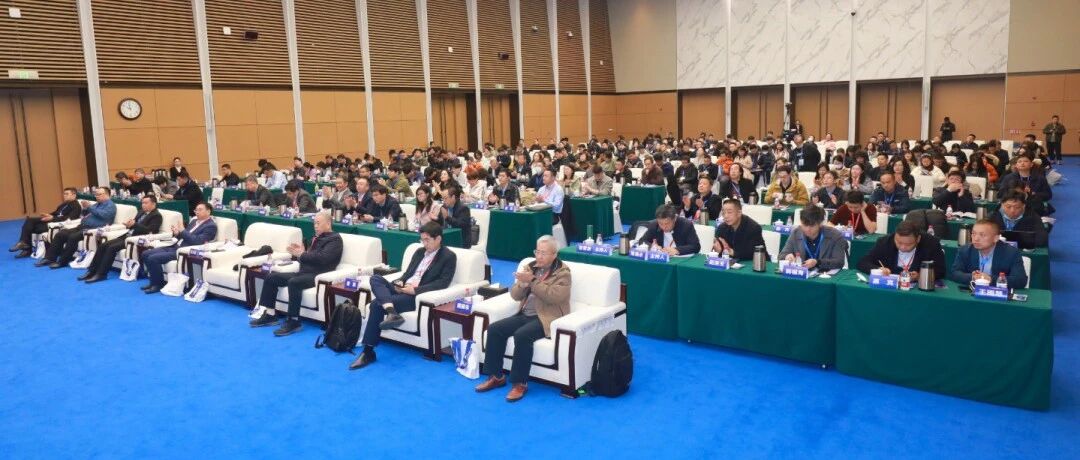
第二届具身智能机器人发展大会在天津成功举行——聚焦场景驱动与量产突围,共探产业发展新动能
机器人圈· 2026-03-19 14:56
Core Viewpoint - The second Embodied Intelligence Robot Development Conference held in Tianjin focuses on "scene-driven, mass production breakthrough: unlocking new momentum for the development of embodied intelligence" and aims to explore cutting-edge technologies, industrial paths, and future trends in embodied intelligent robots [2]. Group 1: Conference Overview - The conference gathered over 400 experts, scholars, industry leaders, and representatives from various sectors to discuss the advancements in embodied intelligent robots [2]. - The event was co-hosted by multiple institutions including the China Electromechanical Integration Technology Application Association and several universities, receiving strong support from various organizations and government bodies [2]. Group 2: Opening Remarks - Key figures such as Wang Tianyou, Vice President of Tianjin University, emphasized the critical leap from technological breakthroughs to industrial implementation in embodied intelligence, highlighting the need for collaborative innovation among government, industry, academia, and research [4]. Group 3: Keynote Presentations - Experts discussed the evolution of intelligent technology, indicating a shift from automation to cognitive intelligence in robotics, which will reshape the industry landscape [7]. - Insights were shared on the integration of robotics with biotechnology, showcasing breakthroughs in life sciences through high-precision operations [7]. Group 4: Industry Applications and Challenges - Discussions included the importance of system-level safety architecture for the scalability of the industry and the need for collaborative talent cultivation between academia and enterprises [9]. - The practical value of robotic technology in complex environments was highlighted, along with the demand for embodied intelligence in high-end manufacturing scenarios [12]. Group 5: Future Outlook - The conference concluded with a consensus on the ongoing challenges faced by embodied intelligent robots, such as adapting to complex environments and overcoming technical bottlenecks, which drive continuous innovation in the industry [13]. - The event served as a high-level platform for collaboration in the field of embodied intelligent robots, with expectations for significant contributions to industrial transformation and social development in the future [13].
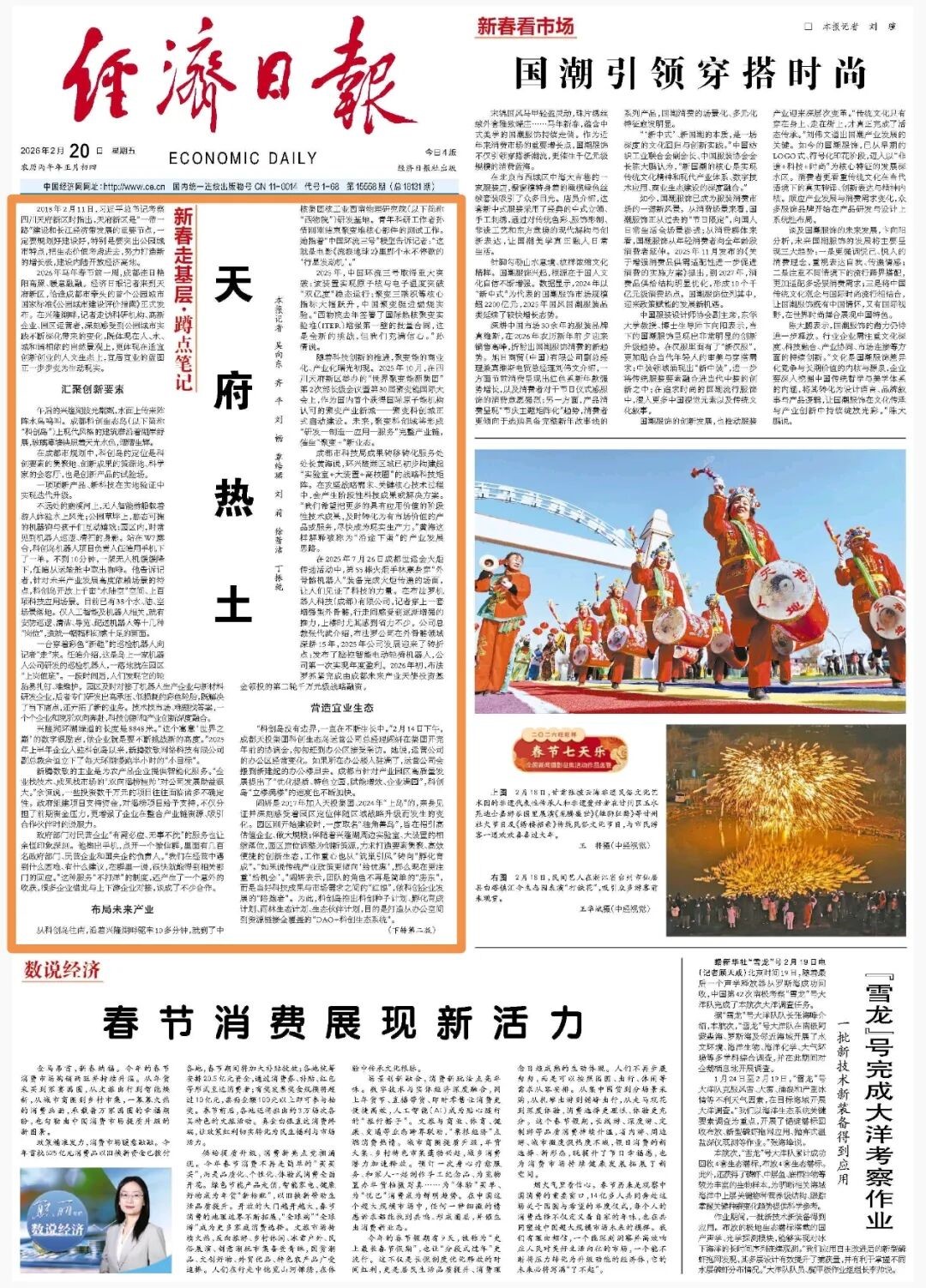
央媒看成都 | 今天,《经济日报》头版头条关注成都
Di Yi Cai Jing· 2026-02-20 12:36
Core Viewpoint - The article highlights the development of Chengdu's Tianfu New Area as a significant hub for innovation and entrepreneurship, emphasizing the integration of ecological values and technological advancements in creating a conducive environment for businesses and startups [14][15]. Group 1: Innovation and Technology - Chengdu's Tianfu New Area is positioned as a key node in the "Belt and Road" initiative and the Yangtze River Economic Belt, focusing on ecological urban development and innovation [14]. - The Chengdu Science and Technology Innovation Island serves as a gathering place for innovative elements, a source of innovation results, and a testing ground for new products [15][16]. - The island has implemented over 38 scenarios for technology applications, including various types of robots for security, cleaning, and delivery, showcasing a blend of technology and practical applications [16]. Group 2: Government Support and Ecosystem - The government provides responsive services to private enterprises, facilitating connections between businesses and government departments, which has led to numerous collaborations [18]. - The establishment of a supportive funding mechanism for projects has alleviated financial pressures on startups, enhancing their ability to integrate resources and attract partners [18]. - The ecosystem is designed to foster innovation through various initiatives, including the "DAO+ Innovation Ecosystem," which aims to connect technology outcomes with market needs [24][26]. Group 3: Future Prospects and Trends - The article discusses the emergence of fusion energy commercialization and the establishment of the Fusion Innovation City, which aims to create a complete industrial chain from research to application [21]. - The integration of cultural and technological elements is seen as a driving force for innovation, with a focus on attracting young talent to the region [26]. - The development of shared workspaces and affordable facilities for startups is part of the strategy to support independent entrepreneurs and foster a vibrant entrepreneurial community [26].
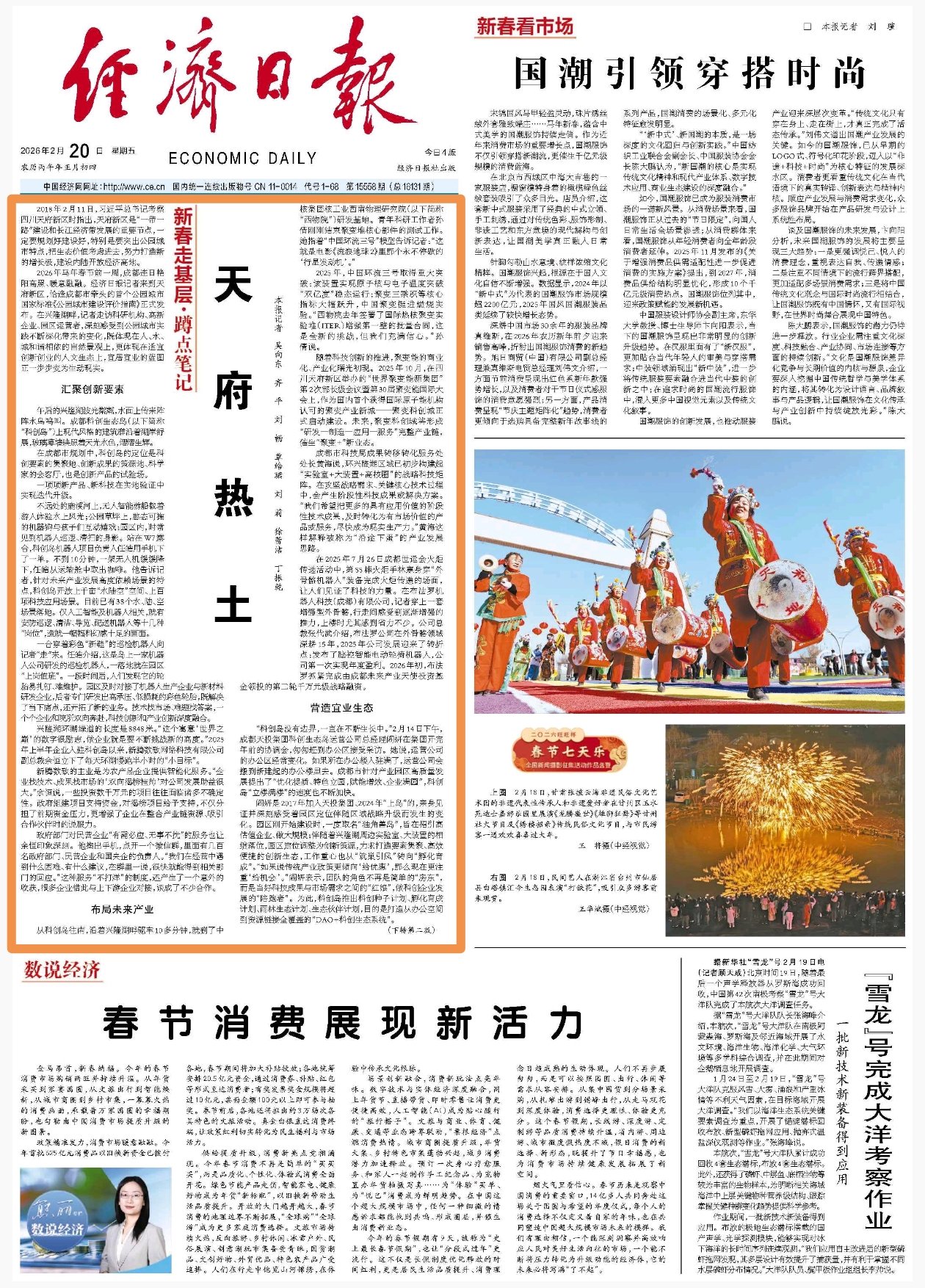
央媒看成都|天府热土
Xin Lang Cai Jing· 2026-02-20 03:08
Core Insights - The article highlights the development of Chengdu's Tianfu New Area as a significant node in the "Belt and Road" initiative and the Yangtze River Economic Belt, emphasizing the importance of ecological value in urban planning [1][13] - Chengdu's innovation ecosystem, particularly the Chengdu Science and Technology Innovation Island, is positioned as a hub for scientific research, innovation, and technology application, showcasing various advanced technologies and products [2][17][18] Group 1: Innovation and Technology - Chengdu Science and Technology Innovation Island is designed as a gathering place for innovation elements, a source of innovative results, and a testing ground for new products and technologies [17][18] - The island has implemented over 38 technology application scenarios, including AI and robotics, enhancing the integration of technology and market needs [18] - The government supports private enterprises through responsive services, facilitating connections between businesses and government departments, which has led to increased collaboration and project funding [19] Group 2: Economic Development and Consumer Trends - The article discusses the revitalization of consumer markets in China, with significant government investment in consumption upgrades, including 525 billion yuan allocated for consumption subsidies [4] - The rise of "Guochao" (national trend) fashion reflects a growing consumer preference for products that blend traditional culture with modern aesthetics, indicating a shift in consumer behavior towards more culturally resonant products [5][11] - The integration of technology in retail, such as online shopping and live-streaming sales, is transforming consumer experiences and enhancing market efficiency [4][12] Group 3: Future Industry and Research - The Chengdu region is developing a strategic technology matrix that combines laboratories, large installations, and academic institutions to foster innovation and commercialization of research outcomes [21] - The establishment of the Fusion Energy Innovation City aims to create a complete industrial chain for fusion energy, indicating a focus on advanced energy solutions and sustainable development [20] - The article emphasizes the importance of creating a supportive ecosystem for startups, including shared workspaces and community engagement initiatives to attract and retain young talent [23]
央媒看四川丨经济日报头版头条:天府热土
Xin Lang Cai Jing· 2026-02-20 01:06
Core Viewpoint - The article highlights the ongoing development and transformation of the Tianfu New Area in Sichuan, emphasizing its role as a key node in the "Belt and Road" initiative and the Yangtze River Economic Belt, particularly focusing on the construction of a park city that integrates ecological value and innovation [3]. Group 1: Innovation and Technology - The Chengdu Science and Technology Ecological Island is positioned as a hub for innovation, featuring modern architecture and a variety of technological applications, including drones and robots for various tasks [5][6]. - The island has implemented over 38 scenarios for water, land, and air applications, showcasing advancements in artificial intelligence and robotics [5]. - The integration of technology and market needs is evident, with companies collaborating to solve practical challenges, such as developing new materials for robots [6]. Group 2: Government Support and Ecosystem - The local government provides responsive services to private enterprises, facilitating communication and collaboration among businesses and government entities [7]. - A strategic technology matrix has been established in the region, focusing on transforming scientific achievements into marketable products [10]. - The ecosystem encourages startups and small businesses by offering shared workspaces and low-cost entry options, fostering a supportive environment for innovation [12]. Group 3: Future Industry Development - The region is advancing in the field of nuclear fusion, with significant breakthroughs expected in the coming years, including the establishment of a complete industrial chain for fusion energy [9][10]. - The "Tianfu Tongtang" initiative aims to attract and retain young talent, with plans for community development that includes housing and recreational facilities [13]. - The focus on creating a vibrant and innovative community is reflected in the integration of technology and culture, enhancing the overall living and working environment [13].
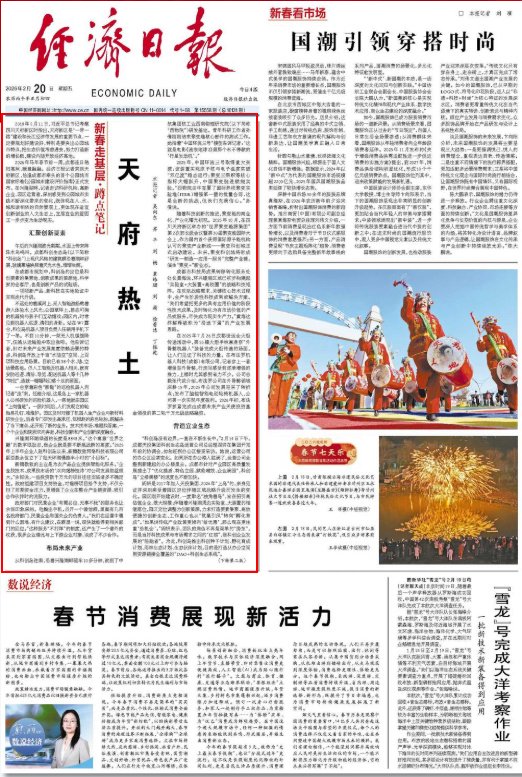
天府热土
Jing Ji Ri Bao· 2026-02-19 22:17
Core Insights - The article highlights the development of Chengdu's Tianfu New Area as a key node in the "Belt and Road" initiative and the Yangtze River Economic Belt, emphasizing the importance of ecological value in urban planning [1] - The establishment of the Chengdu Science and Technology Innovation Island (referred to as "Innovation Island") aims to gather innovative elements and serve as a hub for scientific achievements and product testing [2] Group 1: Innovation and Technology - Innovation Island features various technological advancements, including intelligent unmanned boats and robots for security and cleaning, showcasing a blend of technology and practical applications [3] - The island has opened over a thousand acres of "land, water, and air" space for technology applications, with 38 scenarios already implemented, including various types of robots [3] - The collaboration between companies and research institutions has led to the development of new materials and solutions to existing challenges, enhancing the integration of technology and industry [4] Group 2: Future Industry Layout - The China Fusion Engineering Test Reactor (CFETR) at the Southwest Institute of Physics has made significant progress, achieving stable operation at high temperatures and signing contracts for international collaboration [5][6] - The establishment of the Fusion Innovation City aims to create a complete industrial chain from research and development to application and service, promoting new business models in the fusion energy sector [6] Group 3: Ecosystem for Entrepreneurship - Innovation Island is evolving to support high-quality development, focusing on nurturing innovation rather than merely attracting businesses, with initiatives like the "DAO + Innovation Ecosystem" [8] - The island offers shared workspaces for independent entrepreneurs, facilitating low-cost entry into the market and fostering collaboration among startups [9] - The region has attracted over 2.67 million young talents during the 14th Five-Year Plan, with community amenities being developed to enhance the living experience for entrepreneurs [9]
2026年新股择股路径(一)-AI应用:AI应用春潮涌动,产业链次新股大盘点
Huajin Securities· 2026-02-15 05:24
Investment Rating - The report does not explicitly provide an investment rating for the companies discussed. Core Insights - AI technology is reshaping various industries, with significant advancements in AI models and applications, particularly following the launch of OpenAI's ChatGPT-3.5 in November 2022, which marked the beginning of a new era in artificial intelligence [2][15] - Several newly listed companies in the A-share market have integrated AI technology into their operations, seizing opportunities in the AI development strategy across various sectors, including agriculture, office, retail, medical, energy, and consumer fields [2] Summary by Sections AI Applications Surge - AI models are rapidly evolving, with diverse applications emerging across different sectors, driven by advancements from companies like OpenAI, Google, and others [15] - The commercial success of AI applications is evident in products like AI smart glasses, AI toys, and intelligent driving systems, which are gaining popularity and transforming consumer experiences [15][18][19][30] Representative New Stocks in AI - **Top Cloud Agriculture**: A leading company in smart agriculture, developing pest recognition algorithms and smart agricultural products like AR glasses and robotic dogs for field inspections [58][64] - **Hehe Information**: Focused on AI in office applications, offering products like TextIn and Qixin Huiyan that leverage AI for document processing and data analysis [72][74] - **Hanshu Technology**: A provider of digital solutions for retail, including smart shopping carts and AI cameras, enhancing the shopping experience through technology [89][91] - **Chao Yan Co., Ltd.**: Engaged in AI medical diagnostics, offering innovative products for breast cancer screening and ultrasound imaging systems for minimally invasive surgeries [99][108] - **Southern Network Digital**: Concentrating on digital solutions for energy, developing core products like the "Electric Hong" IoT operating system [2] - **Ying Shi Innovation**: Focused on consumer applications, creating AI algorithms for content creation in products like panoramic action cameras [2] Industry Trends - AI technology is deeply embedded in various sectors, including e-commerce, finance, government, energy, and education, demonstrating its commercial viability and transformative potential [44][53] - The AI toy market is projected to exceed 100 billion yuan by 2030, with a compound annual growth rate (CAGR) of over 50% [20] - The report highlights the increasing integration of AI in daily life, enhancing efficiency in personal and work scenarios, such as energy management and document processing [38][43]
道通科技2025年扣非后归母净利同比大增62.77% “AI驱动+全球布局”实现业绩进阶
Zheng Quan Ri Bao Wang· 2026-02-13 07:45
Core Insights - The company, Daotong Technology, reported a revenue of 4.838 billion yuan for 2025, marking a year-on-year growth of 23.04%, and a net profit attributable to shareholders of 935 million yuan, which is a 45.89% increase year-on-year [1] - The company is committed to its "fully embrace AI" strategy, focusing on smart vehicle diagnostic terminals and smart energy hubs as business entry points, which are driving significant revenue growth [1] Financial Performance - In 2025, the company's net profit after deducting non-recurring items reached 880 million yuan, a substantial increase of 62.77% year-on-year [1] - The company achieved operational efficiency improvements through internal digital transformation and organizational capability building, which laid a solid foundation for growth [1] AI and Technology Development - Daotong Technology is deepening the application of AI multimodal voice models and AI Agents in the smart vehicle diagnostic field, enhancing repair accuracy and efficiency, and receiving positive market feedback [2] - The company’s TPMS products are experiencing rapid growth due to ongoing global replacement demand, contributing significantly to the performance of this segment [2] Smart Charging Solutions - The company is focusing on end-to-end system capability upgrades in the smart charging sector, enhancing its technology base for "smart energy charging models" and related applications [2] - AI capabilities have been deployed in key areas such as charging scheduling and operational management, evolving towards higher autonomy with "AI digital employees" [2] Global Market Expansion - In 2025, Daotong Technology successfully delivered smart charging projects for top global clients across various industries, including energy and transportation [3] - The company secured strategic orders from leading convenience retail groups and local charging network operators in the U.S., and established partnerships with regional power companies to advance new power infrastructure [3] New Business Ventures - The company is accelerating the engineering implementation of embodied intelligence in infrastructure scenarios, showcasing smart charging robots and inspection robots at the 2026 CES [4] - This new business area is expected to become a significant growth point, with the potential for further application in various scenarios [4] Competitive Advantage - Industry analysts note that Daotong Technology's AI technology layout is centered on actual scene demands, creating a strong competitive edge in its three core businesses [5] - The company is developing a sustainable revenue model centered around AI Agents services, forming a robust business barrier and a collaborative, integrated business landscape [5] - The three core tracks of "AI + Diagnosis," "AI + Charging," and "AI + Robotics" align with global trends in digitalization and new energy, indicating substantial future growth potential [5]

36氪首发|农业具身智能企业拿到新融资,估值达5亿元
3 6 Ke· 2026-02-12 02:27
Core Insights - HeXin Power, an agricultural embodied intelligence company, recently completed a multi-million yuan angel round financing, achieving a post-investment valuation of 500 million yuan [1] - The funding will primarily be used for core product iteration, global scene expansion, and talent acquisition [1] - The company focuses on "agricultural embodied intelligence" by developing drones, robots, and smart terminals to address labor shortages and standardization issues in agriculture [1] Company Overview - HeXin Power was established in 2025 and aims to transition agricultural automation from "mechanization" to "intelligence" [1] - The company collaborates with Tsinghua University, the Chinese Academy of Agricultural Sciences, and Harbin Institute of Technology to tackle core technologies such as environmental perception and agricultural-specific AI models [1][2] Technology and Products - HeXin Power has developed a high-speed digital motor technology capable of producing motors with speeds between 180,000 to 200,000 RPM, which is applied in their drones and robots [2] - The company has created a pesticide drift prediction platform and a YOLO-Fi algorithm model for precise variable spraying, enhancing the efficiency of agricultural operations [2] - Key products include a series of plant protection drones and agricultural robots, such as a mushroom picking robot and a weeding robot, which are cost-effective compared to international competitors [3] Market Strategy and Commercialization - HeXin Power employs a strategy of "R&D in Shenzhen, production in the mainland, and market globally," having delivered 10 robots and secured over 100 orders across various scenarios [3] - The company has expanded into markets in Central Asia, South America, and Africa, establishing a smart planting experimental base in Nigeria [3] Leadership Team - The founder and CEO, Zhao Feng, has 14 years of experience in agricultural strategic investment, while the CTO, Sun Shilong, is a professor at Harbin Institute of Technology with expertise in robotics and precision agriculture [4] - The CFO, Zhang Jiang, previously served as the chief analyst for agriculture at UBS and Huaxing Capital [4] Future Goals - HeXin Power aims to become a standardized intelligent production unit for global farmland, leveraging embodied intelligence technology to adapt to unstructured field environments [5] - The company plans to continue promoting its products in large-scale farms across multiple countries as global agricultural automation demand grows [5]
辽宁江苏机器人“手拉手”
Xin Lang Cai Jing· 2026-02-06 16:48
Core Viewpoint - The collaboration between Liaoning and Jiangsu provinces aims to enhance industrial chain integration, particularly in the robotics sector, to promote high-quality development and regional innovation [1][2][3]. Group 1: Event Overview - The Liaoning-Jiangsu Key Industrial Chain Collaboration Initiative was launched on February 5, featuring over 150 participants from government, enterprises, and research institutions [1]. - The initiative aligns with national strategies to strengthen urban coordination and promote efficient collaboration in regional innovation and industrial chains [1]. Group 2: Collaboration Foundation - Liaoning and Jiangsu have established a solid foundation for cooperation, with complementary industrial structures and significant potential for collaboration in technology transfer and industrial chain synergy [2]. Group 3: Focus on Robotics Industry - The robotics industry was chosen as the initial focus due to both provinces' strong capabilities and accumulated advantages in this field, aiming to create a demonstration effect [3]. - Liaoning is committed to developing its artificial intelligence core industry and seeks deep collaboration with Jiangsu in technology research and market expansion [3]. Group 4: Opportunities and Agreements - The event facilitated significant interactions, leading to a better understanding of Liaoning's industrial advantages and numerous future collaboration opportunities in specialized robotics applications [4]. - A total of 15 cooperation agreements were signed during the event, including partnerships between major companies and local enterprises, focusing on emerging business areas such as sensors [4].
