
康复养老机器人

Search documents
新里程:公司加快布局AI及康复养老机器人产业
Zheng Quan Ri Bao· 2026-02-24 09:12
Group 1 - The core viewpoint of the article highlights that the controlling shareholder of the company has maintained stable holdings and has not reduced its stake since the completion of the company's restructuring [2] - The company aims to further enhance its business layout by accelerating its entry into the AI and rehabilitation eldercare robot industries, building on its dual-driven strategy of "medical + pharmaceutical" [2]


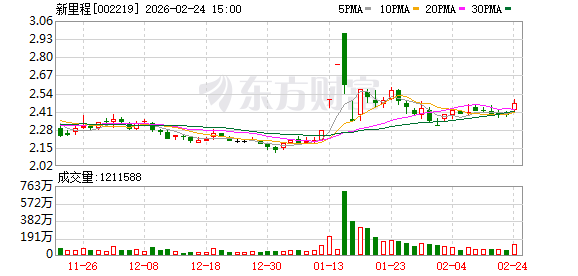
新里程:公司将定位为“AI+场景”,依托公司庞大医疗、养老场景,推动科技产业布局
Cai Jing Wang· 2026-02-24 06:56
Group 1 - The core strategy of the company involves expanding its product pipeline in the pharmaceutical industry through "BD + independent research and development," while also focusing on merger and acquisition opportunities to inject new product resources and market channels into its pharmaceutical sector [1] - In the AI healthcare field, the company positions itself as "AI + scenarios," leveraging its extensive medical and elderly care scenarios to drive technological industry layout [1] - The company has fully integrated its hospitals with the DeepSeek platform, launching AI smart report interpretation and AI medical assistant applications, which enhance the efficiency of diagnosis and treatment processes [1] Group 2 - Recent performance indicates that for the first nine months of 2025, the company achieved a revenue of 2.256 billion yuan, a year-on-year decrease of 23.40%, and a net loss of 38 million yuan, with losses expanding by 167.83% year-on-year [2] - The company is accelerating its strategic layout in rehabilitation and elderly care robotics, while also exploring investment opportunities in upstream and downstream core technology enterprises [3] - The company primarily engages in the production and sales of pharmaceuticals, as well as hospital management and related businesses [3]
感知中国活力 机器人擘画生活新场景
Yang Shi Wang· 2025-12-10 23:14
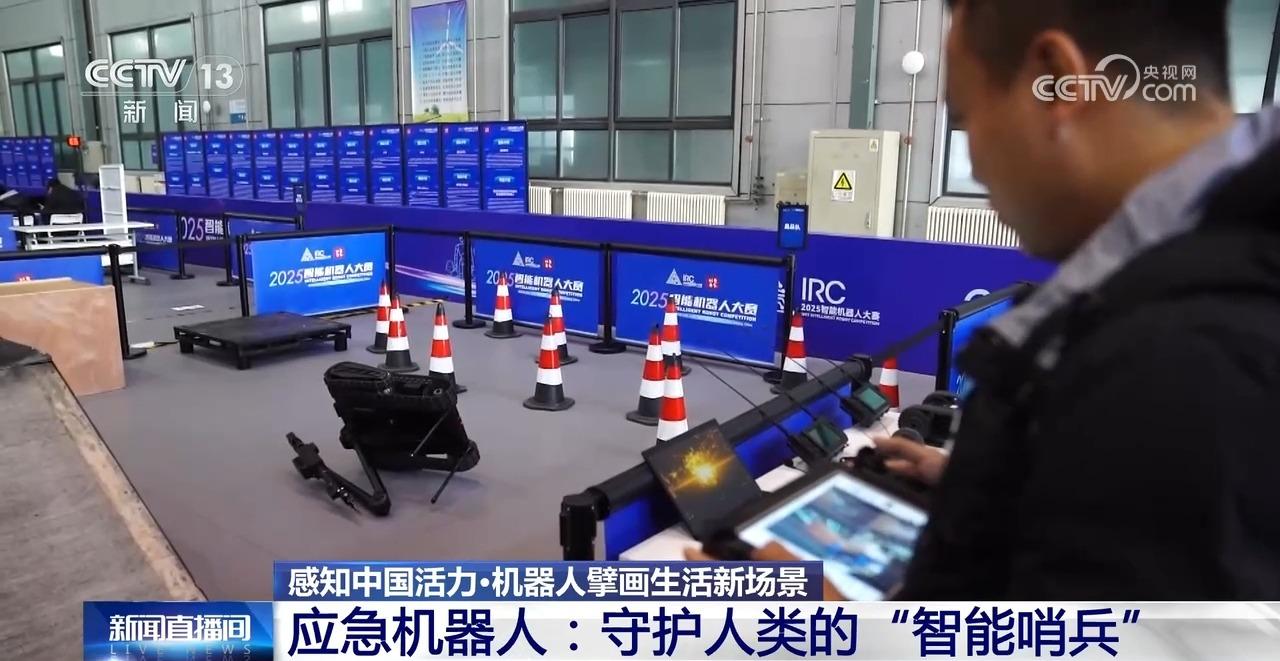
Group 1 - The robot industry has experienced rapid development throughout the year, showcasing advancements from simple performances at the Spring Festival Gala to complex functionalities such as jumping, household chores, and factory operations [1] - The 2025 Intelligent Robot Competition finals were held in Beijing, highlighting new products and applications in the robotics field [1] Group 2 - Emergency robots are being developed as "intelligent sentinels," capable of performing tasks in extreme environments where human presence is limited, such as bomb disposal and high-altitude maintenance [2][4] - A demonstration featured a robot that could autonomously flip itself back to an operational position after tipping over, showcasing resilience and functionality [2] - In high-risk scenarios, robots are performing critical tasks like high-precision spraying on wind turbine models and ice removal from high-voltage transmission lines [4] Group 3 - Rehabilitation and elderly care robots are emerging as valuable assistants in the aging population sector, addressing the growing demand for support in these areas [5] - A mobile robot demonstrated its ability to pick up and categorize scattered items, interact with humans through voice recognition, and operate a microwave, indicating advancements in user-friendly technology [7] - The production of service robots reached 13.5 million units in the first three quarters of the year, surpassing the total expected production for 2024, with expectations for further growth as technology matures and costs decrease [7]

2025智能机器人大赛落幕 这些突破性进展值得关注
Yang Shi Xin Wen· 2025-12-10 01:24
Core Insights - The 2025 Intelligent Robot Competition concluded, focusing on three main areas: emergency rescue, rehabilitation and elderly care, and all-domain innovation, showcasing significant advancements in technology autonomy, scene diversity, and human-centered services [1] Group 1: Emergency Robots - Emergency robots have achieved breakthroughs in autonomous survival and precise collaboration, exemplified by a robot that can self-right after tipping over during a simulated bomb disposal task, minimizing risks to human operators [2] - These robots are evolving from mere tools to partners, capable of operating independently in extreme environments where human presence is hazardous [2] - The market for emergency robots is expected to grow significantly, with the safety and emergency sector becoming a key growth area within the broader robotics industry, projected to double in size by 2030 [3] Group 2: Rehabilitation and Elderly Care Robots - Rehabilitation robots are increasingly addressing the needs of an aging population, integrating technology that enhances understanding and care, such as a new exoskeleton that uses brainwave signals to predict movement intentions [4] - The focus is on improving the quality of life for the elderly, with robots designed to assist in daily tasks, promoting autonomy and dignity rather than replacing human interaction [4][5] - The production of service robots has surged, with 13.5 million units produced in the first three quarters of the year, surpassing the total for 2024, indicating a growing market for rehabilitation and elderly care robots [6] Group 3: All-Domain Innovation Robots - Robots are expanding their applications beyond traditional settings, entering various sectors including high-altitude and underwater operations, demonstrating versatility and innovation [7] - The competition showcased robots capable of performing high-risk tasks, such as maintenance on wind turbines and ice removal from power lines, highlighting their potential to enhance safety and efficiency in hazardous environments [8] - The robotics industry is transitioning from quantity-driven growth to quality enhancement, with applications now covering 71 major sectors of the national economy, driving manufacturing upgrades and meeting public needs [9]