微型反应堆

Search documents
速递|半年两轮融资,估值超18亿:核能初创公司Radiant再获3亿美元,为AI数据中心“充电”
Z Potentials· 2025-12-29 04:53
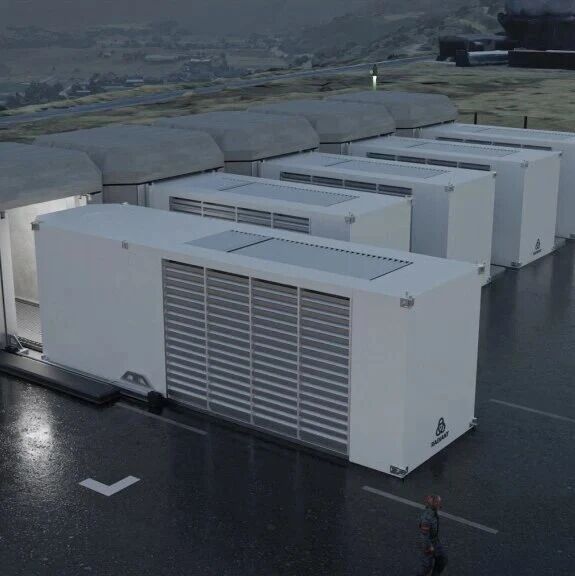
Core Insights - Radiant Nuclear has raised over $300 million in funding, following a trend of significant investments in the nuclear energy sector, with Last Energy securing $100 million and X-energy raising $700 million recently [1][2] - The rapid influx of capital raises questions about a potential bubble in the nuclear energy field, particularly as many startups claim to launch their first reactors next year [2] Funding and Valuation - The latest funding round for Radiant was led by Draper Associates and Boost VC, with participation from Ark Venture Fund, Chevron Technology Ventures, Friends & Family Capital, and Founders Fund, resulting in a post-money valuation exceeding $1.8 billion [3] - Radiant's previous funding round six months ago raised $165 million, indicating a strong investor interest in the company [2] Technology and Product Offering - Radiant is developing a micro-reactor capable of generating 1 megawatt of power, designed for transport via semi-truck, utilizing a helium cooling system and TRISO fuel for enhanced meltdown resistance [3] - The company aims to replace diesel generators in commercial and military applications, offering customers the option to purchase the reactor or subscribe to a power purchase agreement [3] Market Strategy and Partnerships - Data centers are identified as a primary target market for Radiant, with a recent agreement to supply 20 reactors to Equinix, a data center developer [3] - Radiant is constructing a demonstration reactor at Idaho National Laboratory, with plans to begin testing in the summer of 2026, aligning with a broader industry timeline set during the Trump administration [4][5]

人工智能驱动核能复兴,美国初创企业竞逐微型反应堆赛道
Shang Wu Bu Wang Zhan· 2025-11-28 16:25
Core Insights - The nuclear energy industry is experiencing a revival driven by the surge in AI computational demand and supportive policies from the Trump administration [1] - Over a dozen U.S. startups, including Aalo Atomics, Oklo, and Kairos Power, are competing to develop modular small nuclear reactors [1] Industry Financing - The financing scale of the industry has surpassed $4 billion in 2025, a significant increase from $500 million in 2020 [1] - Aalo Atomics is constructing a 3,700 square meter factory in Texas, aiming for critical testing of a 10 MW micro-reactor by 2026 and power supply by 2027 [1] - Kairos Power has received $303 million in support from the U.S. Department of Energy and is building a 50 MW demonstration reactor in Tennessee [1] - X-energy is developing a gas-cooled reactor with investment from billionaire Kamal Ghaffarian [1] Factors Driving Recovery - The revival of the industry is attributed to three main factors: the surge in electricity consumption by AI data centers (OpenAI estimates a need for 250 GW over eight years) [1] - The Inflation Reduction Act provides a 40% investment tax credit [1] - The acceleration of the approval process by the Nuclear Regulatory Commission [1] Corporate Engagement - Tech giants like Microsoft and Amazon have signed long-term nuclear energy procurement agreements [1] - The Three Mile Island nuclear power plant, which previously experienced an accident, has been renamed Crane Clean Energy Center and is resuming operations [1]
光刻机锁死日本工厂运转?材料大国陷困局,氢能芯片能否弯道超车
Sou Hu Cai Jing· 2025-06-04 00:25
Group 1 - The article highlights Japan's precarious position in the semiconductor supply chain, particularly due to U.S. restrictions on exports of critical materials and technologies [1][3] - Japan is home to 23% of the world's semiconductor raw material factories, particularly in Kumamoto, which produces high-purity fluorinated polyimide essential for 3nm chips [1] - The U.S. has imposed conditions on Japan's exports, including the requirement for EUV lithography machines to have geofencing systems, effectively monitoring Japan's semiconductor capabilities [3] Group 2 - Japan's reliance on the U.S. for raw materials is increasing, with 43% of its high-purity rare earth production directed to North America, raising concerns about becoming a technology dependency nation [5] - Toshiba's 2023 financial report indicates a 12% drop in yield for silicon carbide chips due to a lack of domestic etching equipment, while Shin-Etsu Chemical faces rising wafer costs from using U.S. substitutes [6] - The average age of semiconductor engineers in Japan is 51, with a 38% decrease in young professionals over five years, indicating a talent crisis in the industry [6] Group 3 - Japan is exploring alternative technologies, such as quantum computing and hydrogen energy chips, as part of a strategic pivot in its semiconductor approach [8] - Panasonic has developed a miniaturized hydrogen production reactor, and advancements in hydrogen fuel cell technology have been made at the University of Tokyo [10] - Hitachi has created a "three-layer protection" verification system to enhance security in semiconductor material transport [11] Group 4 - Chinese manufacturers are benefiting from Japan's technological constraints, with new domestic etching machines utilizing expired Japanese patents and lower-cost rare earth extraction methods [13][14] - In 2023, Japan was compelled to relax 63 expired patent licenses, leading to a significant outflow of semiconductor talent to China [14] - The article suggests that the ongoing semiconductor conflict is a reflection of broader resource competition and emphasizes the need for Japan to rebuild its innovation ecosystem independently [16]