微型机器人

Search documents
破壁微米!首个细胞级尺寸、会思考的机器人诞生| Science Robotics
机器人大讲堂· 2025-12-16 09:30
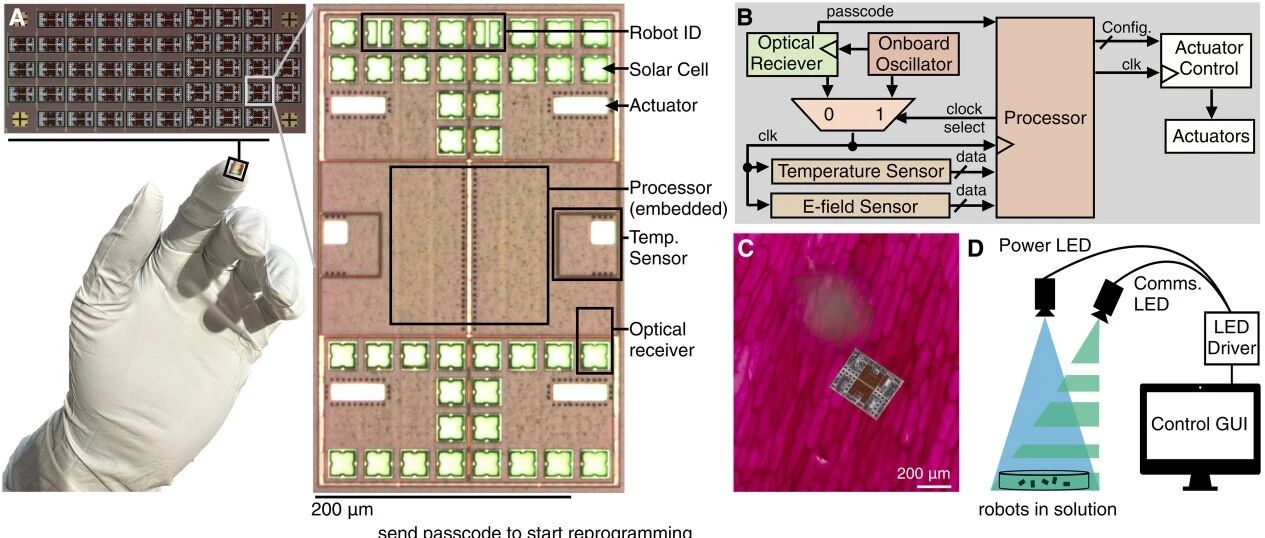
Core Insights - The article discusses a groundbreaking development in micro-robotics, where researchers have created a micro-robot comparable in size to a paramecium, measuring approximately 340 micrometers by 210 micrometers and only 50 micrometers thick, which is about the size of a period [1] - This micro-robot is equipped with an onboard computer that allows it to think autonomously, utilizing onboard computation, perception, memory, movement, and communication systems to operate without human intervention [1] Group 1: Technological Breakthroughs - The research team has developed a new design philosophy that constructs a complete robotic system on a microchip, rather than simply miniaturizing existing components [5] - The micro-robot integrates a photovoltaic cell that converts light into approximately 100 nanowatts of power, which is about one ten-thousandth of the power consumption of a typical calculator [8] - The micro-robot features a custom 11-bit processor capable of running specialized algorithms at ultra-low power, processing data from sensors, and making decisions [9] Group 2: Autonomous Functionality - The micro-robot is designed to autonomously respond to environmental changes, showcasing a significant advancement in robotics by integrating a high-precision temperature sensor with a resolution of 0.3 °C [10] - In experiments, the robot demonstrated the ability to autonomously seek warmer areas by initiating specific movements based on sensor feedback, marking a shift from passive execution to active adaptation [11][14] Group 3: Potential Applications - The micro-robot's low manufacturing cost, potentially as low as $0.01 per unit, opens up vast possibilities for widespread deployment, particularly in the medical field for targeted drug delivery and micro-surgery [15] - In precision manufacturing, these robots could perform high-resolution inspections in areas inaccessible to traditional tools, detecting micro-cracks or blockages [15] - The technology lays the groundwork for collaborative behavior among micro-robots, allowing them to be assigned different tasks based on simple "codes" [16] Group 4: Future Developments - Despite the advancements, challenges remain, including improving movement speed and energy efficiency, as well as expanding interaction methods with the external environment [19] - The research team plans to enhance memory capacity by a hundredfold, develop new actuators, integrate more sensors, and explore novel communication methods suitable for micro-environments [20]

快讯|马斯克设想Optimus将用于手术;现代集团拟投125.2万亿韩元用于人形等方向;中国核岛无线侦检机器人成功研发等
机器人大讲堂· 2025-11-17 09:00
Group 1 - The first wireless inspection robot for nuclear power plants has been successfully developed by Liaoning Hongyanhe Nuclear Power Co., significantly enhancing operational safety and contributing to the intelligent operation and maintenance of nuclear power stations [3][4] - The robot is designed to replace some manual inspections, with plans to expand its capabilities to include radiation measurement and gas sampling, creating a comprehensive and upgradeable robotic system [3][4] Group 2 - Hyundai Motor Group plans to invest a record 125.2 trillion KRW from 2026 to 2030, which is approximately 36.1 trillion KRW more than the previous five years' investment of 89.1 trillion KRW [7][9] - This investment will focus on emerging sectors such as artificial intelligence, software-defined vehicles, electrification, robotics, and hydrogen energy, with 50.5 trillion KRW allocated for these areas [7][9] - The investment aims to revitalize the regional economy and contribute to the national economy by supporting the domestic AI/robotics industry and developing a green energy ecosystem [7][9] Group 3 - Researchers at ETH Zurich have developed a micro-robot designed to combat diseases like stroke and tumors by delivering medication directly to affected areas, minimizing side effects [10][12] - This micro-robot, smaller than most bacteria, can navigate through the bloodstream and release drugs at targeted locations using high-frequency magnetic fields [10][12] Group 4 - Elon Musk envisions Tesla's humanoid robot, Optimus, as a potential solution to provide high-quality healthcare globally, addressing the shortage of skilled medical professionals [13][15] - Musk suggests that millions of these high-precision medical robots could be produced and deployed worldwide, also proposing their use as alternatives to traditional incarceration methods, raising ethical debates [13][15]


快讯|宇树推出首款轮式人形机器人;苏黎世联邦理工新型微型机器人;国内双足人形机器人最大笔种子轮融资等
机器人大讲堂· 2025-11-14 10:09
Group 1 - Yushu Technology launched its first wheeled humanoid robot, G1-D, which features a height range of approximately 1260-1680mm and includes high-definition cameras [3] - The G1-D robot is available in two versions: a general version with 17 degrees of freedom and a flagship version with 19 degrees of freedom, capable of carrying a maximum load of about 3kg [3] - The G1-D employs a combination of wheeled and lifting designs, allowing for vertical operation in a space of 0-2m [3] Group 2 - The ETH Zurich team developed a new generation of micro-robots capable of precise navigation for drug delivery within the human body, utilizing a soluble capsule structure controlled by an external magnetic field [4] - The micro-robots are designed to navigate through the extremely small blood vessels in the human brain, presenting significant technical challenges [4] Group 3 - RoboParty completed a multi-million dollar seed round financing, which will be used for the development of core components and refinement of motion control algorithms [8] - This financing round is noted as the largest seed round in the domestic bipedal humanoid robot sector, marking the first investment by Xiaomi and Galaxy Universal in this field [8] Group 4 - Yifang Innovation announced the completion of a multi-million RMB Pre-A round financing led by Hillhouse Capital and Matrix Partners, aimed at advancing technology research and attracting high-end talent [9] - The company's first product is the industry's first consumer-grade exoskeleton supporting multi-joint linkage, targeting outdoor enthusiasts and professionals [10] Group 5 - Xi'an University of Technology published a paper on a novel grasping robot control method that combines fine hand movements with knowledge reasoning, enhancing the robot's ability to perform multi-target grasping [12]

微型机器人“定点送药”实现靶向治疗
财联社· 2025-11-14 01:20
Core Viewpoint - The article discusses the development of a micro-robot technology by a research team at ETH Zurich, aimed at precise drug delivery for targeted therapies in the medical field [1][2]. Group 1 - A micro-robot capable of navigating upstream in blood vessels has been developed [2]. - The effectiveness of the system has been validated through animal experiments in pigs and in the cerebrospinal fluid of sheep, indicating potential for treating various diseases, including those affecting the nervous system [3]. - The related findings have been published in a recent issue of the journal "Science" [4].

在血管中“逆流而上”精确导航 微型机器人“定点送药”实现靶向治疗
Xin Lang Cai Jing· 2025-11-13 23:25
Core Viewpoint - The research team from ETH Zurich has developed a micro-robot capable of precise navigation in blood vessels, which could lead to advancements in targeted therapies for various diseases, particularly in the nervous system [1] Group 1: Technology Development - The micro-robot technology focuses on "targeted drug delivery" through precise navigation [1] - The ability of the micro-robot to navigate "upstream" in blood vessels represents a significant advancement in medical technology [1] Group 2: Research Validation - The effectiveness of the micro-robot was validated through animal experiments conducted in pigs and in the cerebrospinal fluid of sheep [1] - The results of this research have been published in a recent issue of the journal "Science," indicating peer-reviewed validation [1]

微型机器人“定点送药”实现靶向治疗
Xin Lang Cai Jing· 2025-11-13 22:58
Core Viewpoint - The research team from ETH Zurich has developed a micro-robot capable of precise navigation in blood vessels, which could lead to targeted therapies for various diseases, including those affecting the nervous system [1] Group 1: Technology Development - The micro-robot technology focuses on "targeted drug delivery" through precise navigation [1] - The ability of the micro-robot to navigate "upstream" in blood vessels represents a significant advancement in medical technology [1] Group 2: Research Validation - The effectiveness of the micro-robot was validated through animal experiments conducted in pigs and in the cerebrospinal fluid of sheep [1] - The results of this research have been published in a recent issue of the journal "Science," indicating peer recognition and validation of the findings [1]
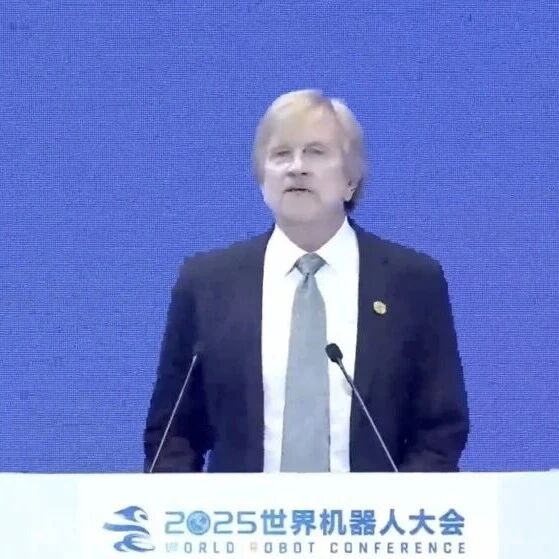
瑞士工程院院士、瑞士苏黎世联邦理工大学教授布拉德利·尼尔森:《用于应对全球主要健康威胁的微型机器人与远程手术》
机器人圈· 2025-10-13 09:51
Core Viewpoint - The article discusses the advancements and potential of micro-robotics in the medical field, particularly in remote surgery and targeted drug delivery, highlighting the challenges and innovations in treating critical conditions like diffuse intrinsic pontine glioma and stroke [4][5][10]. Summary by Sections Event Overview - The 2025 World Robot Conference will be held from August 8 to 12 in Beijing, featuring a main forum and 31 activities with 416 experts sharing insights on new technologies and applications [1]. Micro-Robotics in Medicine - Micro-robotics is gaining attention for its applications in medicine, especially in remote surgery [4]. - The focus is on diffuse intrinsic pontine glioma, a severe brain cancer with poor prognosis, affecting about 300 patients annually in the U.S. [4]. Drug Development Challenges - The global pharmaceutical industry invested approximately $250 billion in drug development last year, with a 90% failure rate, largely due to toxicity issues [5]. - Targeted drug delivery via micro-robots can address the challenge of determining effective treatment dosages [5][6]. Technological Innovations - The development of micro-robots has evolved over 20 years, moving from simple designs to complex intelligent systems inspired by natural organisms [5][6]. - The use of electromagnetic fields to control micro-robots allows for precise movement within the human body [7][11]. Remote Surgery Potential - Remote surgery can significantly reduce the time patients spend traveling to treatment centers, which is critical for conditions like stroke where timely intervention is essential [10][11]. - The technology enables real-time observation and control of surgical procedures from thousands of kilometers away, enhancing access to specialized care [12][13]. Clinical Applications and Collaborations - Successful collaborations in Hong Kong have demonstrated the feasibility of remote surgeries for various conditions, showcasing the potential for widespread application [15]. - The article emphasizes the importance of remote medical services in addressing the needs of patients who cannot access timely surgical interventions [14][16]. Future Directions - The ongoing research aims to further develop micro-robotic technologies and integrate them into clinical practice, potentially revolutionizing surgical procedures and patient care [16].
西湖大学姜汉卿:柔性智能时代来临,以科技向善实现“From Lab to Life”
创业邦· 2025-10-10 10:12
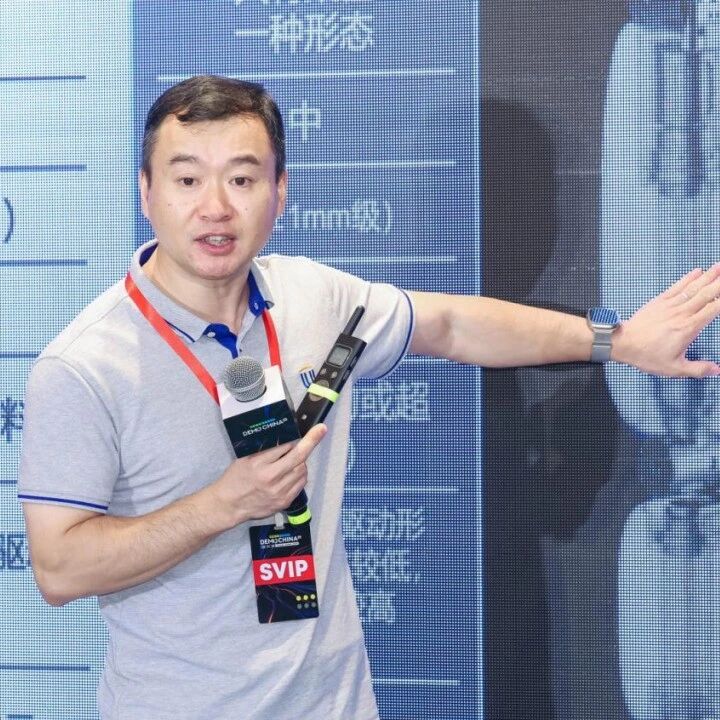
Core Viewpoint - The integration of flexible intelligence and robotics is essential for ensuring safe human-robot interaction in various environments such as homes, elder care, and healthcare, addressing the limitations of rigid robotic arms and electronic device reliability [2][6]. Research Background and Origin of Flexible Technology - The concept of "flexible electronics" was proposed in 2006, focusing on creating devices that can conform to the human body, which has now matured into a commercial sector [6][7]. - The establishment of the "Cross-Mechanics Laboratory" aims to bridge research with practical applications, emphasizing the importance of societal impact and cross-disciplinary collaboration [7]. Core Technology: Flexible to Rigid Mechanisms - The development of "flexible-to-rigid robotic arms" and "full-arm perception" technology addresses safety concerns in human-robot coexistence environments [9][11]. - The robotic arms are designed to be rigid during operation but can become soft during interaction to prevent injury, utilizing mechanical solutions rather than relying solely on electronic systems [12][13]. Key Technologies - **Mechanical Metamaterials**: The robotic arms utilize third-generation materials, combining paper and carbon fiber, designed to change stiffness based on structural configuration [13]. - **Blocking Mechanism**: This mechanism allows the robotic arm to switch between rigid and soft states, ensuring safety during operation [13][14]. - **Full-Arm Perception**: The system employs a simplified approach with only four sensors to detect impacts, allowing for quick responses to avoid collisions [15]. Product Demonstration and Future Plans - A demonstration of the robotic arm shows its ability to switch between hard and soft states within 0.3 seconds, with plans to announce the "Flexible Qiang" intelligent care robot at a national elder care conference [16]. - The robot will feature functions such as fall detection, health management, and emotional companionship, with future iterations focusing on enhancing care capabilities [16]. Exploration of Flexible Intelligence Applications - **Micro Robots**: Innovations in micro-robotics include a new driving method that allows for operation in environments without external power sources, enabling collaborative tasks [18]. - **Customized Flexible Grippers**: A new flexible gripper design addresses the challenges of sorting diverse industrial products, enhancing automation in food processing [19]. - **Speech Assistance for Special Needs**: The integration of flexible electronics and AI aims to assist individuals with speech impairments, achieving over 80% accuracy in reconstructing speech intentions [20].
实探链博会:英伟达、宇树首次参会,机器人展台受关注
Di Yi Cai Jing· 2025-07-16 13:20
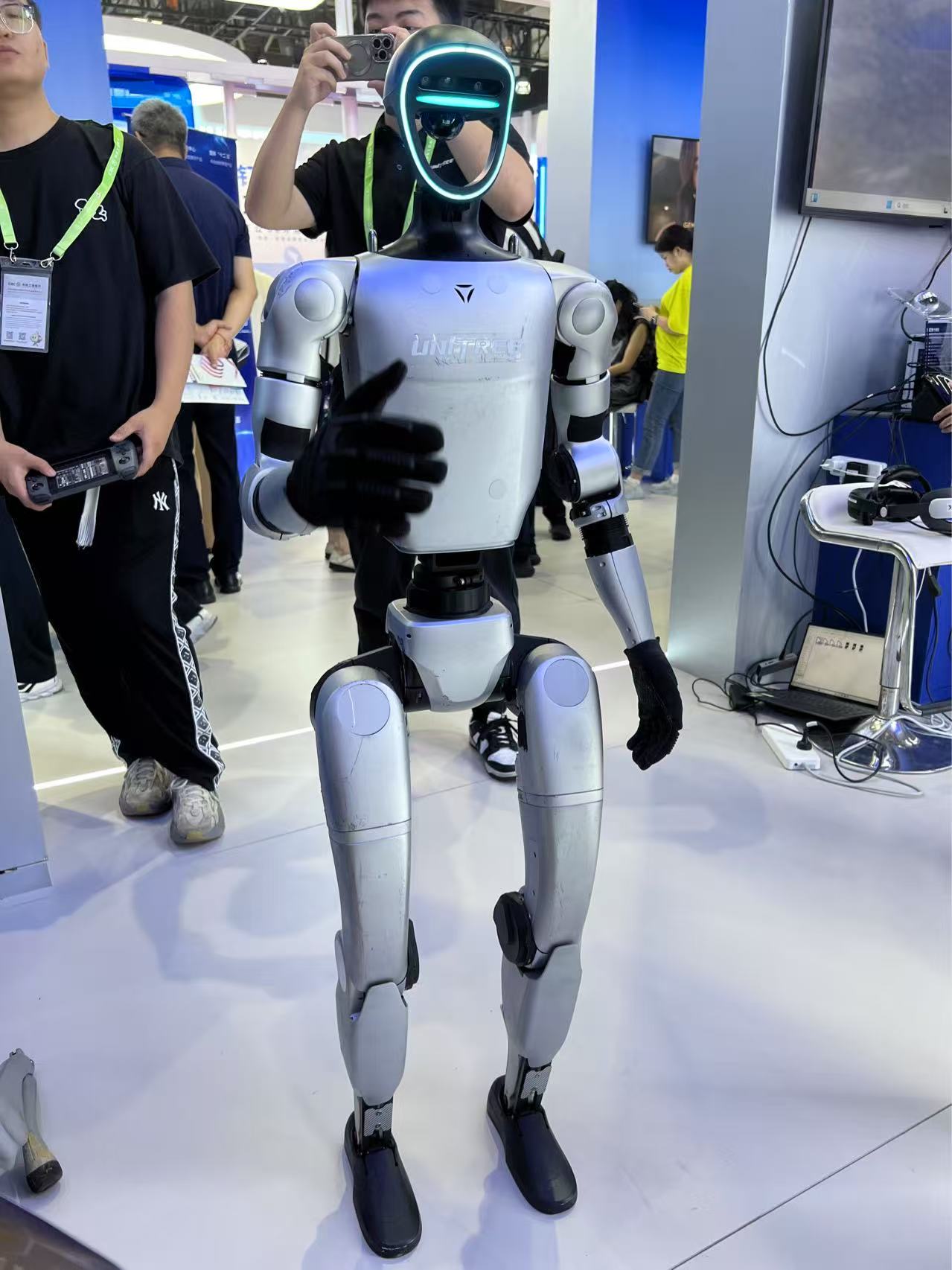
Group 1 - The third China International Supply Chain Promotion Expo (Chain Expo) opened on July 16, featuring many new companies, including Yushu Technology and NVIDIA, which are attending for the first time [1] - Yushu Technology showcased its humanoid robots G1 and Go2, which require secondary development for advanced functionalities, indicating a complexity for ordinary users [1] - The expo provided Yushu Technology an opportunity to understand supply chain relationships and gather market feedback to improve its micro-robot products [1] Group 2 - Attendees at the expo were particularly interested in the capabilities of robots and their future development directions, with expectations for robots to evolve from industrial applications to more complex scenarios within 1 to 3 years [4] - NVIDIA's founder Jensen Huang attracted significant attention at the expo, where the company presented solutions related to robotics, autonomous driving, and cloud computing, including the Mega solution for simulating complex scenarios [4] - NVIDIA highlighted the importance of synthetic data for training autonomous driving systems, addressing the lack of real-world data for manufacturers, and emphasized the alignment of its hardware solutions with the expo's theme [5]

快讯|人形机器人系统进入美国课堂;NAU推出开源外骨骼框架;俄罗斯拆弹机器人量产等
机器人大讲堂· 2025-06-26 08:32
Group 1 - Micro-robots are expected to be used for treating sinusitis, with successful preclinical trials demonstrating their ability to be inserted into animal sinuses and target bacterial infections through electromagnetic guidance [1] - The North Arizona University (NAU) has released an open-source exoskeleton framework named OpenExo, aimed at accelerating the development of robotic legs for disabled individuals, providing comprehensive design files and step-by-step guides for developers [5][6] - The first AI-native curriculum in American classrooms has been launched, featuring a humanoid robot named "Iris" that symbolizes the integration of robotics in education and financial innovation [7][9] Group 2 - Samsung is planning to enter the machine vision market, focusing on providing AI visual capabilities for humanoid robots, leveraging its strengths in image processing and camera technology [11] - Rostec, a Russian state defense group, has unveiled a prototype of a small remote-controlled robot equipped with a powerful laser for deactivating unexploded ordnance, showcasing its capabilities at an industrial engineering expo [12]