Zippy

Search documents
快讯|川崎Corleo坐骑机器人火遍全网;3.8厘米的双足机器人诞生;管道处理微型机器人亮相等
机器人大讲堂· 2025-06-23 13:15
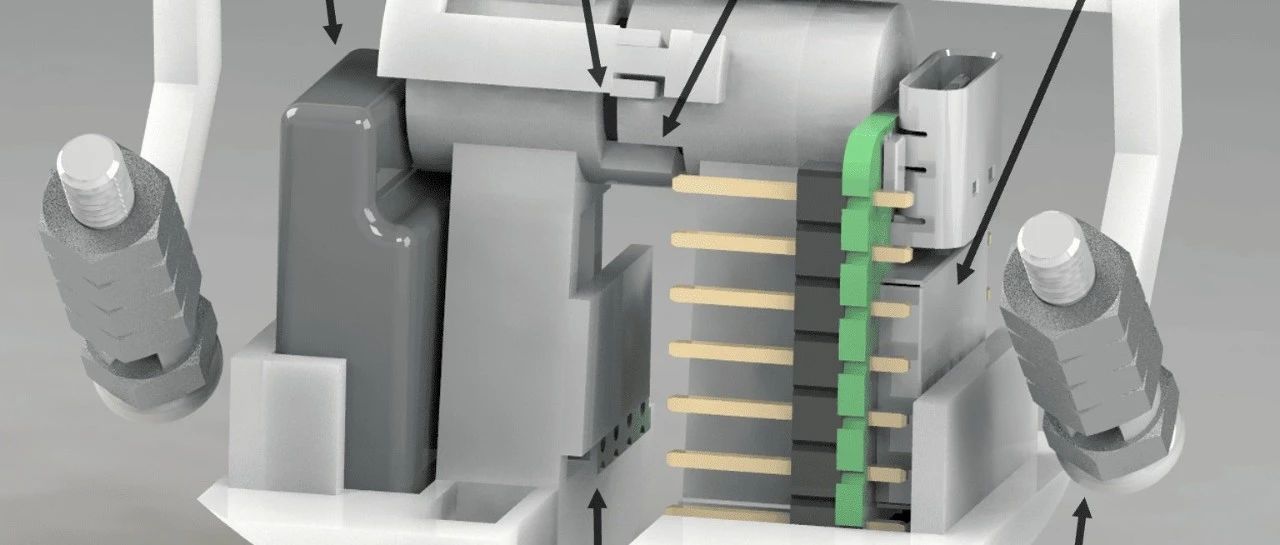
Group 1 - Carnegie Mellon University's engineering school has developed a new robot named Zippy, which is 1.5 inches tall and can walk at a speed equivalent to 19 miles per hour for an adult, making it the smallest and fastest robot in the world [1] - Zippy is designed to navigate rough terrain more easily than wheeled robots, with plans to add sensors for autonomous navigation and positioning, enabling multiple robots to work together in hazardous environments for inspection or rescue tasks [1] Group 2 - Harbin Engineering University, in collaboration with China General Nuclear Power Group and Yangjiang Nuclear Power Co., has developed a quadruped robot for inspecting heat exchange tubes in nuclear power plants, enhancing safety by collecting health information on these critical components [5][6] - The robot features a unique four-legged design and can quickly crawl and inspect, significantly improving the efficiency of heat exchange tube inspections and reducing maintenance costs [6] Group 3 - Kawasaki has unveiled the Corleo robot at the Osaka 2025 Expo, a hydrogen-fueled, four-legged personal mobility robot that aims to revolutionize transportation by integrating nature, technology, and human interaction [9] - Corleo mimics the responsiveness of all-terrain vehicles and is designed to maintain balance and stability on uneven surfaces, with features like GPS navigation to assist riders [9] Group 4 - Researchers from the University of Sheffield and other institutions have developed a series of mini-pipeline robots, known as Pipebots, which can navigate through pipes to automatically inspect for defects, potentially transforming water infrastructure management [10] - These robots are equipped with high-spec acoustic sensors and cameras, capable of detecting leaks and issues before they occur, addressing significant water loss in England and Wales [10] Group 5 - Levita Magnetics has received FDA 510(k) clearance for its MARS (Magnetic-Assisted Robotic Surgery) system, expanding its use for weight loss and hiatal hernia repair surgeries [14] - The system utilizes dynamic magnetic positioning technology to enhance visibility and operability during surgeries, providing a minimally invasive option for treating obesity-related conditions [14]


8点1氪|钟南山对新冠病毒做出最新判断;胖都来商场更名盈都来;孟羽童称时隔两年收到董明珠微信
3 6 Ke· 2025-05-20 23:58
Group 1 - Chao Hong Ji is planning to issue H-shares on the Hong Kong Stock Exchange, with details yet to be confirmed, while its production and operational conditions remain normal [1] - K-Bank is seeking to relaunch its IPO after previous delays, having sent out its prospectus to major underwriters and expected to select a lead underwriter soon [2] - Ningde Times debuted on the Hong Kong stock market with an opening price of 263 HKD per share, closing at 306.2 HKD, marking a 16.43% increase on its first day [5] Group 2 - The Ministry of Housing and Urban-Rural Development reported that over 940 million people live in urban areas in China, with an urbanization rate projected to reach 67% by the end of 2024 [9] - The implementation of the Private Economy Promotion Law marks a significant step in recognizing the legal status of the private economy in China, aiming to promote its sustainable and high-quality development [11] - Meituan is set to launch a new AI programming tool named "NoCode," which is currently in gray testing [17] Group 3 - Douyu reported a total revenue of 947 million CNY for Q1 2025, with innovative business and advertising revenue reaching 383 million CNY, a year-on-year increase of 60.2% [18] - Sailglobal, an overseas HR service provider, announced it has completed a multi-million dollar seed round of financing to enhance AI technology development and expand its overseas service network [20] - "Digital Light Chip" completed a multi-million RMB A+ round of financing, with funds aimed at ongoing chip research and design [27]

卡内基梅隆大学科研团队研发出全球最小的电动自主双足机器人“Zippy”
机器人圈· 2025-05-20 10:22
Group 1 - The Carnegie Mellon University research team has developed the world's smallest electric autonomous bipedal robot named "Zippy," which stands under 4 centimeters tall and can walk, turn, jump, and climb at a speed of 10 steps per second [1] - The bipedal design of "Zippy" allows it to adapt to rugged terrains and provides greater mobility compared to wheeled robots, marking a significant practical breakthrough in micro bipedal robotics [1] - "Zippy" achieves a running step frequency comparable to that of a human running at 31 kilometers per hour, setting a record for autonomous bipedal robots [1] Group 2 - The micro robot can access narrow spaces that are difficult for humans and other devices, with potential applications in disaster rescue, industrial inspection, and geological exploration [1] - Future enhancements for "Zippy" include equipping it with visual sensors for positioning and autonomous navigation, enabling it to perform complex tasks in hazardous environments through collaborative efforts [1]
机器人ETF(562500)低开高走!全球最小的电动自主微型双足机器人问世
Mei Ri Jing Ji Xin Wen· 2025-05-20 06:04
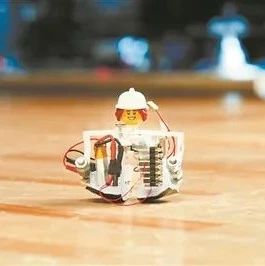
Group 1 - The core viewpoint of the news highlights the performance of the robotics sector, particularly the rise of the robotics ETF (562500) which increased by 0.35% as of 13:49, with significant trading activity and a turnover rate of 2.84% [1] - The leading stock in the robotics sector is Xinbang Intelligent, which surged by 19.99%, while TuoSiDa experienced a decline of 7.18%, indicating mixed performance among holdings [1] - Over the past 20 days, the robotics ETF has seen an increase of over 9%, with a trading volume exceeding 3.7 billion yuan, making it the top performer among comparable funds [1] Group 2 - In terms of capital flow, the robotics ETF experienced a net outflow of 0.63 billion yuan recently, but over the past 20 trading days, it has attracted a total of 4.44 billion yuan [2] - The current scale of the robotics ETF stands at 13.14 billion yuan, with a notable increase of 5.476 billion yuan over the past three months, leading the comparable funds in growth [2] - The ETF's share count has reached 15.156 billion, with an increase of 7.133 billion shares in the last three months, also the highest among comparable funds [2] Group 3 - The research team from Carnegie Mellon University has developed the world's smallest electric autonomous bipedal robot named "Zippy," which stands under 4 centimeters tall and can perform various movements autonomously [1] - The robot's capabilities include walking, turning, jumping, and climbing at a speed of 10 steps per second, showcasing advancements in robotics technology [1] - The results of this research were presented at the 2025 IEEE International Conference on Robotics and Automation, indicating ongoing innovation in the field [1]

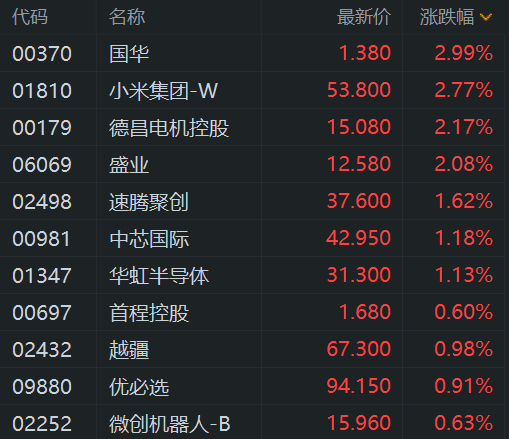
港股机器人概念股普涨,国华、小米、盛业、德昌电机控股涨超2%,速腾聚创、中芯国际、华虹半导体涨超1%
Ge Long Hui· 2025-05-20 02:12
Group 1 - The robotics sector in Hong Kong has seen a general increase, with companies like Guohua, Xiaomi, Shengye, and Dechang Electric Holdings rising over 2% [1] - Notable stock performances include Guohua at 2.99%, Xiaomi at 2.77%, and Dechang Electric Holdings at 2.17% [2] - Other companies such as Suton Juchuang, SMIC, and Huahong Semiconductor also experienced gains exceeding 1% [1][2] Group 2 - A research team from Carnegie Mellon University has developed the world's smallest electric autonomous bipedal robot named "Zippy," which stands under 4 centimeters tall and can perform various movements at a speed of 10 steps per second [2] - In the medical rehabilitation field, exoskeleton robots are primarily applied in three scenarios: spinal cord injury repair, stroke rehabilitation, and aging assistance [3] - The global exoskeleton robot market is entering a rapid growth phase, with projections indicating a market size of $1.8 billion in 2024 and expected to exceed $12 billion by 2030, reflecting a compound annual growth rate of 28% [3]



最小电动自主双足机器人问世
news flash· 2025-05-19 22:01
Core Viewpoint - The Carnegie Mellon University research team has developed the world's smallest electric autonomous bipedal robot named "Zippy," which stands under 4 centimeters tall and can perform various movements autonomously [1] Group 1 - The robot is equipped with a compact onboard battery, actuators, and control systems, enabling it to initiate movement independently [1] - "Zippy" can walk, turn, jump, and climb at a speed of 10 steps per second [1] - The research findings were presented at the 2025 IEEE International Conference on Robotics and Automation [1]
最小电动自主双足机器人Zippy
机器人大讲堂· 2025-05-18 08:15
Core Viewpoint - The emergence of small centimeter-level robots is revolutionizing the robotics field, showcasing their ability to navigate tight spaces and perform tasks that larger robots cannot, while also being cost-effective for large-scale deployment [1] Group 1: Small Robots Advantages - Small centimeter-level robots can operate in industrial facilities, natural caves, and disaster debris, executing inspection and exploration tasks [1] - Their design utilizes cheaper materials and less quantity, making them economically efficient for mass deployment [1] Group 2: Challenges Faced by Small Robots - Small robots face hardware limitations due to size constraints, lacking sufficient perception, drive, and control resources, which affects their dynamic stability during movement [3] - The complexity and space occupation issues arise from multi-legged designs, while bipedal robots face greater challenges in miniaturization while maintaining stability and efficiency [3] Group 3: Zippy - The Smallest Bipedal Robot - Zippy, a 3.6 cm tall bipedal robot, is the smallest independent bipedal walking robot, inspired by the passive dynamic walker (PDW) concept [4][5] - Zippy can passively stand without drive, and it can turn, jump, and climb stairs, achieving a maximum speed of 25 cm/s, making it the fastest autonomous bipedal robot relative to its leg length [5] Group 4: Design and Engineering of Zippy - Zippy's design is based on the simpler Mugatu robot, following five critical design rules to ensure stability and feasibility [8] - The robot's structure consists of two rigid bodies, each with a leg and a curved foot, produced using 3D printing, which simplifies the design and reduces manufacturing costs [10] Group 5: Performance Evaluation of Zippy - Zippy's performance was rigorously tested for walking speed, turning ability, and terrain adaptability, demonstrating excellent energy efficiency and stability on uneven surfaces [5][25] - The robot successfully navigated obstacles, including 2 mm and 3 mm steps, and maintained an average speed of 16.7 cm/s on random terrain [23] Group 6: Future Prospects - Zippy's development opens new avenues for small robot design, proving that miniaturizing passive dynamic walking principles can create compact and flexible robots with stable movement capabilities [26] - Future improvements include integrating an inertial measurement unit (IMU) for real-time gait adjustments and visual navigation capabilities, enabling multiple Zippy robots to work collaboratively in narrow or hazardous environments [27]