德州589街区

Search documents
德百集团张月娟谈商业新生态:从购物场所到城市会客厅
Sou Hu Cai Jing· 2025-12-19 09:11
Core Viewpoint - Traditional retail enterprises are facing a profound transformation in consumer behavior, shifting from mere purchasing to seeking emotional value, cultural identity, and immersive experiences, prompting a redefinition of the marketplace's role [1]. Group 1: Consumer Behavior Changes - Consumers are no longer satisfied with just shopping; they seek social connections, emotional links, and cultural resonance in retail spaces [4]. - The real challenge for offline retail is not a decrease in foot traffic, but a fundamental change in consumer behavior, where consumers "vote with their feet" towards places that offer unique experiences and emotional value [4]. Group 2: Business Strategy and Transformation - 德百集团 is transforming its commercial spaces from "transaction venues" to "city living rooms" and "cultural experience sites," which is both a strategy to address challenges and a key to seizing new opportunities [4]. - The company has launched the "德州589街区," which leverages historical context to enhance commercial space, achieving significant results in foot traffic and consumption levels since its opening [4]. Group 3: Market Positioning and Future Directions - 德百集团 aims to serve a diverse customer base while maintaining a clear core positioning as a "quality consumption leader" and "provider of a better life" [5]. - The company is pursuing a diversified strategy guided by the principles of "development, consolidation, breakthrough, and combination," which includes upgrading traditional retail, enhancing online-offline integration, and expanding into health and cultural tourism sectors [5]. - These initiatives reflect the company's commitment to social responsibility, integrating local cultural heritage and regional economic development into its business model [5].


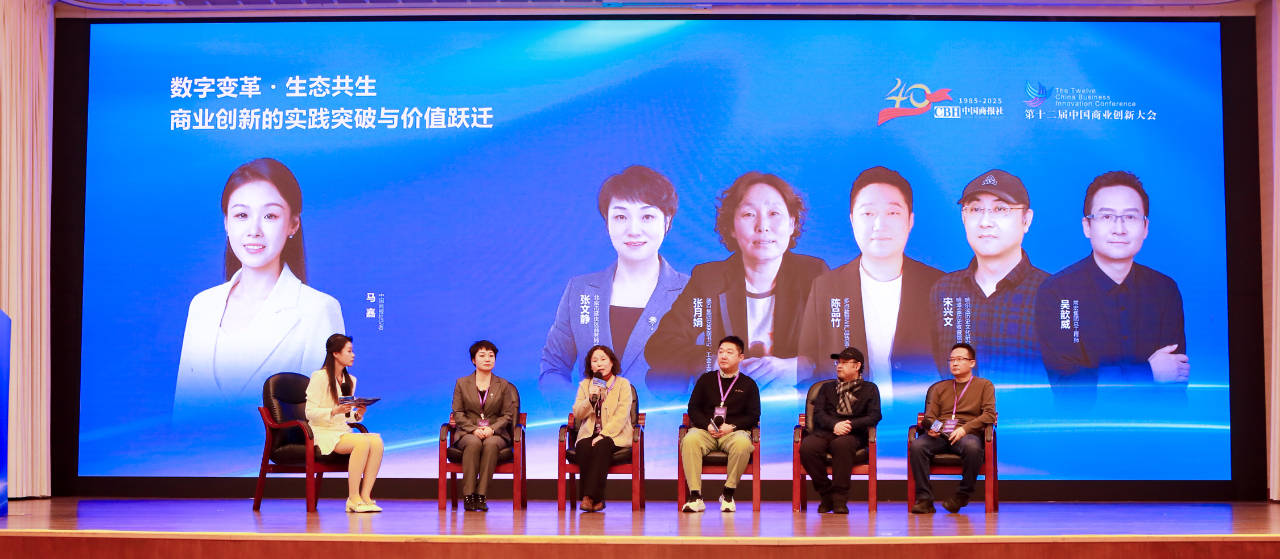
“生态共生”取代“单打独斗” 数字时代商业核心范式迎来转变
Sou Hu Cai Jing· 2025-12-18 15:18
Group 1 - The core message of the roundtable discussion is that the underlying logic of competition in Chinese commerce is undergoing profound reconstruction, shifting from traditional linear competition to an open, collaborative, and value-sharing business ecosystem, which is essential for survival and high-quality development [1][6] - The challenges faced by physical retail include a redefined consumer expectation for shopping experiences that provide emotional and situational value, necessitating a transformation from mere sales to becoming service providers and cultural operators [2][3] - Digital tools are evolving from enhancing internal efficiency to facilitating external ecological connections, with a focus on data flow efficiency between ecosystems, indicating that digitalization must transition from internal empowerment to external integration [3][4] Group 2 - The physical spaces in commercial digital transformation must also adapt, requiring a comprehensive digital approach throughout the lifecycle of construction, which faces structural challenges such as data silos and a lack of skilled talent [4][5] - Cultural elements play a crucial role in connecting and empowering commercial spaces, as demonstrated by the successful integration of historical architecture into modern commercial experiences, fostering a sense of community and shared value [4][5] - The role of local governments is evolving from mere management to becoming creators and maintainers of ecological conditions, with initiatives aimed at transforming regional cultural resources into commercial development momentum [5][6] Group 3 - The micro-foundation of commercial ecosystems lies in specific partnerships, shifting from a focus on rental efficiency to valuing brand resonance and collaborative efforts in creating unique market experiences [7] - The relationship between commercial entities and brands is evolving from a landlord-tenant model to a partnership model based on co-creation of value, emphasizing the importance of digital capabilities in enhancing customer service [7] - The future competitive advantage in business will increasingly depend on the ability to build, integrate, and lead ecosystems, moving away from isolated operations to collaborative co-creation [7]