德阿风电项目

Search documents
授人以渔 造福民生——探访中企南非德阿风电项目
Xin Hua She· 2025-11-18 09:46
Core Viewpoint - The De Aar Wind Power Project, a significant achievement of China-South Africa cooperation under the Belt and Road Initiative, has positively impacted local employment and living standards while contributing to clean energy transformation in South Africa [2][3]. Investment and Project Overview - The De Aar Wind Power Project was completed in 2017 by China National Energy Group Longyuan Power South Africa Company, with a total investment of approximately 2.5 billion RMB [2]. - The project has a total installed capacity of 244.5 MW, making it the largest operational wind power project in South Africa [2]. - It generates approximately 770 million kWh of clean electricity annually, benefiting around 300,000 households in South Africa [2]. Local Employment and Skills Development - The project has trained over 110 local youth in renewable energy technology, with more than 80% of current employees being local, many in key positions [4]. - The initiative has created a "learning-practice-employment" pathway for local youth, enhancing their job prospects in the emerging renewable energy sector [4]. Community Support and Social Impact - The company invests over 4.5 million ZAR annually in scholarship programs, having supported 390 students to date [4]. - A mobile medical unit, funded with nearly 4 million ZAR, provides medical services to approximately 9,000 local residents each year, benefiting over 50,000 individuals by September 2025 [5]. - Local government officials express hope for continued collaboration with Chinese enterprises to further improve the region's economy and living conditions [5].



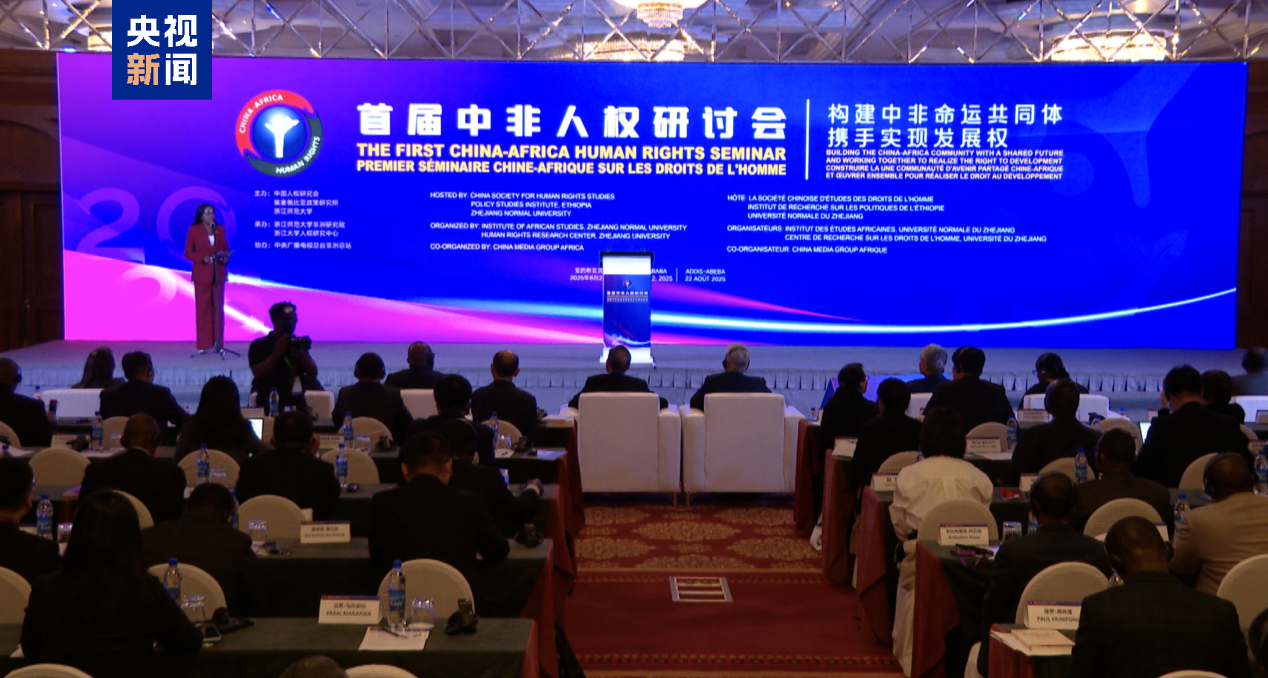
总台记者观察丨中非携手共绘发展权新篇章
Yang Shi Xin Wen Ke Hu Duan· 2025-08-24 07:12
Core Viewpoint - The first African Human Rights Seminar held in Addis Ababa emphasized the importance of development as a key solution to all human rights issues, culminating in the release of the "Addis Ababa Consensus on Development Rights" [1][4]. Summary by Relevant Sections Development Rights - Development is highlighted as an indispensable human right, with a focus on eradicating poverty, hunger, conflict, and discrimination as foundational to human rights protection [3]. - The consensus underscores the necessity of a people-centered development approach, ensuring equitable distribution of development benefits [3]. Sustainable Development - The document advocates for sustainable and high-quality development, reinforcing the role of the UN Charter and the 2030 Sustainable Development Agenda in realizing development rights [3]. - It calls for respect for national sovereignty and the right of countries to choose their own paths for human rights development, opposing the politicization of human rights issues [3]. International Relations - The consensus firmly rejects unilateralism, hegemony, and protectionism, promoting a new type of international relations based on mutual respect and cooperation [3]. - It emphasizes the importance of collective action to ensure the implementation of development rights and the integration of these rights into the UN agenda [3]. China-Africa Cooperation - The document identifies China-Africa cooperation as an effective means to promote the realization of development rights, leveraging mechanisms like the China-Africa Cooperation Forum and the Belt and Road Initiative [3][10]. - China's experience in development is seen as valuable for African nations striving to overcome poverty and achieve sustainable development [5]. Critique of Western Approaches - African representatives expressed strong opposition to Western hegemony disguised as human rights advocacy, highlighting structural issues in Western aid models that may undermine African sovereignty [9]. - The consensus reflects a growing sentiment among African nations to define and pursue their own human rights agendas, free from external imposition [9][10]. Practical Examples of Cooperation - China has implemented various initiatives, such as the "20+20 Cooperation Plan" for higher education, which has significantly contributed to talent development in Africa [8]. - Infrastructure projects like the Mombasa-Nairobi Railway have demonstrated tangible benefits, including a 40% reduction in logistics costs and the creation of 74,000 jobs [8].