
中非合作

Search documents
塞内加尔智库:中国对非零关税举措具有重要意义
Xin Hua She· 2026-02-23 23:02
Core Viewpoint - The announcement by China to implement zero tariffs for African countries that have diplomatic relations with it is expected to enhance African exports to China and highlights the deeper value of China-Africa cooperation in the current international context [1] Group 1 - The initiative is aimed at promoting trade between Africa and China, potentially increasing the volume of exports from African nations [1] - The move reflects the strengthening of diplomatic and economic ties between China and African countries amid changing global dynamics [1]
春种希望,推动中刚关系更好造福两国人民
Xin Lang Cai Jing· 2026-02-23 02:13
Core Viewpoint - The relationship between China and the Democratic Republic of the Congo (DRC) has significantly strengthened, marked by various cooperative initiatives and cultural exchanges, particularly during the Chinese New Year celebrations in the DRC [1][2][3]. Economic Cooperation - The trade volume between China and the DRC is projected to reach $27.57 billion by 2025, reflecting a 3% year-on-year increase [2]. - Key infrastructure projects, such as the construction of the Kolwezi Vocational Training Center and the Kinshasa Capital Ring Road, are progressing rapidly under the "package" cooperation framework [2]. - Humanitarian aid from China includes the dispatch of 23 medical teams from Hebei Province to the DRC, contributing to local healthcare [2]. Cultural Exchange - The first performance of the Chinese Wuju Opera Troupe in the DRC is scheduled for 2025, showcasing cultural collaboration [2]. - The Chinese Embassy in the DRC has hosted the "Chinese Film Week" for three consecutive years, promoting Chinese culture to the local population [2]. - Increasing numbers of DRC youth are learning Chinese at the Confucius Institute, indicating a growing interest in cultural exchange [2]. Humanitarian Support - China has provided humanitarian assistance to the DRC, including rice and medical supplies, demonstrating its commitment to supporting the DRC amid ongoing challenges [3]. - The DRC's ambassador to China emphasized the importance of learning from China's development strategies to achieve peace and progress in the DRC [3].
第39届非盟首脑会议闭幕 与会代表高度评价中非合作
Sou Hu Cai Jing· 2026-02-16 09:12
Group 1 - The 39th African Union Summit concluded, marking a "new momentum" in both structure and substance, as stated by the AU Commission Chairperson, Moussa Faki Mahamat [1] - African leaders discussed key issues including peace and security challenges, AU reforms, participation in the G20, and the implementation of the Agenda 2063 during the two-day summit [3] - The AU reiterated its zero-tolerance policy towards illegal regime changes and emphasized its commitment to "silencing the guns" [3] Group 2 - China announced that starting from May 1, 2026, it will implement a zero-tariff policy for 53 African countries that have diplomatic relations with it, aiming to promote economic partnerships and expand access for African products to China [3] - The AU Commission spokesperson highlighted China's significant role as a trade partner and the largest investor in Africa's infrastructure development, welcoming the zero-tariff initiative [4] - The Secretary-General of the African Migration Observatory noted that the China-Africa relationship is closely tied to the Belt and Road Initiative, which has brought substantial changes to Africa, and the zero-tariff policy is expected to align with the African Continental Free Trade Area, creating a win-win situation for development [6]


为中非共逐现代化之梦提供新机遇
Xin Lang Cai Jing· 2026-02-15 17:59
Group 1 - The Chinese government will implement zero-tariff measures for 53 African countries starting from May 1, 2026, which is expected to significantly enhance trade opportunities for African products entering the Chinese market [2][3] - The announcement of zero tariffs has been positively received by various African leaders and business representatives, who believe it will create unique opportunities for expanding exports to China [2][3] - The focus on signing economic partnership agreements and expanding market access for African products is crucial for the growth of African small and medium-sized enterprises [3] Group 2 - The deepening of China-Africa relations is highlighted by the ongoing cooperation in various sectors, including infrastructure, trade, and emerging fields such as digital innovation and green energy [5][6] - The historical context of China-Africa relations, marked by significant projects like the TAZARA railway, continues to symbolize the friendship and mutual support between the two regions [5] - The upcoming "China-Africa Cultural Exchange Year" in 2026 is seen as an opportunity to further strengthen ties and enhance mutual understanding [1][5]
同心七十载,中非共逐现代化之梦
Xin Lang Cai Jing· 2026-02-11 19:49
Group 1 - The core viewpoint of the news is the signing of the economic partnership framework agreement between China and South Africa, marking a significant deepening of economic ties between the two nations [1] - South Africa becomes the 33rd African country to sign such an agreement with China, highlighting the growing economic relationship between the highest industrialized economy in Africa and its largest Asian trading partner [1] - The agreement ensures that South Africa will enjoy zero tariff treatment on 100% of product categories exported to China, providing a stable and predictable institutional guarantee for enhancing bilateral trade [1] Group 2 - The agreement is expected to facilitate the entry of South African products, such as wine and citrus fruits, into the Chinese market, benefiting both nations [2] - The signing of the agreement comes in the context of South Africa seeking to diversify its trade relationships, especially after the U.S. imposed a 30% tariff on certain South African products [1][2] - China's commitment to high-quality development and expanding high-level openness is anticipated to create greater opportunities for China-Africa cooperation [2][3]
“湘非”如何共拓合作新蓝海?
Zhong Guo Xin Wen Wang· 2026-02-09 10:35
Core Insights - Hunan's import and export with African countries is projected to reach 58 billion yuan by 2025, marking a historical high and maintaining the leading position in Central and Western China for seven consecutive years [1] - The Hunan Provincial Two Sessions in 2026 will focus on exploring new cooperation paths with Africa, emphasizing the importance of healthcare collaboration [1] Group 1: Trade and Economic Cooperation - Hunan is diversifying its trade structure with Africa, moving from engineering equipment exports to importing specialty products like coffee and flowers [3] - The establishment of the China-Africa Economic and Trade Expo in Hunan has accelerated the formation of supportive systems and institutions for trade cooperation [3] - Hunan has established cooperation mechanisms with 28 African countries, enhancing the atmosphere for economic and trade collaboration [3] Group 2: Healthcare Initiatives - The establishment of the China-Africa Hospital Alliance aims to systematically improve public health standards in Africa, with initiatives including training African medical personnel in Chinese medical technology [1] - The proposal for medical resource integration between Hunan and Africa has been adopted by the Hunan Provincial Health Commission, facilitating collaboration between local hospitals and African healthcare facilities [1] Group 3: Talent Development and Training - There is a recognized shortage of international trade talents with expertise in African markets, which is seen as a bottleneck for Hunan's advancement in Africa cooperation [4] - Suggestions have been made to establish a provincial-level training base for China-Africa economic and trade talents to support high-quality development in cooperation [4] - Local enterprises in Hunan are interested in the African market but face challenges due to a lack of foreign trade talents and language skills [4] Group 4: Social and Community Initiatives - The "New Farm for African Mothers" project aims to provide substantial assistance to African women, showcasing Hunan's commitment to social responsibility in its international endeavors [5] - Hunan plans to establish more overseas warehouses and factories in Africa to promote further cooperation through resource sharing and platform building [5]
新春走基层丨“烂泥路”变“致富路”——中企在肯尼亚铺就乡村振兴“快车道”
Xin Hua She· 2026-02-09 06:59
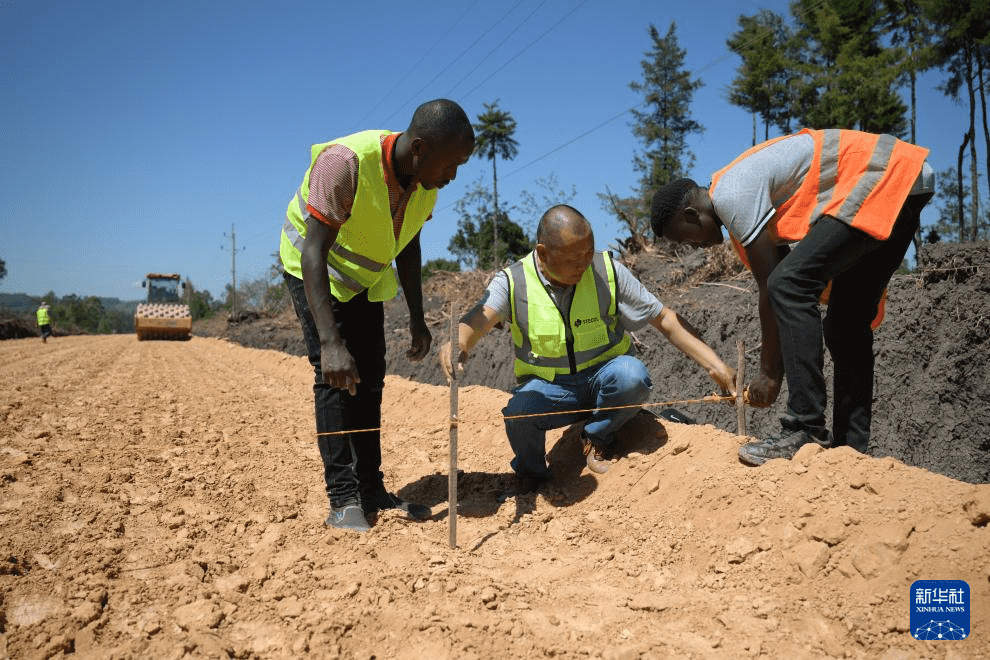
Core Viewpoint - Chinese enterprises are significantly contributing to rural development in Kenya by constructing roads, transforming previously inaccessible areas into thriving communities and enhancing local economies [1][4][16]. Group 1: Infrastructure Development - China Electric Power Construction Municipal Group Co., Ltd. has built hundreds of kilometers of asphalt rural roads in Nyanza County, with the 643 section being a notable example, currently 70% complete and spanning approximately 60 kilometers [4][12]. - The construction of these roads has alleviated long-standing transportation issues, allowing local farmers to transport their products efficiently, thus increasing their income and improving market access [6][12]. Group 2: Economic Impact - The new roads have enabled farmers to quickly deliver fresh produce, such as tea and bananas, to processing facilities, ensuring better quality and higher prices for their goods [6][12]. - Local transportation services, such as motorcycle taxis ("Boda Boda"), have seen a doubling of income due to improved road conditions, leading to increased passenger numbers and reduced vehicle wear [11][12]. Group 3: Community Engagement - The construction teams have fostered strong relationships with local communities, often assisting with additional infrastructure needs, such as school and hospital access, thereby enhancing community ties [8][11]. - Local schools have reported increased enrollment due to improved access, with one school seeing student numbers rise from approximately 500 to over 700 [9][12]. Group 4: Employment and Training - The projects have created numerous job opportunities for local residents and have included training programs for local workers, enhancing their skills and employability [12][16]. - The focus on localized management has ensured that the benefits of the projects are felt directly within the communities [12].
“烂泥路”变“致富路”
Xin Lang Cai Jing· 2026-02-08 19:33
Core Insights - Chinese enterprises are actively involved in infrastructure development in Kenya, particularly in rural road construction, which enhances local connectivity and agricultural productivity [1][4] - The construction of the 643 section of the rural road has significantly improved transportation for local farmers, allowing for quicker delivery of agricultural products to markets, thus increasing their income [2][3] Company Contributions - China Electric Power Construction Group's municipal construction division has built hundreds of kilometers of rural asphalt roads in Nyanza Province, with the 643 section being a key project that connects various villages and farms [1][3] - The project has created numerous job opportunities and trained local technical workers, emphasizing localized management and quality construction practices [3][4] Industry Impact - Improved road infrastructure has transformed the agricultural landscape in Kenya, facilitating better access to markets and enhancing the livelihoods of local farmers [2][4] - The collaboration between Chinese construction companies and local communities has fostered mutual understanding and friendship, contributing to a positive perception of foreign investment in local development [3][4]
“烂泥路”变“致富路”——中企在肯尼亚铺就乡村振兴“快车道”
Xin Hua She· 2026-02-08 07:33
Core Viewpoint - Chinese enterprises are significantly contributing to the infrastructure development in rural Kenya, particularly through the construction of roads that enhance local agricultural productivity and improve the quality of life for residents [1][4]. Group 1: Infrastructure Development - China Electric Power Construction Group Co., Ltd. (CEPC) has constructed hundreds of kilometers of asphalt rural roads in Nyanza Province, Kenya, with the 643 section being a notable example, currently 70% complete and spanning approximately 60 kilometers [1][3]. - The construction of these roads has transformed previously impassable dirt roads into smooth, accessible routes, facilitating local economic development and improving transportation for agricultural products [1][4]. Group 2: Economic Impact - The new roads have enabled farmers to transport their products, such as tea and bananas, directly to processing facilities, ensuring better quality and increasing farmers' incomes [2][3]. - The project has created numerous job opportunities and trained a group of local technical workers, contributing to the local economy [3]. Group 3: Community Engagement - The construction team has fostered strong relationships with local residents, often assisting with community needs such as school and hospital access, which has led to increased local goodwill [2][3]. - The project has also improved educational access, with student enrollment at local schools increasing from approximately 500 to over 700 due to better transportation [2][3]. Group 4: Cultural Exchange - Chinese construction workers have engaged with local communities, learning Swahili and sharing cultural experiences, which has enhanced mutual understanding and friendship [3]. - Personal stories, such as a construction manager being invited to a local villager's home, illustrate the deepening ties between the Chinese workers and the local population [3].

通讯丨非洲咖啡香飘中原古城——从一座咖啡厂看中非经贸合作
Xin Hua Wang· 2026-02-04 07:10
Core Viewpoint - The article highlights the growing coffee trade between China and African countries, particularly Ethiopia, showcasing how this collaboration enhances economic ties and creates job opportunities in both regions [1][4]. Group 1: Industry Development - The coffee industry in Puyang, Henan Province, is thriving despite the region not being a coffee-growing area, exemplifying the deepening economic cooperation between China and Africa [1]. - The establishment of the China (Puyang) Ethiopia Coffee Industry Demonstration Park facilitates the processing and export of Ethiopian coffee beans to various countries, including Japan, South Korea, and Singapore [1]. - The Chinese coffee market is experiencing rapid growth, with Ethiopia becoming the seventh largest coffee exporter to China in 2023, projected to rise to fourth place by 2025 [3]. Group 2: Economic Impact - Ethiopia's coffee production is significant, with an annual output of approximately 600,000 tons and around 5 million small-scale farmers involved in the coffee sector [4]. - The coffee trade has created job opportunities in Puyang, with local workers, particularly women, benefiting from employment in the coffee packaging process [4]. - The collaboration under the Belt and Road Initiative is fostering economic growth and employment in both Ethiopia and Puyang, enhancing the livelihoods of individuals involved in the coffee supply chain [4]. Group 3: Trade Relations - In 2024, China will implement a 100% zero-tariff policy for products from 33 least developed African countries, including Ethiopia, benefiting agricultural exports [1][2]. - Ethiopian coffee exporters, such as AWO Coffee Company, are increasingly meeting the rising demand in China by sourcing beans from local farmers [2]. - The improvement in transportation efficiency and the rise in organic coffee exports from Ethiopia are aligning with the growing consumer demand for high-quality coffee in China [3].