房屋托管服务

Search documents
一场针对普通人的金融大收割,正在卷土重来!
商业洞察· 2025-12-25 09:26
Core Viewpoint - The article highlights a new type of financial trap that targets individuals through deceptive housing rental agreements, leading to significant debt accumulation and loss of property [3][4][36]. Group 1: Case Study of the Trap - A woman borrowed 130,000 yuan but ended up with a debt of nearly 12.6 million yuan due to compounded interest and hidden fees [3][32]. - The rental company, despite being officially registered, engaged in predatory lending practices, using contracts with hidden clauses to exploit borrowers [3][20][27]. - The contracts included a low-interest loan agreement, a high-rent property management contract, and an authorization letter that allowed the company to seize the property in case of default [9][10][27]. Group 2: Mechanism of the Scam - The scam operates through a four-step process: establishing false authority, creating a contractual maze, inducing debt escalation, and exploiting legal loopholes [21][27][30][34]. - The initial contact with potential victims is facilitated by the company's access to personal financial information, creating a false sense of security [21][22]. - Once the victim signs the contracts, they are trapped in a cycle of increasing debt, often leading to the loss of their properties [30][34]. Group 3: Broader Implications - The article warns that this type of scam is not isolated and could evolve into other forms, such as auto loans or different financial products, as long as the underlying fraudulent model persists [38]. - The ease of accessing personal information for malicious purposes is a significant concern, making individuals vulnerable to such traps [37]. - The article emphasizes the importance of being cautious of offers that defy basic business logic, particularly those promising unusually high returns or benefits [39].


女子借款13万,不到一年半要还近1300万!央视曝光“套路贷”
Xin Lang Cai Jing· 2025-12-18 14:24
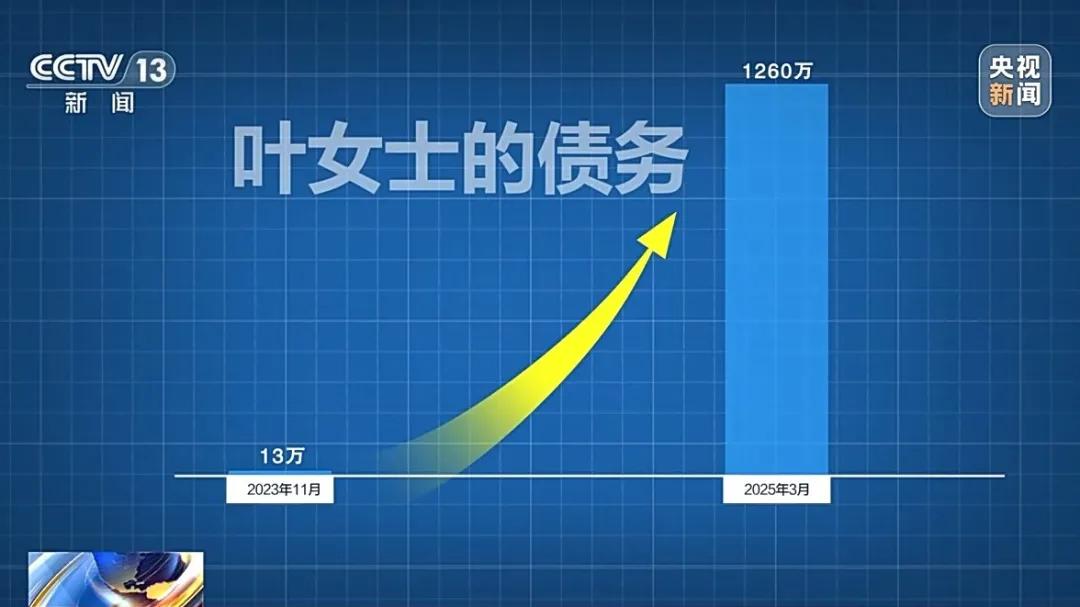
Core Insights - A criminal gang disguised as a housing rental company was dismantled by police in Chengdu, Sichuan, with five core suspects arrested, revealing a shocking debt trap where a victim's loan of 130,000 yuan ballooned to nearly 13 million yuan in less than a year and a half, leading to the forced mortgage of properties worth nearly 10 million yuan [1][12]. Group 1: Loan Scheme Details - The victim, Ms. Ye, received a call claiming to offer loans through an "internal green channel" in collaboration with financial management departments, accurately detailing her recent bank loan rejection and credit inquiries [2][13]. - Ms. Ye signed three contracts: a loan agreement for 130,000 yuan at a monthly interest rate of 1.5%, a housing management contract promising fixed monthly income of 23,000 yuan regardless of tenant occupancy, and an authorization letter with a clause imposing a 30% penalty on annual rent in case of default [3][14]. - Upon receiving the loan, Ms. Ye was charged 26,000 yuan in fees, leaving her with only 104,000 yuan from the original loan amount [4][15]. Group 2: Debt Escalation - By March 2024, Ms. Ye received a default notice claiming her property was classified as a group rental, requiring her to pay a penalty of 82,800 yuan [5][16]. - Attempts to terminate the contract led to demands for compensation of 331,200 yuan for the remaining four years of the management contract [6][17]. - To manage her escalating debt, Ms. Ye was introduced to another company offering a "debt optimization" plan, which involved borrowing an additional 450,000 yuan, causing her total debt to soar from 130,000 yuan in November 2023 to 12.6 million yuan by March 2025 [7][18]. Group 3: Company Operations and Revenue Structure - The involved rental company, established in 2018 with a registered capital of 10 million yuan, appeared compliant with regulations but operated beyond normal rental practices, generating 427.1 million yuan in penalty fees compared to only 6.32 million yuan in rental income over two and a half years [9][20]. - The company utilized rental data from housing authorities to target individuals with vacant properties and previous loan rejections, effectively preying on vulnerable borrowers [20]. - Contracts were designed to include hidden clauses that were difficult to contest legally, and the company collaborated with multiple small loan and guarantee companies, effectively charging exorbitant interest rates disguised as legitimate loans [10][21]. Group 4: Legal and Police Action - The criminal activities were exposed following a series of unusual arbitration cases in July 2025, where all defendants failed to appear, and the same company was involved in multiple claims [22]. - Police traced 49 million yuan in illegal lending back to the suspects, leading to the arrest of 73 individuals and the seizure of significant evidence, including servers and contract documents [22].
自如房东,为何总被平台拿捏?
3 6 Ke· 2025-05-21 03:07
Core Viewpoint - The article discusses the challenges faced by landlords who entrust their properties to management platforms like Ziroom, highlighting potential risks and pitfalls associated with such arrangements [2][14]. Group 1: Issues with Property Management Platforms - Many landlords experience significant issues after handing over their properties to management platforms, including property damage and lack of maintenance [3][6]. - Landlords report that management platforms often shift responsibility for repairs and damages onto them, leading to disputes over accountability [6][14]. - The management platform's approach to renovations often involves high fees, which landlords feel are unjustified and lead to financial losses [8][14]. Group 2: Financial Implications for Landlords - Landlords are often required to pay substantial renovation fees upfront, which can range from tens of thousands to hundreds of thousands of yuan, creating a sunk cost that they cannot recover [7][14]. - Management platforms may pressure landlords to lower rental prices or extend vacancy periods under the pretext of market conditions, which can further erode landlords' income [13][14]. - Landlords who refuse to comply with these demands may face contract termination, resulting in additional financial penalties and loss of rental income [14][15]. Group 3: Alternatives and Market Dynamics - Increasingly, landlords are opting to manage their properties directly or seek alternative management platforms to avoid the pitfalls associated with established players like Ziroom [15][16]. - Direct management allows landlords to retain more control over their properties and potentially achieve higher rental yields, although it requires more time and effort [15][16]. - The competitive landscape for property management is evolving, with other platforms emerging as alternatives, but they also carry risks of their own, as seen in past incidents like the Eggshell Apartment crisis [16].