套路贷

Search documents
一场针对普通人的金融大收割,正在卷土重来!
商业洞察· 2025-12-25 09:26
Core Viewpoint - The article highlights a new type of financial trap that targets individuals through deceptive housing rental agreements, leading to significant debt accumulation and loss of property [3][4][36]. Group 1: Case Study of the Trap - A woman borrowed 130,000 yuan but ended up with a debt of nearly 12.6 million yuan due to compounded interest and hidden fees [3][32]. - The rental company, despite being officially registered, engaged in predatory lending practices, using contracts with hidden clauses to exploit borrowers [3][20][27]. - The contracts included a low-interest loan agreement, a high-rent property management contract, and an authorization letter that allowed the company to seize the property in case of default [9][10][27]. Group 2: Mechanism of the Scam - The scam operates through a four-step process: establishing false authority, creating a contractual maze, inducing debt escalation, and exploiting legal loopholes [21][27][30][34]. - The initial contact with potential victims is facilitated by the company's access to personal financial information, creating a false sense of security [21][22]. - Once the victim signs the contracts, they are trapped in a cycle of increasing debt, often leading to the loss of their properties [30][34]. Group 3: Broader Implications - The article warns that this type of scam is not isolated and could evolve into other forms, such as auto loans or different financial products, as long as the underlying fraudulent model persists [38]. - The ease of accessing personal information for malicious purposes is a significant concern, making individuals vulnerable to such traps [37]. - The article emphasizes the importance of being cautious of offers that defy basic business logic, particularly those promising unusually high returns or benefits [39].


央行发布信用修复政策:给负债者一个重塑的机会
Sou Hu Cai Jing· 2025-12-22 04:49
Core Viewpoint - The People's Bank of China has introduced a new policy aimed at removing small overdue records from personal credit reports, providing a rare opportunity for millions of families to restore their credit status [1][4]. Group 1: Policy Implementation - The policy allows for automatic removal of overdue records for amounts under 10,000 yuan if repaid by March 31, 2024, without the need for application [1][4]. - This initiative reflects a balance between punishment and forgiveness, acknowledging the financial difficulties faced by many during the pandemic [4][5]. Group 2: Policy Boundaries - The policy is defined by four clear boundaries to prevent misuse: 1. Overdue records must be from January 1, 2020, to December 31, 2025 [6]. 2. The principal amount must not exceed 10,000 yuan [7]. 3. Full repayment must occur by March 31, 2026 [8]. 4. It primarily benefits non-malicious, small, and occasional overdue cases [9][10]. Group 3: Underlying Issues - Many individuals face credit issues not from small overdue payments but from falling into high-interest loans and predatory lending traps [11]. - These predatory lenders often exploit urgent financial needs, leading to a cycle of debt that is difficult to escape [11][12]. Group 4: Post-Policy Considerations - The introduction of the policy has already attracted fraudulent schemes promising to erase credit blemishes for a fee, which the central bank has warned against [14]. - The policy offers a valuable opportunity for financial reset, emphasizing the importance of responsible borrowing and spending habits [14]. Group 5: Call for Further Action - While the new policy is a positive step, there is a call for stronger regulatory measures to eliminate illegal high-interest and predatory lending practices [15][16]. - Establishing a transparent and fair lending environment is crucial to prevent the cycle of debt and ensure financial stability for families [16].
女子借款13万,不到一年半要还近1300万!央视曝光“套路贷”
Xin Lang Cai Jing· 2025-12-18 14:24
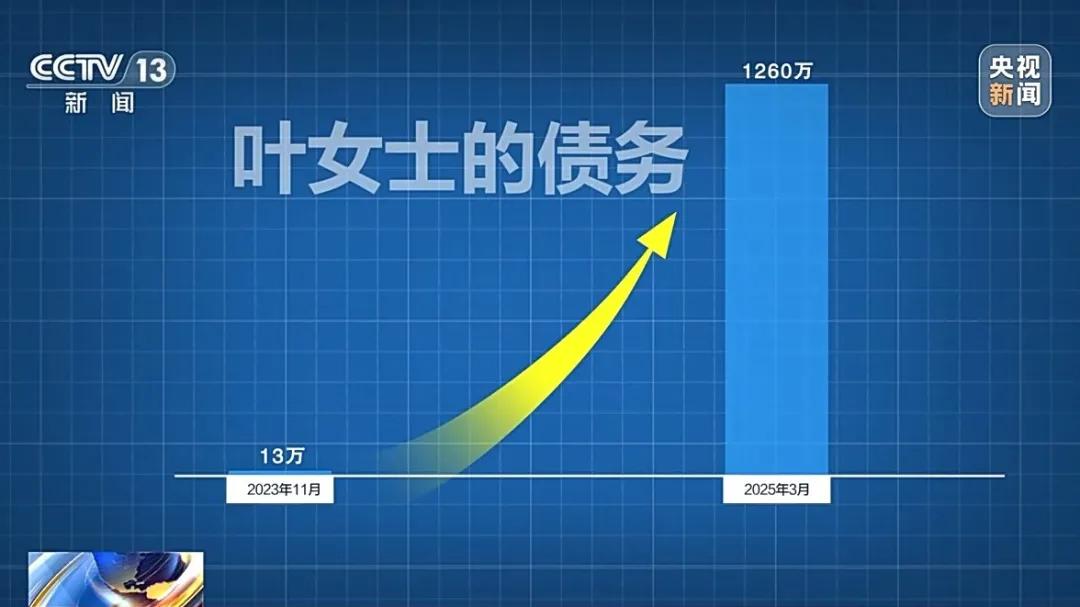
Core Insights - A criminal gang disguised as a housing rental company was dismantled by police in Chengdu, Sichuan, with five core suspects arrested, revealing a shocking debt trap where a victim's loan of 130,000 yuan ballooned to nearly 13 million yuan in less than a year and a half, leading to the forced mortgage of properties worth nearly 10 million yuan [1][12]. Group 1: Loan Scheme Details - The victim, Ms. Ye, received a call claiming to offer loans through an "internal green channel" in collaboration with financial management departments, accurately detailing her recent bank loan rejection and credit inquiries [2][13]. - Ms. Ye signed three contracts: a loan agreement for 130,000 yuan at a monthly interest rate of 1.5%, a housing management contract promising fixed monthly income of 23,000 yuan regardless of tenant occupancy, and an authorization letter with a clause imposing a 30% penalty on annual rent in case of default [3][14]. - Upon receiving the loan, Ms. Ye was charged 26,000 yuan in fees, leaving her with only 104,000 yuan from the original loan amount [4][15]. Group 2: Debt Escalation - By March 2024, Ms. Ye received a default notice claiming her property was classified as a group rental, requiring her to pay a penalty of 82,800 yuan [5][16]. - Attempts to terminate the contract led to demands for compensation of 331,200 yuan for the remaining four years of the management contract [6][17]. - To manage her escalating debt, Ms. Ye was introduced to another company offering a "debt optimization" plan, which involved borrowing an additional 450,000 yuan, causing her total debt to soar from 130,000 yuan in November 2023 to 12.6 million yuan by March 2025 [7][18]. Group 3: Company Operations and Revenue Structure - The involved rental company, established in 2018 with a registered capital of 10 million yuan, appeared compliant with regulations but operated beyond normal rental practices, generating 427.1 million yuan in penalty fees compared to only 6.32 million yuan in rental income over two and a half years [9][20]. - The company utilized rental data from housing authorities to target individuals with vacant properties and previous loan rejections, effectively preying on vulnerable borrowers [20]. - Contracts were designed to include hidden clauses that were difficult to contest legally, and the company collaborated with multiple small loan and guarantee companies, effectively charging exorbitant interest rates disguised as legitimate loans [10][21]. Group 4: Legal and Police Action - The criminal activities were exposed following a series of unusual arbitration cases in July 2025, where all defendants failed to appear, and the same company was involved in multiple claims [22]. - Police traced 49 million yuan in illegal lending back to the suspects, leading to the arrest of 73 individuals and the seizure of significant evidence, including servers and contract documents [22].
借款13万却要还近1300万!警方揭露“套路贷”陷阱
财联社· 2025-12-17 16:05
Core Viewpoint - The article reveals a shocking debt trap involving a loan shark gang disguised as a housing rental company, where victims' debts can escalate dramatically due to hidden fees and penalties [1][2]. Group 1: Case Overview - The case involves a victim, Ms. Ye, who borrowed 130,000 yuan and saw her debt balloon to nearly 12.6 million yuan in just over a year due to compounded interest and hidden fees [1][15]. - The gang used precise personal information to lure victims, making them believe in the legitimacy of the loan offers [2][4]. Group 2: Contractual Manipulation - The gang presented three contracts to Ms. Ye: a loan agreement, a housing management contract promising fixed rental income, and an authorization letter with hidden clauses for penalties [6][10]. - The hidden clause in the authorization letter allowed the company to charge a 30% penalty on annual rent if the victim defaulted, which was not initially noticed by Ms. Ye [8][10]. Group 3: Debt Escalation Mechanism - After the initial loan, Ms. Ye was charged various fees, reducing her actual loan amount to 104,000 yuan, while the company failed to pay any promised rental income [10]. - The debt snowballed as the company continuously charged her high penalties under the guise of contract violations, leading to a total debt of 12.6 million yuan by March 2025 [15][19]. Group 4: Company Operations and Revenue Model - The rental company, established in 2018 with a registered capital of 10 million yuan, appeared legitimate but engaged in illegal practices to generate revenue [16][19]. - The company's income structure was heavily skewed, with only 6.32 million yuan from rental income compared to 42.71 million yuan from penalty fees, indicating a focus on exploiting contractual loopholes [19][21]. Group 5: Legal and Regulatory Insights - The gang's operations were exposed through unusual arbitration cases, where multiple victims faced similar issues without appearing in court [22][26]. - The police investigation revealed that the company had connections with other financial institutions, indicating a broader network of illegal lending practices [21][26]. Group 6: Recommendations and Precautions - Authorities emphasize the importance of vigilance against low-interest loans and fixed income offers, advising victims to retain all documentation and report to the police immediately if they suspect they are in a loan trap [28][30].

借款13万却要还近1300万,揭露“套路贷”陷阱:精准筛选“有房有贷”群体,通过违约金条款与文字游戏,以年息180%贷给借款人
Xin Lang Cai Jing· 2025-12-17 14:19
Core Viewpoint - A criminal gang disguised as a housing rental company was dismantled by the Chengdu police, revealing a shocking debt trap where a victim's debt escalated from 130,000 yuan to nearly 13 million yuan in less than a year and a half, with properties worth nearly 10 million yuan being forced into collateral [1][24]. Group 1: The Scheme - The victim, Ms. Ye, was targeted through a phone call claiming to offer loans via an "internal green channel" in collaboration with financial management departments, showcasing precise knowledge of her recent bank loan rejection [3][29]. - The gang employed a combination of contracts, including a loan agreement with a 1.5% monthly interest rate and a property management contract promising fixed rental income, which concealed the true traps within the agreements [8][33]. - The contracts included hidden clauses that allowed the company to impose exorbitant penalties, such as a 30% penalty on annual rent if the victim defaulted, which was not initially noticed by the victim [34][35]. Group 2: Debt Escalation - The victim's debt ballooned from 130,000 yuan in November 2023 to 12.6 million yuan by March 2025, as the company continuously charged high penalties under various pretexts [41]. - The company’s revenue model was heavily skewed towards penalty income, with 4,271 million yuan from penalties compared to only 632 million yuan from rental income over two and a half years, indicating a predatory business model [45]. Group 3: Regulatory and Operational Insights - The rental company, established in 2018 with a registered capital of 10 million yuan, appeared legitimate with proper licenses but engaged in illegal practices that deviated from standard rental operations [14][43]. - The company utilized legal loopholes to target vulnerable individuals, such as those with vacant properties and previous loan rejections, effectively creating a system of exploitation [19][45]. - Investigations revealed that the company had connections with multiple financial institutions, indicating a coordinated effort to disguise illegal lending practices under the guise of legitimate operations [18][47]. Group 4: Law Enforcement Response - The police operation led to the arrest of 73 individuals and the seizure of significant evidence, including servers and contract documents, effectively dismantling the criminal organization [53]. - Authorities emphasized the importance of protecting personal information and regulating credit inquiry permissions to prevent such exploitation in the future [52].
揭秘“黄金分期”背后的高息债务套路
Bei Jing Shang Bao· 2025-12-04 16:13
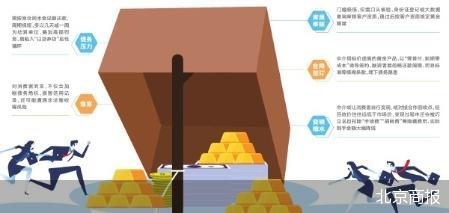
Core Viewpoint - The rise in international gold prices has led to a surge in gold consumption and investment, but it has also given rise to predatory lending practices disguised as "gold installment" schemes, which exploit consumers in need of short-term financing [1][3][10]. Group 1: Nature of the Scheme - The "gold installment" borrowing model is marketed with terms like "zero down payment, zero interest, and zero fees," but it is essentially a new form of predatory lending disguised as a legitimate financial product [3][4]. - Victims often find themselves trapped in high-interest debt cycles, with actual funds received being significantly lower than expected due to hidden fees and unfavorable buyback prices [4][9]. Group 2: Consumer Experiences - Many consumers, like Lin Ying (a pseudonym), have reported being misled into signing contracts for gold purchases that they cannot afford, only to receive far less than the market value when attempting to liquidate the gold [4][6]. - The process often involves high-pressure tactics from intermediaries who promise quick cash solutions but ultimately lead consumers into debt traps with exorbitant repayment terms [6][10]. Group 3: Regulatory and Legal Context - Regulatory bodies have begun to issue warnings about the illegal nature of these gold-related financial activities, which often violate financial regulations and consumer protection laws [12][14]. - Legal cases have emerged where courts have recognized the predatory nature of these schemes, leading to the invalidation of contracts that disguise high-interest loans as legitimate gold transactions [13][15]. Group 4: Recommendations and Consumer Awareness - Experts recommend that consumers should be cautious of low-threshold, high-return financial products and prioritize dealing with licensed financial institutions for short-term funding needs [15][16]. - In case of falling victim to such schemes, consumers are advised to cease all payments, gather evidence, and seek legal recourse to challenge the validity of the contracts signed [16].
“实在是还不起了”!零首付黄金分期实际是高利贷?揭秘背后套路…
Bei Jing Shang Bao· 2025-12-04 15:08
Core Viewpoint - The "gold installment" scam disguises illegal high-interest loans as legitimate gold transactions, leading consumers into a triple dilemma of high costs, asset safety risks, and legal challenges [3][18]. Group 1: Nature of the Scam - The rise of "gold installment" loans is linked to the increasing international gold prices, which has spurred a surge in gold consumption and investment [4][5]. - These loans are marketed with enticing terms such as "zero down payment, zero interest, and zero fees," but they are essentially high-interest loans disguised as gold purchases [5][10]. - The operational model involves splitting the flow of funds and goods, making it difficult to trace the actual flow of money and increasing regulatory challenges [4][9]. Group 2: Consumer Experiences - Victims of the scam report significant financial losses, with one individual receiving only 10,000 yuan after being promised 20,000 yuan worth of gold, highlighting the deceptive nature of the recovery process [7][17]. - Many consumers find themselves trapped in a cycle of debt, facing high penalties for late payments and struggling to meet repayment schedules [9][12]. - The actual costs of borrowing are much higher than advertised, with some victims facing annualized interest rates exceeding legal limits [12][18]. Group 3: Legal and Regulatory Context - Legal experts indicate that the contracts involved in these scams are designed to obscure the true nature of the loans, complicating consumers' ability to seek legal recourse [9][18]. - Regulatory bodies have begun to issue warnings about the illegal nature of these financial activities, emphasizing the need for consumer vigilance [19][22]. - Judicial cases have demonstrated that courts are recognizing these contracts as invalid due to their deceptive nature, which could set a precedent for future cases [21][23]. Group 4: Recommendations for Consumers - Consumers are advised to prioritize licensed financial institutions for short-term funding needs and to carefully assess their repayment capabilities [25]. - In the event of falling victim to such scams, it is crucial to cease all payments immediately and gather evidence to support any potential legal claims [26].

万元买金到手8500元!黄金分期背后的高息债务“套路”
Sou Hu Cai Jing· 2025-12-04 04:53
Core Viewpoint - The rise in international gold prices has led to a surge in gold consumption and investment, but it has also given rise to predatory lending practices disguised as "gold installment" schemes, which exploit consumers in need of short-term financing [1][3]. Group 1: Gold Installment Schemes - "Gold installment" schemes are marketed with enticing offers such as "zero down payment, zero interest, and zero fees," but they are essentially high-interest loans disguised as gold purchases [3][4]. - Victims of these schemes often find themselves trapped in a cycle of debt, facing high penalties for late payments and hidden fees that significantly reduce the actual funds received [4][5]. - The complexity of these schemes, which separate the flow of funds from the physical gold, makes it difficult for regulators to track and increases the risk for consumers [4][9]. Group 2: Consumer Experiences - Many consumers, like Lin Ying (a pseudonym), have reported being misled into these schemes, believing they were obtaining legitimate loans, only to discover they were entering into high-interest debt agreements [3][4]. - Victims have shared experiences of receiving far less than the promised amount when attempting to liquidate the gold, often at prices significantly below market value [4][8]. - The contracts signed by consumers often contain vague terms regarding repayment schedules and penalties, leading to further financial distress [5][6]. Group 3: Regulatory and Legal Context - Regulatory bodies have identified these gold installment schemes as illegal financial activities, often involving high-interest lending disguised as legitimate gold transactions [10][12]. - Legal cases have emerged where courts have ruled against companies using these schemes, recognizing them as a form of disguised high-interest lending [11][12]. - There is a call for stronger regulatory measures to combat these predatory practices, including better tracking of gold transactions and consumer education on the risks involved [13][14].

万元买金到手8500元!黄金分期背后的高息债务“套路”
Bei Jing Shang Bao· 2025-12-04 04:48
Core Viewpoint - The rise in international gold prices has led to a surge in gold consumption and investment, but it has also given rise to predatory lending practices disguised as "gold installment" schemes, which exploit consumers in need of short-term financing [1][2][8]. Group 1: Gold Installment Schemes - "Gold installment" schemes are marketed with enticing offers such as "zero down payment, zero interest, and zero fees," but they are essentially high-interest loans disguised as gold purchases [2][3]. - Victims of these schemes often find themselves trapped in a cycle of debt, facing high penalties for late payments and hidden fees that significantly reduce the actual funds received [3][4][5]. - The complexity of these schemes, which separate the flow of funds from the physical gold, makes it difficult for regulators to track and for consumers to understand the true costs involved [3][8]. Group 2: Consumer Experiences - Many consumers, like Lin Ying (a pseudonym), have reported being misled into believing they were securing legitimate loans, only to end up with significantly less cash than expected after selling the gold at a loss [3][4]. - The actual cash received from selling the gold is often much lower than the market value, compounded by additional hidden costs, leading to a financial crisis for many consumers [7][8]. - Legal experts have noted that these schemes exploit consumers' lack of understanding of complex financial contracts, making it challenging for them to seek recourse [8][9]. Group 3: Regulatory and Legal Context - Regulatory bodies have begun to issue warnings about the illegal nature of these gold installment schemes, which often involve fraudulent practices and violate financial regulations [11][12]. - Judicial cases have highlighted the deceptive practices of companies using gold sales contracts to mask high-interest lending, leading to court rulings that invalidate such contracts [10][11]. - Experts suggest that a coordinated effort between regulatory and judicial authorities is necessary to combat these illegal financial activities effectively [12][13].
法眼看剧丨看《少年田野》 游戏闯关“零元购”赢取手机?小心游戏贷陷阱!
Yang Guang Wang· 2025-11-09 03:40
Core Points - The article discusses the dangers of online scams targeting minors, particularly through deceptive gaming promotions that lure them into signing loan contracts under false pretenses [1][3][6] - It highlights the legal consequences of such scams and the importance of awareness and education to prevent minors from falling victim to these schemes [9][14][22] Group 1: Scam Mechanisms - The "1 yuan to claim a phone" scheme is a common tactic used to entice minors, where they are led to believe they can obtain a high-value phone for a minimal upfront cost, only to later discover they have signed a loan agreement [3][6][11] - Criminals create seemingly legitimate platforms, such as gaming apps, to lower victims' defenses and use enticing offers to collect personal information and coerce them into high-interest loans [7][14] Group 2: Legal Framework and Enforcement - The article emphasizes that Chinese law strictly prohibits high-interest lending, and various loan scams can lead to other criminal activities, including fraud, extortion, and even violence against victims [14][16] - Judicial authorities are committed to a zero-tolerance policy towards crimes that harm minors, ensuring strict penalties for offenders and prioritizing the protection of minor victims during legal proceedings [18][20] Group 3: Prevention and Awareness - The article advises on the importance of not trusting suspicious offers, protecting personal information, and verifying the legitimacy of online platforms to avoid falling victim to scams [9][22] - It calls for collaboration among families, schools, and social organizations to create a protective environment for minors, emphasizing the need for education on recognizing and reporting scams [20][22]