打边炉

Search documents
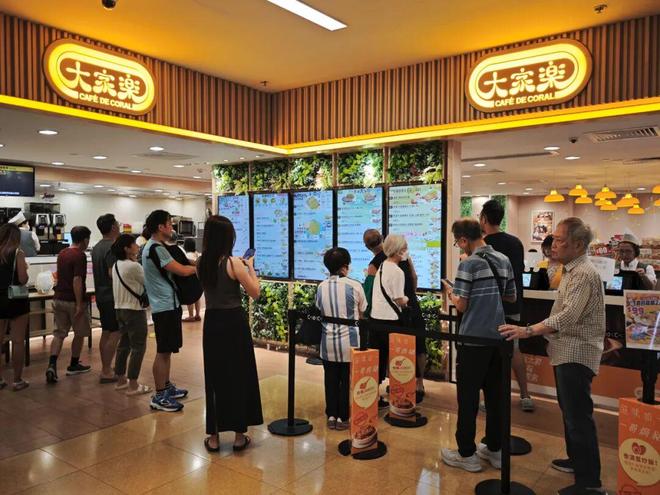
大家乐三连爆 改革要化整为零
Xin Lang Cai Jing· 2025-11-10 05:11
Core Viewpoint - The restaurant industry continues to face challenges, with the fast-food chain Café de Coral (00341) issuing a profit warning, forecasting a 65% to 70% drop in net profit for the half-year ending September 30. This marks the third consecutive profit warning for the company, indicating a deteriorating situation [1][3][4]. Financial Performance - Café de Coral anticipates a year-on-year decline of approximately 30% in EBITDA, with an estimated EBITDA of 344 million HKD in the previous year. The net profit is projected to fall to around 46.8 million HKD, down from 144 million HKD in the same period last year [3][4]. - The average monthly profit per store has decreased significantly, from approximately 34,000 HKD to about 13,800 HKD, raising concerns about the sustainability of operations [4][5]. Industry Context - The Hong Kong restaurant sector is experiencing a downturn, exacerbated by trends such as consumers dining in mainland China and a shift towards more affordable meal options. Many restaurants are struggling, with closures becoming increasingly common [5][9]. - Despite the challenges, Café de Coral is still managing to operate profitably, which is seen as a sign of effective management compared to many competitors [5]. Strategic Response - In response to the ongoing challenges, Café de Coral plans to implement significant reforms, including adopting a more flexible operating model, consolidating underperforming stores, simplifying operations, and upgrading supply chains in Hong Kong and mainland China [7][11]. - The company acknowledges that its traditional business model, which relied on scale and high customer traffic, is under pressure due to changing consumer preferences and industry dynamics [9][11]. Brand Positioning - The brand's historical advantages of being "affordable, fast, and good" are diminishing as consumer expectations evolve. The average dinner price has risen to between 60 and 80 HKD, making it less competitive against cheaper meal options [9][11]. - Café de Coral's lack of a unique positioning compared to other fast-food chains like McDonald's and KFC is highlighted, as it struggles to differentiate itself in a crowded market [9][11]. Future Outlook - The company is expected to focus on a "divide and conquer" strategy, consolidating its main brand while expanding its sub-brands to better align with market trends and consumer demands [11]. - The effectiveness of these reforms will be crucial in determining whether Café de Coral can reverse its declining performance and surprise investors in future earnings [11].


遍地「火锅刺客」,年轻人的火锅瘾都淡了丨2025年轻人「火锅」报告
后浪研究所· 2025-02-27 09:02
Core Insights - The article discusses the evolving preferences of young consumers regarding hot pot, highlighting a shift in taste and dining frequency, as well as the emergence of alternative dining options. Group 1: Hot Pot Preferences - The most popular hot pot base among young people is "spicy hot pot," favored by 74.2% of respondents, followed by "Chaozhou beef hot pot" at 57.5% [2][3] - Different age groups exhibit varying preferences, with 77.6% of post-95s favoring spicy hot pot, while over 50% of post-00s prefer tomato hot pot [5][6] - Regional preferences show that spicy hot pot is most popular in Chengdu, while other cities have their own favorites, such as sour soup hot pot in Guangzhou and tomato hot pot in Suzhou [8][10] Group 2: Hot Pot Ingredients and Dipping Sauces - Beef is the most favored hot pot ingredient, chosen by 86.6% of young consumers, followed by shrimp paste at 57.1% and lamb at 53.0% [11][12] - The most popular dipping sauce is sesame oil, with a 62.8% preference, followed by minced garlic and sesame paste [14][15] Group 3: Dining Frequency and Brand Preferences - Despite a strong interest in hot pot, the frequency of dining out has decreased, with many young people eating hot pot less than twice a month [21][22] - "Haidilao" is the leading hot pot brand, preferred by 65.6% of respondents, indicating its strong market position [23][24] Group 4: Factors Influencing Hot Pot Choices - Key factors influencing hot pot choices include taste (90.2%), freshness of ingredients (60.9%), and price (76.0%), with waiting time also becoming a significant concern [26][27] - Young consumers are increasingly price-sensitive, with over 50% willing to pay between 100-200 yuan per person for hot pot, and nearly 40% preferring options under 100 yuan [32][34] Group 5: Emerging Trends in Dining - The article notes a rise in alternative dining options such as small hot pots, grilled fish, and skewers, with small hot pot establishments growing at a rate of 33.5% [36][37] - The shift towards "one-person meals" reflects changing consumer behavior, as young people seek more affordable and convenient dining experiences [43][55]