
振镜

Search documents
金橙子(688291):工业软件激光垂类专家,3D打印+快反镜蓄势待发
Guotou Securities· 2026-01-23 08:49
Investment Rating - The investment rating for the company is "Buy-A" with a target price of 56.97 CNY within six months [6][9]. Core Insights - The company, Jin Chengzi, is a leading player in the laser control system sector, focusing on both horizontal and vertical business expansion. It has over 20 years of experience in the laser industry and aims to strengthen its position through continuous innovation and strategic acquisitions [1][17]. - The company is actively developing its 3D printing business and plans to acquire Samit, a unicorn company, to enhance its capabilities in fast-reflecting mirrors, which are crucial for future industries such as aerospace and quantum communication [4][39]. - The market for 3D printing is rapidly expanding, with significant growth expected in industrial applications, particularly in aerospace and consumer sectors. The importance of control systems in this market is increasing, positioning Jin Chengzi for future growth [3][41]. Summary by Sections 1. Company Overview - Jin Chengzi specializes in laser processing control systems, which serve as the "brain" of equipment, integrating modeling, path planning, and execution control [2][45]. - The company has a comprehensive product line that includes software, controllers, and galvanometers, serving over a thousand clients across various industries such as consumer electronics, new energy, semiconductors, automotive, and pharmaceuticals [2][24]. 2. 3D Printing and Future Prospects - The 3D printing market is projected to grow from billions to hundreds of billions, with Jin Chengzi's control systems expected to play a significant role in this transformation [3][41]. - The company has been investing in 3D printing technology since 2014 and has developed high-precision galvanometers that meet international standards, enhancing its competitive edge in this field [43][44]. 3. Strategic Acquisitions - The planned acquisition of Samit aims to strengthen the company's fast-reflecting mirror capabilities, which are essential for applications in commercial aerospace and quantum communication [4][39]. - This acquisition is expected to complement Jin Chengzi's existing product lines and expand its market reach into high-growth sectors [4][39]. 4. Financial Performance and Projections - The company has maintained stable revenue growth, with projected revenues of 2.61 billion CNY in 2025, 3.26 billion CNY in 2026, and 4.17 billion CNY in 2027, alongside net profits of 0.48 billion CNY, 0.73 billion CNY, and 1.05 billion CNY respectively [9][11]. - The gross margin for the core business remains high, around 70%, indicating strong profitability and effective cost management [29][30].

金橙子20250813
2025-08-13 14:53
Summary of Conference Call Notes Company and Industry Overview - The conference call discusses **Jingchengzi's acquisition of Changchun Samit Optoelectronics**, focusing on high-precision fast mirrors technology to enhance existing laser stabilization control systems and expand applications in aerospace, satellite communications, and anti-drone systems [2][3]. Key Points and Arguments - **Acquisition Rationale**: The acquisition aims to leverage the technological synergy between Jingchengzi and Samit, as both companies operate in similar technical domains involving precision optical control products [3]. - **Business Restructuring**: Post-acquisition, Jingchengzi will reorganize its business into consumer (desktop devices) and industrial products (control systems, galvanometers, fast mirrors), with a focus on precision micro-machining [2][5]. - **Financial Impact**: Samit's high gross margin is expected to significantly enhance Jingchengzi's net profit, with specific financial contributions anticipated to materialize over the next few years [2][5]. - **Core Product Applications**: Samit's fast mirrors are crucial for rapid beam deflection and tracking, with applications in target detection, commercial satellite communications, and anti-drone systems [2][6]. Additional Important Insights - **Future Business Plans**: Jingchengzi plans to explore ultra-precision machining applications, particularly using fast mirrors for rapid compensation of beam shifts caused by thermal expansion in high-end precision equipment [2][8]. - **Market Recovery**: The 3C industry and new energy battery sectors are showing signs of recovery, with a focus on both consumer and industrial product development, alongside opportunities in the semiconductor sector [4][9]. - **Semiconductor Applications**: The company is exploring new applications in the semiconductor field, particularly in wafer chip tuning, utilizing fast mirrors for precise laser control [4][12]. - **3D Printing Strategy**: Jingchengzi is cautiously entering the ToC 3D printing market through partnerships for customized development, focusing on control systems that can transition from industrial to consumer applications [13][14]. - **Long-term Performance Outlook**: The company aims to align its long-term performance strategy with successful benchmarks like Bosch, seeking sustainable growth through similar development strategies [15].
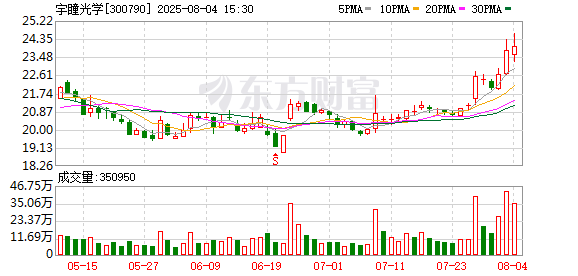
宇瞳光学:目前已获得主流激光雷达模组客户多个定点
Zheng Quan Ri Bao· 2025-08-04 07:40
Group 1 - The company, Yutong Optics, produces optical components for LiDAR, including mirrors and lenses [2] - The company has secured multiple contracts with mainstream LiDAR module customers, and several projects have begun mass delivery [2]


海外需求+潮玩经济加持,消费级3D打印应用有望加速
HTSC· 2025-06-18 04:51
Investment Rating - The report maintains an "Overweight" rating for the consumer electronics sector [5]. Core Viewpoints - The consumer-grade 3D printing market is expected to accelerate due to overseas demand and the rise of the trendy toy economy, transitioning from niche to mainstream [1]. - Technological advancements and cost reductions in the supply chain are anticipated to unlock greater potential for 3D printing technology in the long term [3]. - Investment opportunities are highlighted in the 3D printing components and scanning segments, with a focus on companies involved in these areas [4]. Summary by Sections Section 1: Market Dynamics - The consumer-grade 3D printing market is benefiting from technological breakthroughs, reduced costs, and expanded DIY applications, making it more accessible to consumers [1]. - The demand for personalized manufacturing overseas, combined with the trendy toy economy, is expected to drive growth in the consumer-grade 3D printing sector [2]. Section 2: Export and Domestic Demand - Domestic 3D printer manufacturers are experiencing significant sales overseas, with exports reaching 377.8 thousand units in Q1 2024, a year-on-year increase of 7.2% [2]. - The rise of IP creation in the trendy toy economy is creating a responsive ecosystem within the domestic 3D printing community, enhancing market demand [2]. Section 3: Future Potential - Long-term prospects for 3D printing technology include its application in personalized manufacturing for consumers, acceleration of product development for businesses, and its role as a core high-end production process in industrial settings [3]. - Cost reductions through domestic sourcing of key materials and components are expected to further lower production costs for 3D printers, enhancing market competitiveness [3]. Section 4: Investment Opportunities - The report emphasizes investment opportunities in the 3D printing components sector and the 3D scanning segment, identifying key players in these areas [4].