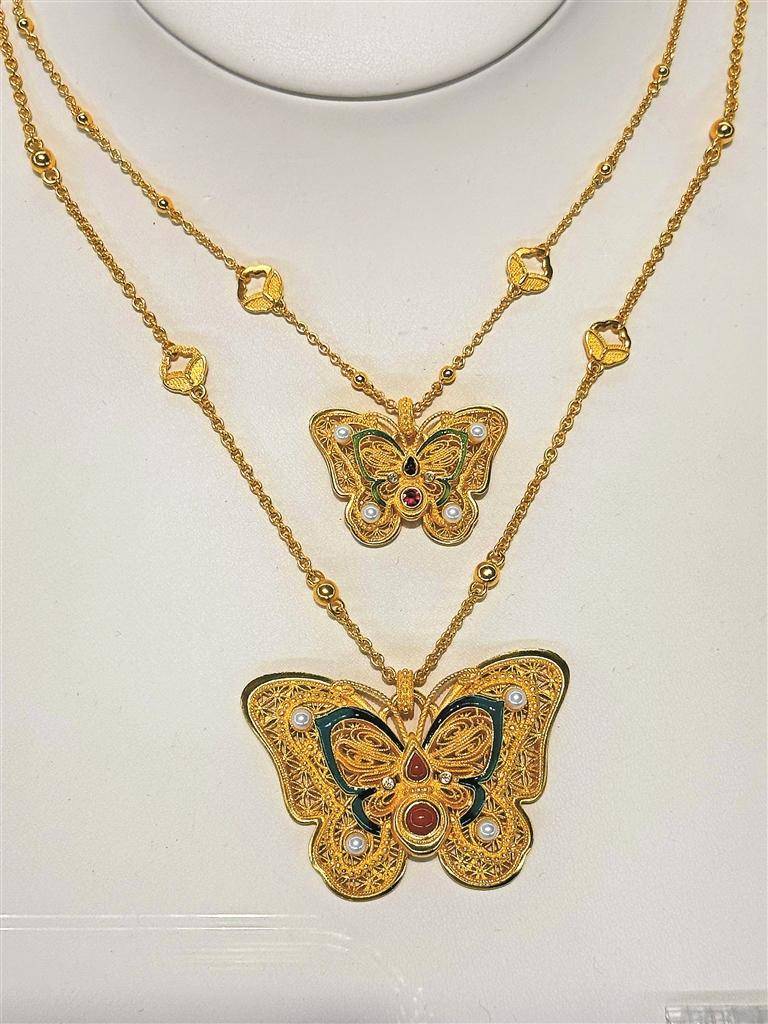
故宫联名系列

Search documents
周大福回应部分商品再涨价:根据市场环境及产品需求,适时作出调价
Cai Jing Wang· 2025-12-19 03:38
Core Viewpoint - Chow Tai Fook has raised prices on certain gold, platinum, and diamond-inlaid products, with increases ranging from 4% to 16% for most items in the collection [1] Price Adjustments - The company has implemented three price increases since March 2025, with the previous adjustments showing increases of 10%-20% and 12%-18% respectively [1] - The recent price adjustment is part of the company's routine operational policy, responding to market conditions and product demand [1] Commitment to Quality - Chow Tai Fook emphasizes its commitment to maintaining exceptional quality and craftsmanship while meeting consumer expectations through these price adjustments [1]
年轻人爱上新中式黄金首饰
Sou Hu Cai Jing· 2025-08-21 00:26
Group 1 - The core viewpoint of the articles highlights the transformation of gold jewelry consumption from being associated with weddings to becoming a daily fashion choice for younger consumers [3][4][5] - The rise of new Chinese-style gold jewelry is driven by innovative designs that incorporate traditional craftsmanship, appealing to the aesthetic preferences of the younger demographic [6][7] - The World Gold Council's report indicates that 62% of consumers aged 18-24 already own gold jewelry, significantly higher than other jewelry categories, reflecting a shift in consumer behavior towards viewing gold as an essential part of daily attire [4][5] Group 2 - The industry is witnessing a fundamental shift in consumption scenarios, with gold jewelry moving beyond the wedding market to everyday wear, as evidenced by successful product launches that integrate traditional elements with modern aesthetics [5][6] - The new Chinese-style gold jewelry emphasizes a personalized expression of Eastern aesthetics, moving away from heavy traditional designs to lighter, more contemporary forms that resonate with modern consumers [6][8] - The competition within the gold jewelry market is evolving from a price-based strategy to a value-based approach, where design and cultural significance are becoming the key competitive advantages [9][10] Group 3 - The extension of consumption scenarios is broadening the industry's boundaries, with gold now penetrating into areas such as trendy collectibles and cultural products, supported by a mature industry ecosystem [10] - The integration of traditional craftsmanship with modern consumer needs is being facilitated by collaborations with cultural institutions and the establishment of dedicated research entities, enhancing product value and market appeal [9][10]