
斫轮

Search documents
【新华解读】国资央企交2025年“成绩单” 今年工作重点将会有哪些?
Xin Hua Cai Jing· 2026-01-28 15:37
Core Insights - The central enterprises' total assets are expected to exceed 95 trillion yuan by the end of 2025, with a profit target of 2.5 trillion yuan and fixed asset investments of 5.1 trillion yuan [1] - The focus of state-owned enterprise reform has shifted from foundational reforms to aligning with national strategies and fostering new productive forces, with strategic emerging industries becoming the core engine of development [3][4] Group 1: Reform and Governance - The reform actions have achieved systematic breakthroughs in optimizing layout, improving governance, and strengthening supervision, with over 70% of revenue from central enterprises linked to national security and economic lifelines [2] - The enhancement of governance effectiveness is a key highlight, with the implementation of a personalized assessment mechanism where 76% of indicators are tailored to individual enterprises, promoting a shift from scale expansion to quality and efficiency [2][4] - The next steps will focus on further deepening reforms to address systemic barriers and prominent issues [2] Group 2: Strategic Emerging Industries - Central enterprises are expected to invest 2.5 trillion yuan in strategic emerging industries by 2025, accounting for 41.8% of total investments, with revenue from these sectors projected to exceed 12 trillion yuan [4] - Mergers and acquisitions are emphasized as crucial for industrial upgrades, with significant consolidations occurring in key sectors [4] - The integration of artificial intelligence with the real economy is creating new industrial opportunities, with initiatives like the "AI+" program being implemented [5] Group 3: Innovation and Technology - The focus on enhancing innovation capabilities includes increasing investment in basic research and establishing platforms for technology transfer [5][6] - Central enterprises are expected to play a significant role in the supply of intelligent computing facilities and AI solutions, creating vast market opportunities in various sectors [5][6] - The government is drafting policies to support the cultivation of emerging pillar industries, aiming to create a comprehensive system for technology sourcing and industrial incubation [6] Group 4: Future Development Goals - The State-owned Assets Supervision and Administration Commission (SASAC) has outlined five key work deployments for 2026, emphasizing high-quality development and ensuring value-added growth aligns with GDP growth [7] - The focus will be on optimizing layouts in sectors like renewable energy, low-altitude economy, and quantum technology, while also enhancing the integration of technology and industry [7][8] - Risk prevention and reform efforts will be synchronized, with mechanisms established to mitigate investment, debt, and overseas business risks [7]
重要领域央企营收占比超七成,“AI+”专项行动继续全力推进
Di Yi Cai Jing· 2026-01-28 12:56
Core Viewpoint - The State-owned Assets Supervision and Administration Commission (SASAC) is drafting a document to promote the cultivation of emerging pillar industries by central enterprises, aiming for significant profit and investment targets by 2025 [1][4]. Group 1: Financial Targets and Performance - By 2025, central enterprises aim to achieve a total profit of 2.5 trillion yuan, complete fixed asset investments of 5.1 trillion yuan, and pay taxes of 2.5 trillion yuan [1]. - Strategic emerging industries are expected to receive investments of 2.5 trillion yuan, accounting for 41.8% of total investments, with revenue from these industries exceeding 12 trillion yuan [1]. - In the "14th Five-Year Plan" period, central enterprises' total assets have increased significantly, reaching 90 trillion yuan, with an average annual growth rate of 6.9% [3]. Group 2: Strategic Focus on Emerging Industries - Central enterprises are focusing on emerging industries, with revenue from these sectors expected to increase by over 10 percentage points compared to 2022 [4]. - The SASAC plans to strengthen investments in sectors such as new energy, aerospace, and quantum technology, aiming to create globally competitive industrial clusters [4]. - The emphasis is on fostering strategic emerging industries that have high technological content and strong market competitiveness, which will help state-owned enterprises develop new advantages and momentum [4]. Group 3: Technological Innovation and AI Integration - The SASAC is advancing the "AI+" initiative, which aims to integrate artificial intelligence into various sectors, enhancing operational efficiency and innovation [5][6]. - Central enterprises are collaborating with leading companies to create over a thousand application scenarios in key industries such as energy and manufacturing [6]. - The SASAC is committed to deepening the integration of technological and industrial innovation, supporting the establishment of original technology sources and promoting the commercialization of scientific achievements [7][8].
中央企业“AI+”专项行动取得积极进展
Xin Hua She· 2026-01-28 08:22
Core Viewpoint - The State-owned Assets Supervision and Administration Commission (SASAC) is actively promoting the "AI+" initiative among central enterprises, achieving significant progress in key areas such as application, computing power, data, and models [1][2] Group 1: Achievements in AI+ Initiative - Central enterprises have created over 1,000 application scenarios focusing on key industries like energy, manufacturing, and communications [1] - Examples include the State Grid and Southern Power Grid utilizing AI for intelligent management in power dispatch and fault prediction [1] - Central enterprises are integrating into the national computing power layout, with three major telecom operators establishing four "ten thousand card clusters" to support large model training [1] Group 2: Support for AI Development - General models like "Jiutian" from China Mobile and "Xingchen" from China Telecom have empowered over 200 external units, accelerating applications in energy and industrial manufacturing [1] - The "Huanxin Community" initiated by SASAC provides over 2,000 domestic intelligent computing chips for free, gathering over 4,000 models and 800 datasets to promote the widespread application of AI technology [1] Group 3: Future Directions - Central enterprises will intensify efforts in the "AI+" initiative, focusing on enhancing investment traction, deepening scenario cultivation, and optimizing data supply [2] - The goal is to become a key provider of intelligent computing infrastructure, a significant enabler of AI across various industries, and an organizer of systematic industrial layout [2]


国务院国资委:聚焦具身智能等领域,建“AI+”产业共同体
Nan Fang Du Shi Bao· 2026-01-28 05:59
Core Viewpoint - The State-owned Assets Supervision and Administration Commission (SASAC) is focusing on advancing the "AI+" initiative in key sectors such as embodied intelligence and energy, aiming to create an "AI+" industrial community and enhance the openness of application scenarios [1][3]. Group 1: Progress in AI Applications - Central enterprises have launched over 1,000 application scenarios in key industries like energy, manufacturing, and telecommunications, utilizing AI for tasks such as power dispatch and fault prediction [3][4]. - The integration of AI in traditional industries is seen as a crucial driver for transformation, with examples including the use of intelligent robots in manufacturing and advanced models in rail transport [3][4]. Group 2: Infrastructure and Computational Power - Central enterprises are actively contributing to the national computing power layout, with significant investments in computational resources, including the establishment of four "ten-thousand card clusters" by major telecom operators [3][4]. - Platforms like "Xirang" and "Computing Network Brain" are being developed to provide standardized computing power services, emphasizing low-cost and high-intelligence solutions [3][4]. Group 3: Model Development and Collaboration - The development of large models is accelerating, with companies like China Mobile and China Telecom enhancing their capabilities and empowering over 200 external units in various sectors [3][4]. - SASAC has initiated the "Renewal Community" to support young entrepreneurs and tech enthusiasts by providing over 2,000 domestic intelligent computing chips and access to a vast array of models and datasets [4][5]. Group 4: Future Directions - The next steps for state-owned enterprises include strengthening investment strategies, focusing on the construction of integrated computing networks, and optimizing data supply in key areas such as transportation, energy, and finance [5]. - The aim is to enhance the quality of industrial development through effective investments and to foster a collaborative environment for AI applications across various sectors [5].

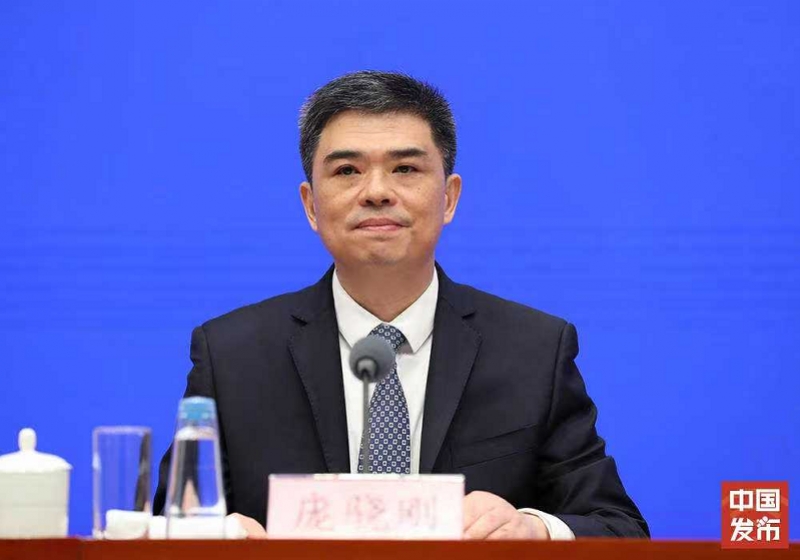
上半年央企实现增加值5.2万亿元——稳的基础在夯实 进的态势在巩固
Jing Ji Ri Bao· 2025-07-20 22:09
Core Viewpoint - Central enterprises in China are facing challenges but are maintaining overall economic stability, with significant contributions to the national economy through various sectors [1][2]. Group 1: Economic Performance - From January to June, central enterprises achieved a value-added output of 5.2 trillion yuan and completed fixed asset investments of 2 trillion yuan [1]. - Strategic emerging industries have seen strong investment, with significant increases in electricity sales, crude oil production, air transport turnover, and container throughput [1]. - The sales of new energy vehicles from major automotive companies like China FAW, Dongfeng, and Changan grew by over 20% in the first half of the year [1]. Group 2: Technological Innovation - Central enterprises are actively implementing the "Artificial Intelligence+" initiative, with over 800 application scenarios developed [2]. - Major telecommunications companies have launched general models capable of complex reasoning and multimodal capabilities [2]. - R&D expenditure for central enterprises reached 413.98 billion yuan, maintaining a research intensity of 2.26% compared to the previous year [2]. Group 3: Strategic Goals and Future Directions - Central enterprises are at a critical juncture for high-quality development, emphasizing the need for improved productivity and innovation [3]. - The focus is on enhancing core functions and competitiveness while achieving this year's targets [3]. - The State-owned Assets Supervision and Administration Commission (SASAC) aims to improve original technology supply capabilities and promote deep integration of industry, academia, and research [4].