
新西兰债券

Search documents
全球债市遭大规模抛售
Shang Hai Zheng Quan Bao· 2026-01-21 00:31
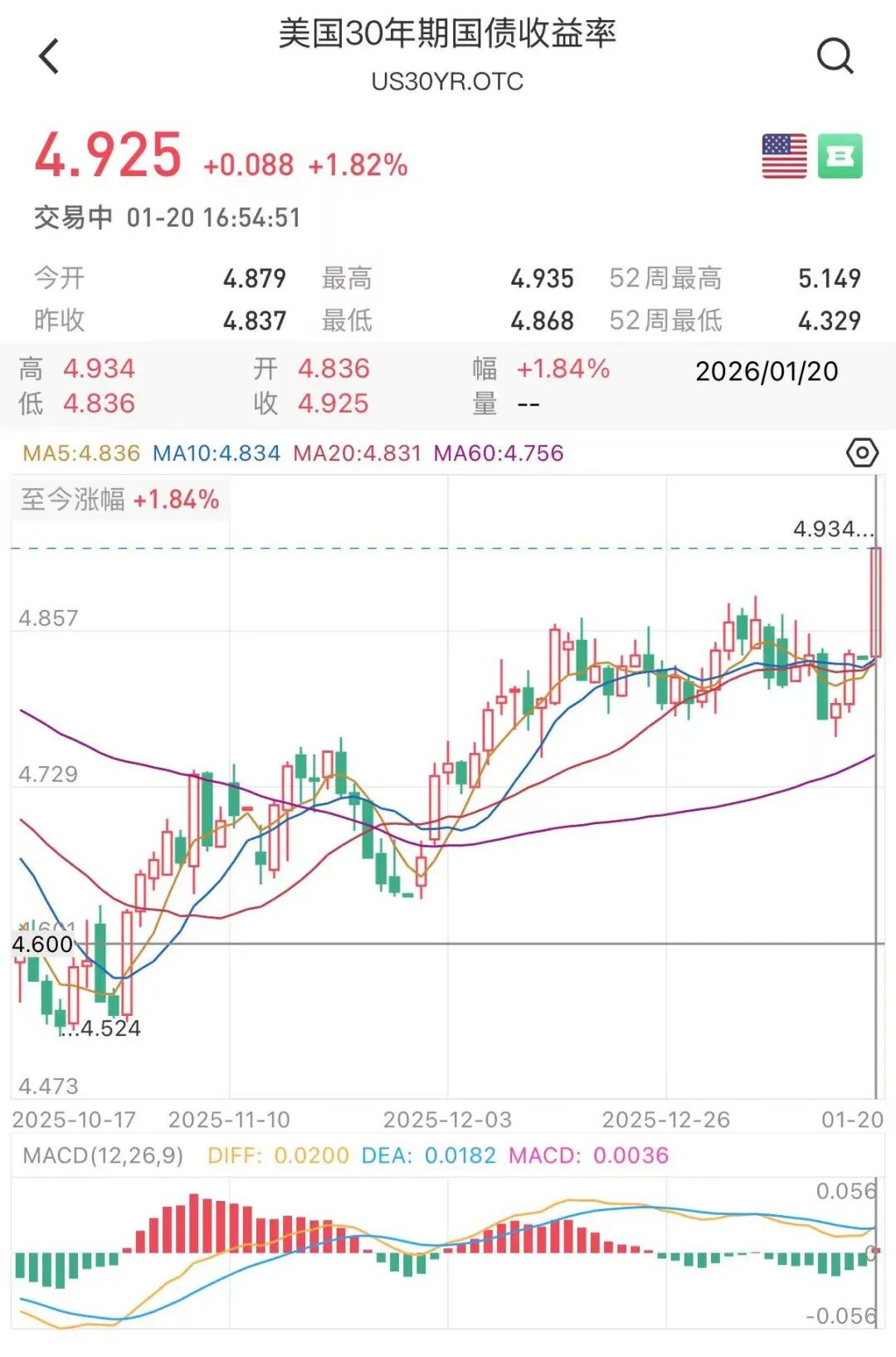
Group 1 - The global bond market experienced a significant sell-off, with U.S. and Japanese bonds leading the decline, marking a historic rise above 4% for Japanese bonds for the first time in over 30 years [1][5] - The U.S. 30-year Treasury yield rose nearly 9 basis points to 4.925%, while the 10-year Treasury yield reached a high of 4.286%, both hitting their highest levels since early September of the previous year [3][4] - Concerns over fiscal sustainability and the potential for increased debt issuance to fund government spending are causing volatility in the U.S. bond market, with investors questioning the reliability of U.S. Treasuries as a safe haven [5][6] Group 2 - Japan's 30-year bond yield increased by over 30 basis points to 3.915%, and the 40-year bond yield reached 4.231%, also a historic high, reflecting a significant shift in the Japanese bond market [5][6] - A recent auction of Japan's 20-year bonds showed weak demand, with a bid-to-cover ratio of 3.19, lower than previous auctions and the 12-month average of 3.34, indicating market concerns [6] - The global bond market is under pressure as investors demand higher yields to compensate for persistent inflation and rising government borrowing, with recent tariff threats potentially exacerbating these pressures [6]

新西兰债券收益率续升,新西兰联储维持利率不变。
news flash· 2025-07-09 02:24
Core Viewpoint - New Zealand's bond yields continue to rise as the Reserve Bank of New Zealand maintains its interest rates unchanged [1] Group 1 - The Reserve Bank of New Zealand decided to keep the official cash rate steady, which has implications for the bond market [1] - Rising bond yields indicate market expectations of future interest rate hikes or inflation concerns [1] - The decision to maintain rates reflects the central bank's assessment of the current economic conditions and inflation targets [1]