
澳大利亚债券

Search documents
全球债市遭大规模抛售
Shang Hai Zheng Quan Bao· 2026-01-21 00:31
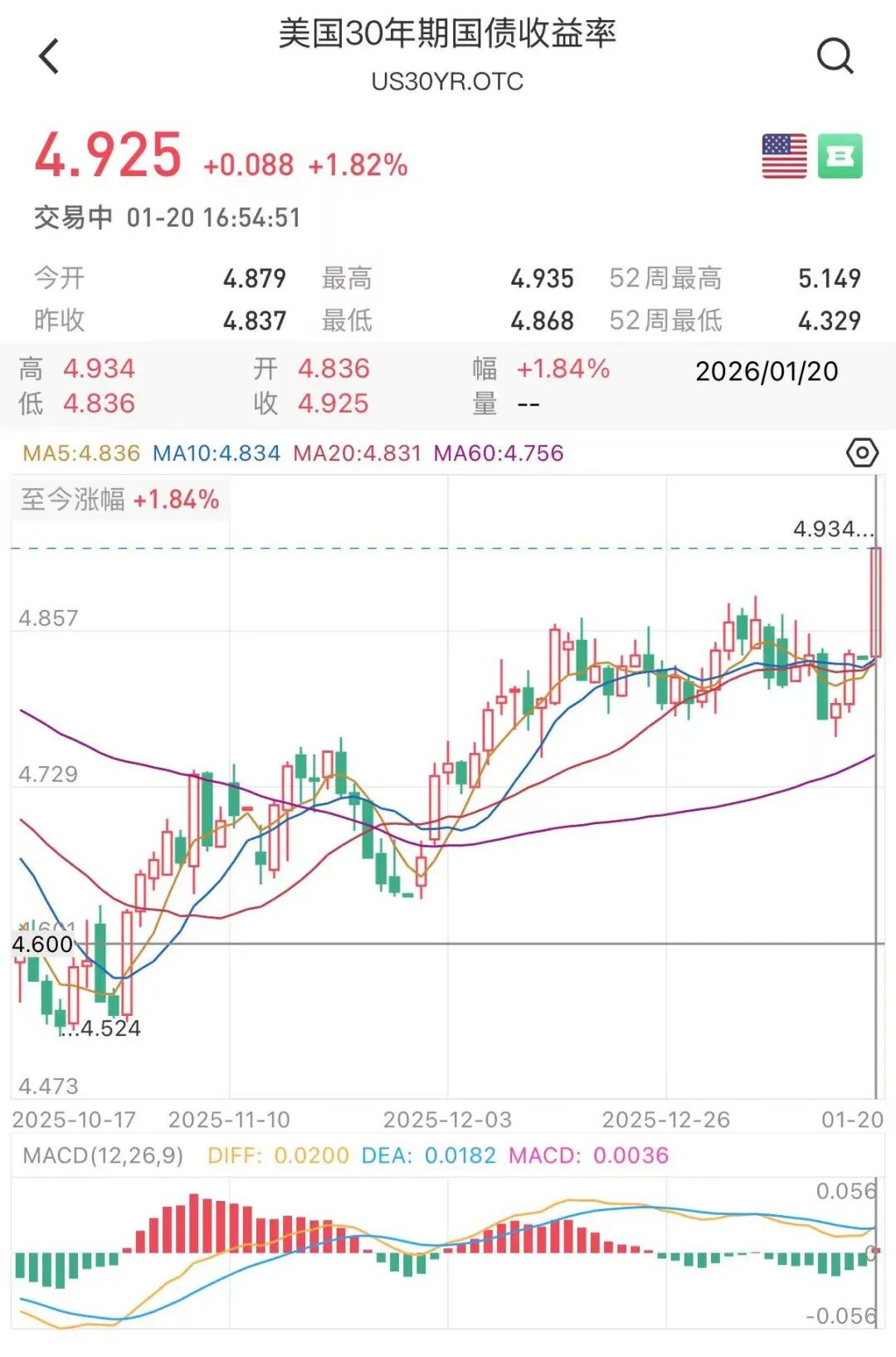
Group 1 - The global bond market experienced a significant sell-off, with U.S. and Japanese bonds leading the decline, marking a historic rise above 4% for Japanese bonds for the first time in over 30 years [1][5] - The U.S. 30-year Treasury yield rose nearly 9 basis points to 4.925%, while the 10-year Treasury yield reached a high of 4.286%, both hitting their highest levels since early September of the previous year [3][4] - Concerns over fiscal sustainability and the potential for increased debt issuance to fund government spending are causing volatility in the U.S. bond market, with investors questioning the reliability of U.S. Treasuries as a safe haven [5][6] Group 2 - Japan's 30-year bond yield increased by over 30 basis points to 3.915%, and the 40-year bond yield reached 4.231%, also a historic high, reflecting a significant shift in the Japanese bond market [5][6] - A recent auction of Japan's 20-year bonds showed weak demand, with a bid-to-cover ratio of 3.19, lower than previous auctions and the 12-month average of 3.34, indicating market concerns [6] - The global bond market is under pressure as investors demand higher yields to compensate for persistent inflation and rising government borrowing, with recent tariff threats potentially exacerbating these pressures [6]

被特朗普吓跑!金融大鳄加速逃离美债市场
Jin Shi Shu Ju· 2025-05-23 08:46
Group 1 - Large investors are diversifying their bond portfolios due to the impact of Trump's trade war and the increasing U.S. fiscal deficit, which have weakened the attractiveness of the U.S. bond market [1][2] - The recent tax reform proposed by Trump, which passed in the House, is expected to significantly increase U.S. public debt, raising concerns among investors about government borrowing levels [1][2] - The traditional role of U.S. bonds as a safe haven asset has been undermined, leading to a shift in focus towards international asset allocation, especially as other regions' bond markets show strong returns [1][3] Group 2 - Investors are increasingly worried about the high allocation of dollar assets compared to historical levels, prompting them to consider diversifying into other markets [2][3] - The U.S. long-term treasury bonds have faced significant sell-offs, with the 30-year treasury yield rising above 5.1%, the highest since the end of 2023, indicating growing concerns about U.S. fiscal trajectory [2][3] - The depreciation of the dollar against six major currencies by 8% this year has made non-U.S. assets more appealing, with investors highlighting the attractiveness of European, Japanese, and Australian bonds [3][4] Group 3 - Concerns about the U.S. budget deficit, projected to remain at 6%-7% of GDP, are leading to increased refinancing needs and potential higher yields demanded by buyers [4][5] - The ongoing discussions among global investors regarding diversification away from U.S. capital markets have intensified due to the pressures of a weakening dollar, declining stock markets, and rising interest rates [4][5] - The traditional role of U.S. bonds may diminish due to high fiscal deficits and leverage, prompting a reevaluation of investment strategies [5]