易方达医药生物

Search documents
超40只主动权益基金一年翻倍 老牌权益大厂再现投资实力
Sou Hu Cai Jing· 2025-08-14 02:26
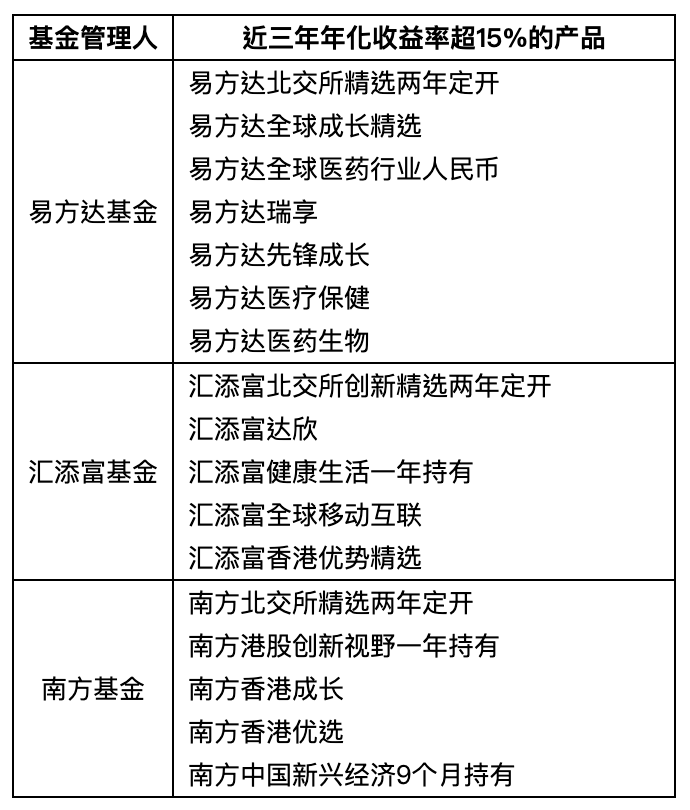
Core Viewpoint - The A-share market has shown a strong upward trend since July, with the Shanghai Composite Index surpassing 3600 points for the fourth time since 2007, 2015, and 2021, indicating a robust market recovery and investor sentiment improvement [1] Group 1: Market Performance - Since September 2024, A-shares and Hong Kong stocks have experienced a multi-sector rotation upward, with sectors like dividends, artificial intelligence, banking, and innovative pharmaceuticals showing active performance [1] - As of August 6, 2023, 80 actively managed equity funds have seen gains exceeding 60% this year, primarily from leading fund managers such as E Fund, Huitianfu, and GF Fund [2] - The AI and innovative pharmaceutical sectors have shown strong growth, with the CSI Artificial Intelligence Theme Index and the CSI Innovative Pharmaceutical Industry Index rising over 60% and 40% respectively in the past year [2] Group 2: Fund Performance - There are 43 equity funds that have doubled in value over the past year, with E Fund leading with four "doubling funds" [2][3] - As of August 6, 2023, 90 actively managed equity funds have achieved an annualized return of over 15% over the past three years, with E Fund having the highest number of such funds at seven [4][5] - The overall annualized return of the Wind All A Index is 3.19%, while the representative Wind Mixed Equity Fund Index has a return of -1.99% over the same period [6] Group 3: Sector Insights - The innovative pharmaceutical sector has seen a strong rebound after four years of stagnation, with several stocks doubling or tripling in value this year [7] - Fund managers believe the current market conditions for the innovative pharmaceutical sector are sustainable, with a focus on globally competitive pharma and biotech companies [7] - The technology sector, particularly cloud computing, is viewed as having long-term potential, although some fund managers anticipate adjustments due to prior gains [8]

破除「基金赚钱基民亏」魔咒,公募基金走到历史关口
3 6 Ke· 2025-05-12 10:07
Core Viewpoint - The public fund industry in China is undergoing significant reforms aimed at improving performance and aligning fund manager compensation with fund performance, as outlined in the "Action Plan for Promoting High-Quality Development of Public Funds" issued by the China Securities Regulatory Commission (CSRC) [1][3]. Group 1: Reform Details - The new plan includes a performance-based compensation structure for fund managers, where those managing funds that underperform their benchmarks by more than 10% over three years will see a significant decrease in their performance pay [1][6]. - The plan mandates that, within the next year, leading fund management companies must issue at least 60% of their new funds as floating management fee products, which are linked to fund performance [1][6]. - Currently, only 138 public fund products charge floating management fees, indicating a need for increased adoption of this fee structure [1]. Group 2: Industry Context - The public fund industry has experienced volatility over the past five years, with many investors facing disappointing returns, leading to a decline in new investors [2]. - A significant portion of funds, approximately 23.2%, have underperformed their benchmarks by over 10% in the last three years, highlighting the need for reform [5]. - The reforms aim to address the issue of fund managers profiting while investors do not, a situation that has been increasingly scrutinized [3][5]. Group 3: Fee Structure Changes - The new floating management fee structure will adjust fees based on performance relative to benchmarks, with lower fees for underperformance and higher fees for exceeding benchmarks [3][6]. - The reforms are designed to create a more investor-friendly environment by aligning the interests of fund managers with those of investors, promoting long-term investment strategies [8][10]. - The shift towards floating fees is part of a broader trend to reduce costs for investors and improve the overall competitiveness of the public fund industry in China [10].