易方达稳健收益债券B

Search documents
迎春节 基金密集派发“红包”
Shang Hai Zheng Quan Bao· 2026-02-16 09:27
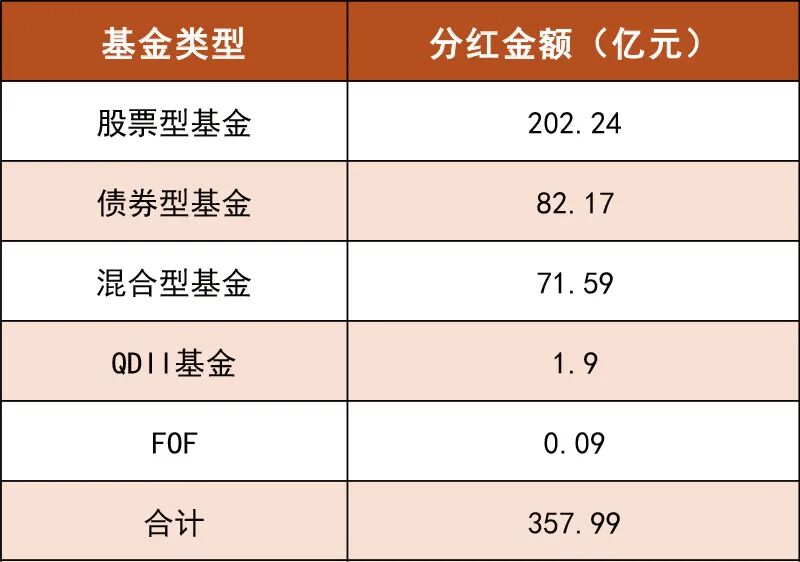
Group 1 - The core viewpoint of the article highlights a significant increase in public fund dividends, with nearly 36 billion yuan distributed before the Spring Festival, marking a growth of over 35% compared to the previous year [1][3] - In 2026, stock funds have emerged as the dominant force in the dividend distribution, contributing over 56% of the total dividends, amounting to approximately 202.24 billion yuan, which is a 158% increase year-on-year [3][4] - Conversely, bond funds have seen a substantial decrease in dividend payouts, totaling 82.17 billion yuan, a decline of 47.81% compared to the previous year [3][4] Group 2 - The largest contributors to stock fund dividends include the Huatai-PB CSI 300 ETF, which distributed 98.11 billion yuan, followed by the E Fund CSI 300 ETF at 44.79 billion yuan [4][5] - The increase in stock fund dividends is attributed to two main factors: the recovery of the A-share market in 2025, leading to substantial distributable profits, and a greater emphasis on investor returns within the public fund industry [6][8] - In contrast, bond funds have faced challenges due to a turbulent bond market in 2025, resulting in lower distributable income and a decrease in overall dividend amounts [6][9] Group 3 - Dividend-themed funds have also played a significant role in the current dividend wave, with these funds focusing on high-dividend, stable cash flow companies, collectively distributing over 2 billion yuan this year [8] - Fund managers are increasingly recognizing the value of dividend assets, especially in a low-interest-rate environment, where stable dividend returns are becoming a scarce source of income [9] - The rebalancing of dividend indices in December 2025 has led to an average dividend yield of around 5%, making dividend assets more attractive for reallocating funds from traditional savings and investment products [9]

最受欢迎的固收+基金,都在这里了
雪球· 2025-05-30 06:24
Core Viewpoint - The article emphasizes the stability and reliability of bond-oriented funds compared to equity funds, particularly during market downturns, suggesting that investors should focus on experienced fund managers and avoid funds with high volatility [2][7]. Group 1: Fund Performance and Selection Criteria - Bond funds primarily derive their returns from fixed income, with equity investments serving as a supplementary source of income. This leads to a better holding experience during market declines [2]. - The selection criteria for bond funds include a stock holding ratio of 5-20% and a fund size of no less than 200 million [3]. - The top 50 bond funds held by institutional investors have a total holding of up to 15.8 billion units, with the smallest holding exceeding 1.8 billion units [5][13]. Group 2: Institutional Investor Insights - The average tenure of fund managers for the top 50 bond funds is 8.18 years, indicating a level of experience that can be beneficial for investors [7]. - Notable fund managers with over 10 years of experience include Wang Xiaocheng and Hu Jian from E Fund, as well as Zhao Xiaodong from Guofu Fund, highlighting the expertise available in the bond fund sector [7]. Group 3: Historical Performance Data - The historical performance of the top 50 bond funds since 2018 shows that they have outperformed equity mixed funds in six out of eight years, demonstrating their superior return capabilities [9]. - Four funds have consistently delivered positive returns each year since 2018, showcasing their reliability: Jingshun Longcheng Jing Sheng Shuangxi Income Bond A, Guangfa Jiyuan Bond A, Guofu Hengrui Bond A, and Fuguo Stable Enhanced Bond A/B [10].