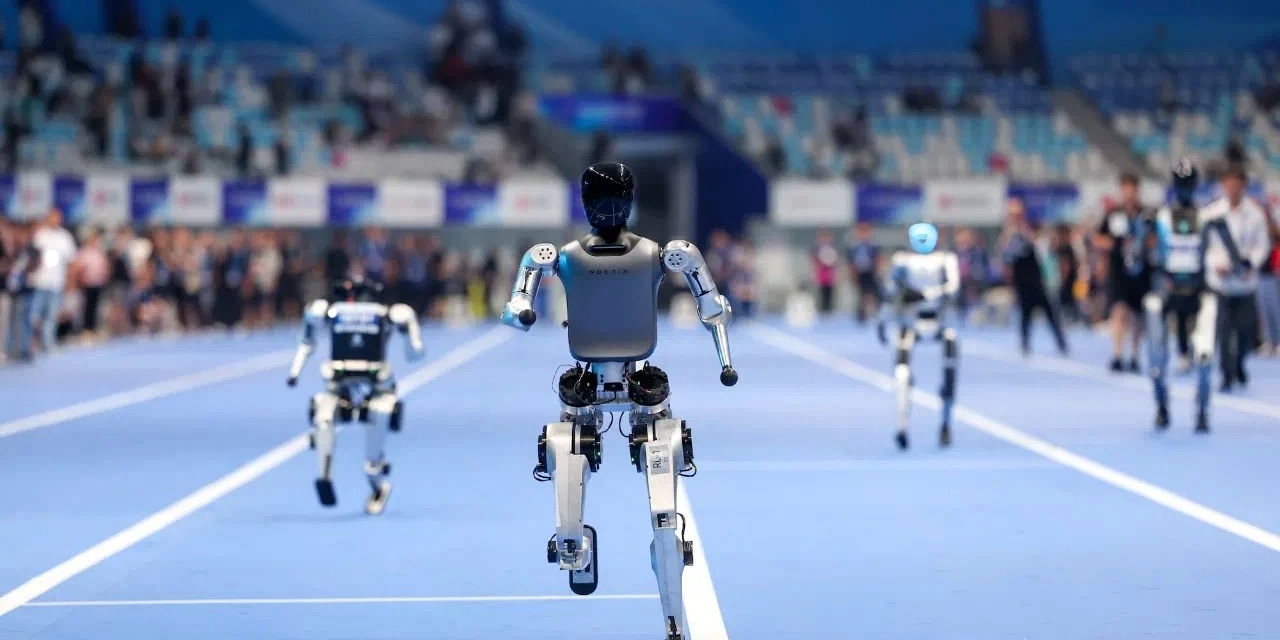
星尘智能S1机器人

Search documents
锦秋基金被投企业星尘智能亮相进博会,机器人乐队奏出中国风未来|Jinqiu Spotlight
锦秋集· 2025-11-07 07:15
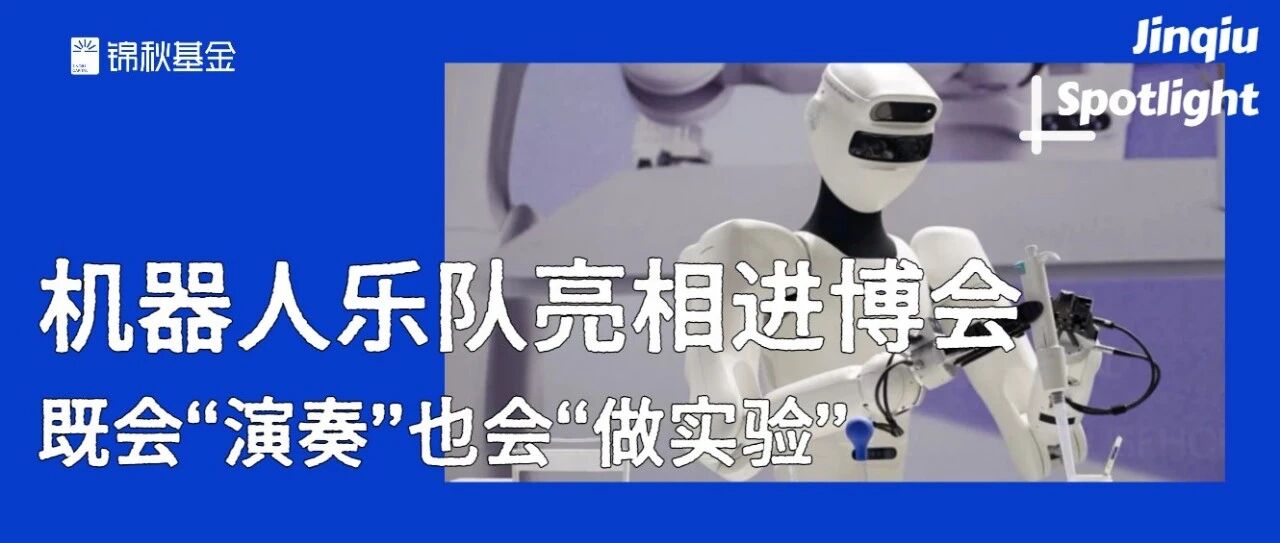
Core Insights - Jinqiu Fund leads Astribot's Series A and continues to invest in Series A+ round, focusing on breakthrough technologies and innovative business models in general artificial intelligence [3] - Astribot's "Little Central Robot Band" debuted at the 8th China International Import Expo, showcasing the integration of technology and culture through performances [3][6] - The robots demonstrated advanced capabilities in high-dynamic and high-load tasks, emphasizing the unique advantages of rope-driven transmission technology [4][6] Investment and Development - Jinqiu Fund, with a 12-year focus on AI investments, seeks long-term opportunities in AI startups with transformative technologies [3] - Astribot aims to become a leading AI robot assistant for billions, leveraging a combination of teaching learning and embodied intelligent models [14][16] Technological Advancements - The robots utilize a unique rope-driven transmission and humanoid design, achieving human-like performance in motion and rhythm [9][10] - The high-precision control and dynamic response of the robots allow for complex musical performances, showcasing their ability to mimic human emotional expression [7][10] Market Applications - The "Little Central Robot Band" has performed at various high-profile events, expanding the boundaries of entertainment and cultural expression [8] - Astribot's robots are being applied in diverse fields, including scientific research, commercial services, entertainment, and industrial applications, accelerating the commercialization of robotics [17] Future Outlook - The company is building a positive feedback loop of optimization, data accumulation, algorithm evolution, and industrial application to enhance the commercialization of embodied intelligence [16] - Astribot's vision includes enabling robots to autonomously master complex skills for various real-world applications, from household tasks to artistic creation [14][16]

人形机器人逼近产业化关口,谁在买?
3 6 Ke· 2025-11-05 12:11
Core Viewpoint - The humanoid robot industry is transitioning from showcasing demos to securing substantial orders, marking a significant step towards industrialization with several companies achieving orders of over a thousand units, indicating a shift in focus towards real-world applications and sales [2][3][4]. Group 1: Market Dynamics - In the past two months, multiple companies have entered the "thousand-unit club," with eight firms reporting significant orders, reflecting a growing demand in the humanoid robot sector [2][3]. - The price range for humanoid robots varies, with educational and performance models priced between 20,000 to 100,000 yuan, while industrial models start at 200,000 yuan, suggesting that large orders often correspond to contracts worth hundreds of millions [3][4]. - The recent surge in orders is attributed to increased public awareness following high-profile appearances and the emergence of actual demand in sectors like manufacturing and education [3][4]. Group 2: Industrialization and Challenges - The shift to thousand-unit orders signifies a pivotal moment for the humanoid robot industry, moving from experimental models to real-world deployment, akin to the early days of electric vehicles [4][5]. - Key questions arise regarding the buyers and their intended applications, as the industry transitions from a focus on demos to a competitive landscape centered on delivery capabilities [5][6]. - Major clients in manufacturing and education are driving demand, with manufacturing firms facing challenges such as labor shortages and rising costs, making humanoid robots a viable solution for automation [6][7]. Group 3: Product Development and Feedback - Manufacturers are increasingly acting as "invisible product managers," providing feedback that drives product iterations and adaptations to meet diverse operational needs [10][12]. - Companies like Star Dust Intelligent are adjusting their product offerings based on client feedback, leading to modular solutions that enhance flexibility and adaptability in various industrial scenarios [10][12]. Group 4: Sales and Market Strategy - The sales landscape is evolving, with companies focusing on building robust sales teams and distribution networks to effectively market humanoid robots across different sectors [24][25]. - Competitive pricing strategies are emerging, with companies like Songyan Power introducing models priced below 10,000 yuan to explore new market segments and drive adoption [25][26]. - The industry is witnessing a shift towards a more sustainable business model, emphasizing delivery capabilities and customer satisfaction over merely securing large orders [18][21]. Group 5: Future Outlook - The humanoid robot industry is expected to accelerate in 2026, driven by ongoing projects and increased focus on delivery and customer engagement [27][28]. - Companies are also looking to expand their international presence, with expectations of significant revenue contributions from overseas markets in the near future [27].

经观头条|人形机器人站在产业化门口
Jing Ji Guan Cha Wang· 2025-11-05 11:38
Core Insights - The humanoid robot industry is transitioning from showcasing demos to focusing on actual orders, with several companies entering the "thousand-unit club" in recent months [3][4] - The surge in orders is attributed to increased public awareness and real demand in sectors like manufacturing and education, creating viable deployment scenarios [4][5] - The shift to "thousand-unit orders" marks a significant milestone in the industrialization of humanoid robots, indicating their movement from experimental models to real-world applications [5][6] Industry Demand - Major clients for humanoid robots are primarily from the manufacturing and education sectors, with manufacturing showing a more rigid demand due to labor shortages and rising costs [7][8] - The flexibility of humanoid robots allows for easier adaptation to changing production needs compared to traditional automation solutions [7][8] - Educational institutions are adopting humanoid robots through small pilot programs, focusing on their integration into teaching and learning environments [14][15] Sales and Delivery Challenges - The industry is experiencing a shift from securing orders to ensuring successful delivery, with companies facing challenges in product design and supply chain management [18][19] - Companies are increasingly focusing on building robust sales teams and distribution channels to effectively market humanoid robots [23][24] - Pricing strategies are evolving, with some companies introducing lower-priced models to stimulate demand and explore new market segments [24][25] Future Outlook - The humanoid robot industry is expected to accelerate in 2026, driven by ongoing projects and increased attention from potential investors [25][27] - Companies are also looking to expand their presence in international markets, with expectations of significant revenue contributions from overseas operations [25][27]