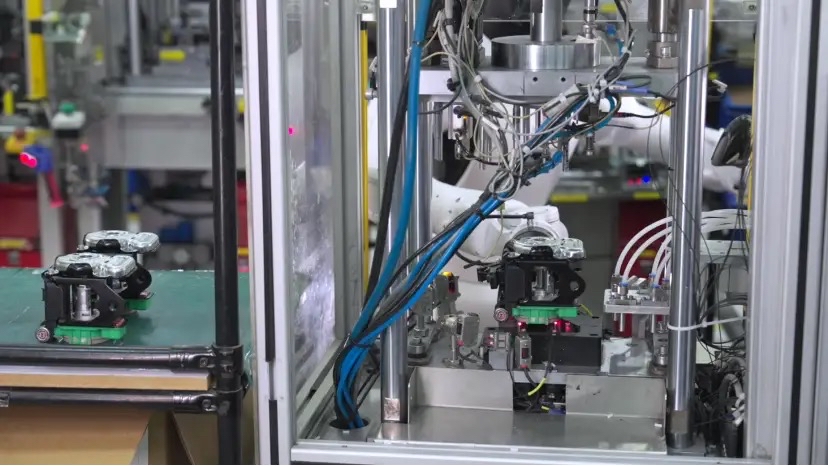
智元G2机器人

Search documents
2026量产元年,人形机器人机会在哪?
格隆汇APP· 2025-12-07 07:40
Core Viewpoint - The article highlights the significant growth potential in the humanoid robot industry, driven by technological advancements, policy support, and increasing market demand, particularly as the year 2026 approaches, marking a pivotal point for mass production [9][32]. Group 1: Market Dynamics - The humanoid robot sector is experiencing a rebound in the A-share market, with notable performances from companies like Lixing Co., which saw a 20% increase in stock price [5]. - In the U.S. market, the government is actively supporting the robotics industry, leading to a surge in stock prices for related companies, such as iRobot Corp, which saw a 133% increase over five trading days [8]. - The shift in market sentiment is moving from speculative trading to performance realization, as the industry anticipates a transition to tangible results [9]. Group 2: Technological Advancements - Tesla is leading the global mass production wave, with plans to launch its Gen3 humanoid robot model in Q1 2026, aiming for a production capacity of 1 million units by the end of the year [11]. - Continuous technological breakthroughs, such as the Optimus Gen2.5's enhanced capabilities, are laying the groundwork for commercial viability [13]. - The development timeline for Tesla's humanoid robots indicates a clear path from concept to mass production, with significant milestones achieved [17]. Group 3: Competitive Landscape - The humanoid robot industry is a focal point of U.S.-China technological competition, with both countries ramping up support for their domestic industries [22]. - In China, a collaborative ecosystem is emerging, combining complete machines, components, and supportive policies, leading to a surge in orders from domestic companies [18]. - Key components like reducers and servo motors have seen over 50% market share achieved by domestic manufacturers, breaking the overseas monopoly [22]. Group 4: Market Opportunities - The industrial sector is facing a labor shortage, with humanoid robots capable of replacing multiple skilled workers, creating a strong demand for these technologies [22]. - The humanoid robot market is projected to grow significantly, with estimates suggesting a market size of 6.339 billion yuan by 2025 and over 640 billion yuan by 2030 [23]. - Investment focus should be on critical components, technological upgrades, and ecosystem collaboration to capitalize on the upcoming mass production phase [25][29]. Group 5: Strategic Directions - Investment strategies should prioritize key components and assemblies that will benefit from mass production, as well as technological upgrades that enhance performance and reduce costs [26][28]. - The focus should also include vertical applications in industries such as logistics and manufacturing, where robots can provide clear ROI and operational efficiency [30]. - Companies that can offer integrated solutions combining hardware, software, and services will be better positioned to succeed in the evolving market landscape [30].



人形机器人逼近产业化关口,谁在买?
3 6 Ke· 2025-11-05 12:11
Core Viewpoint - The humanoid robot industry is transitioning from showcasing demos to securing substantial orders, marking a significant step towards industrialization with several companies achieving orders of over a thousand units, indicating a shift in focus towards real-world applications and sales [2][3][4]. Group 1: Market Dynamics - In the past two months, multiple companies have entered the "thousand-unit club," with eight firms reporting significant orders, reflecting a growing demand in the humanoid robot sector [2][3]. - The price range for humanoid robots varies, with educational and performance models priced between 20,000 to 100,000 yuan, while industrial models start at 200,000 yuan, suggesting that large orders often correspond to contracts worth hundreds of millions [3][4]. - The recent surge in orders is attributed to increased public awareness following high-profile appearances and the emergence of actual demand in sectors like manufacturing and education [3][4]. Group 2: Industrialization and Challenges - The shift to thousand-unit orders signifies a pivotal moment for the humanoid robot industry, moving from experimental models to real-world deployment, akin to the early days of electric vehicles [4][5]. - Key questions arise regarding the buyers and their intended applications, as the industry transitions from a focus on demos to a competitive landscape centered on delivery capabilities [5][6]. - Major clients in manufacturing and education are driving demand, with manufacturing firms facing challenges such as labor shortages and rising costs, making humanoid robots a viable solution for automation [6][7]. Group 3: Product Development and Feedback - Manufacturers are increasingly acting as "invisible product managers," providing feedback that drives product iterations and adaptations to meet diverse operational needs [10][12]. - Companies like Star Dust Intelligent are adjusting their product offerings based on client feedback, leading to modular solutions that enhance flexibility and adaptability in various industrial scenarios [10][12]. Group 4: Sales and Market Strategy - The sales landscape is evolving, with companies focusing on building robust sales teams and distribution networks to effectively market humanoid robots across different sectors [24][25]. - Competitive pricing strategies are emerging, with companies like Songyan Power introducing models priced below 10,000 yuan to explore new market segments and drive adoption [25][26]. - The industry is witnessing a shift towards a more sustainable business model, emphasizing delivery capabilities and customer satisfaction over merely securing large orders [18][21]. Group 5: Future Outlook - The humanoid robot industry is expected to accelerate in 2026, driven by ongoing projects and increased focus on delivery and customer engagement [27][28]. - Companies are also looking to expand their international presence, with expectations of significant revenue contributions from overseas markets in the near future [27].


经观头条|人形机器人站在产业化门口
Jing Ji Guan Cha Wang· 2025-11-05 11:38
Core Insights - The humanoid robot industry is transitioning from showcasing demos to focusing on actual orders, with several companies entering the "thousand-unit club" in recent months [3][4] - The surge in orders is attributed to increased public awareness and real demand in sectors like manufacturing and education, creating viable deployment scenarios [4][5] - The shift to "thousand-unit orders" marks a significant milestone in the industrialization of humanoid robots, indicating their movement from experimental models to real-world applications [5][6] Industry Demand - Major clients for humanoid robots are primarily from the manufacturing and education sectors, with manufacturing showing a more rigid demand due to labor shortages and rising costs [7][8] - The flexibility of humanoid robots allows for easier adaptation to changing production needs compared to traditional automation solutions [7][8] - Educational institutions are adopting humanoid robots through small pilot programs, focusing on their integration into teaching and learning environments [14][15] Sales and Delivery Challenges - The industry is experiencing a shift from securing orders to ensuring successful delivery, with companies facing challenges in product design and supply chain management [18][19] - Companies are increasingly focusing on building robust sales teams and distribution channels to effectively market humanoid robots [23][24] - Pricing strategies are evolving, with some companies introducing lower-priced models to stimulate demand and explore new market segments [24][25] Future Outlook - The humanoid robot industry is expected to accelerate in 2026, driven by ongoing projects and increased attention from potential investors [25][27] - Companies are also looking to expand their presence in international markets, with expectations of significant revenue contributions from overseas operations [25][27]
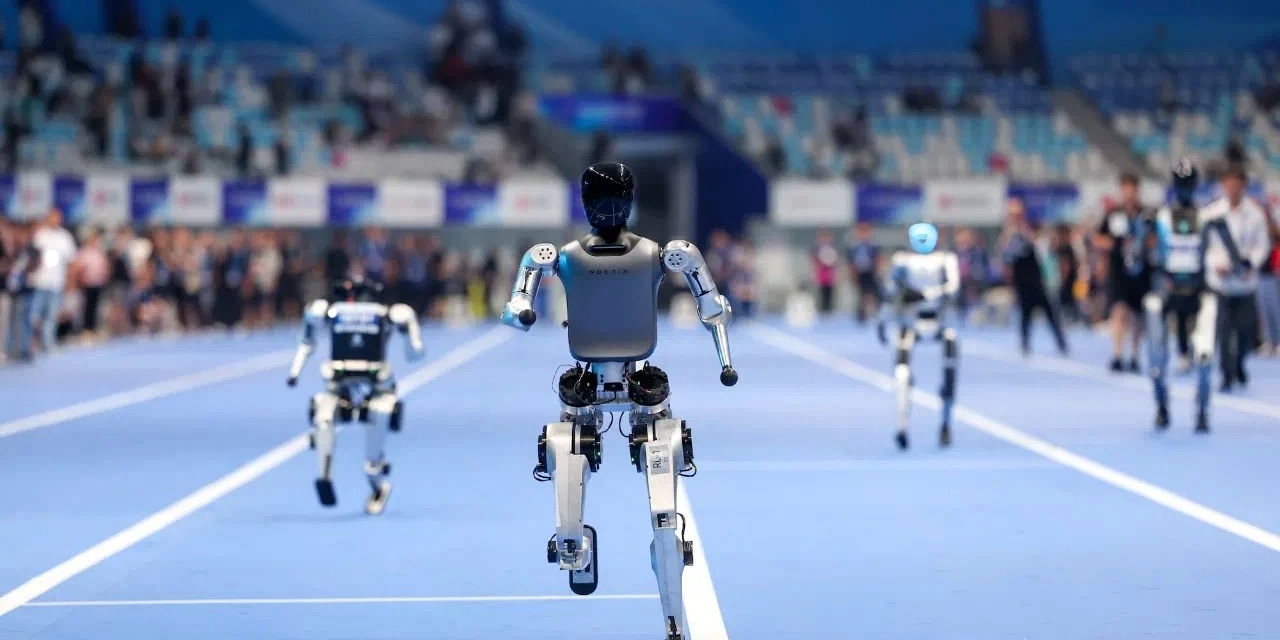
人形机器人逼近产业化关口,谁在买?
经济观察报· 2025-11-05 10:49
Core Insights - The humanoid robot industry is transitioning from showcasing demos to securing substantial orders, marking a significant step towards commercialization [3][4] - Recent months have seen multiple companies entering the "thousand-unit club," indicating a shift towards real sales and contracts worth billions [3][4] - The demand for humanoid robots is primarily driven by the manufacturing and education sectors, with specific needs emerging that robots can fulfill [6][11] Group 1: Market Dynamics - The recent surge in orders is attributed to increased public awareness and the emergence of practical applications in various industries [4][6] - Humanoid robots are no longer just prototypes; they are beginning to be deployed in real-world scenarios, similar to the early days of electric vehicles [4][6] - The industry is witnessing a shift from "demo-driven" sales to "delivery-driven" sales, altering the commercial logic of humanoid robots [4][27] Group 2: Customer Segments - Manufacturing clients are the largest orderers, driven by challenges such as labor shortages and rising costs, making robots a viable solution for repetitive tasks [6][10] - The education sector is adopting humanoid robots through small pilot programs, focusing on their adaptability for teaching and engagement [11][13] - Some orders are being placed by companies for promotional purposes, indicating a diverse range of applications for humanoid robots [13] Group 3: Delivery and Production Challenges - Successful delivery is becoming a critical measure of success, with companies needing to demonstrate their ability to fulfill orders [15][16] - Companies are facing challenges in production and supply chain management as order volumes increase, necessitating robust operational strategies [15][16] - The focus is shifting from merely securing orders to ensuring a complete delivery cycle, including customer engagement and cash flow management [16][17] Group 4: Pricing Strategies and Competition - Companies are exploring aggressive pricing strategies to capture new market segments, with some introducing robots at significantly lower price points [25][26] - The competition is intensifying, with firms investing in sales teams and channel development to effectively market humanoid robots [22][24] - Differentiation in product offerings is becoming essential, with companies developing various models to cater to different market needs [26] Group 5: Future Outlook - The humanoid robot industry is expected to accelerate in 2026, driven by ongoing projects and increased market attention [26][27] - Companies are also focusing on international markets, with plans to expand their distribution networks globally [26]

交付成拐点,智元与figure正赛开始?
Di Yi Cai Jing· 2025-10-17 07:23
Core Insights - The current landscape of humanoid robotics emphasizes the importance of delivery and practical applications over theoretical advancements, with companies like Zhiyuan focusing on compliance and stability for industrial B-end clients [1][10] - Zhiyuan is accelerating its overseas market expansion, aiming for 30% of its revenue to come from international business by next year, indicating a competitive stance against global players like Figure and Optimus [1][2] Group 1: Product Development and Market Strategy - Zhiyuan's G2 robot has received significant orders, including a multi-billion yuan framework order from Longqi Technology and a procurement order exceeding 100 million yuan from Junsheng Group, with deliveries already underway [2] - The G2 features a redesigned structure with a seven-degree-of-freedom force-controlled arm, enhancing its application scenarios and increasing the complexity of transitioning from demonstration to delivery [3][5] - The company emphasizes "automotive-grade" standards for stability and consistency in industrial applications, collaborating with Junsheng Group to ensure a robust supply chain for G2 production [5][11] Group 2: Technological Advancements - G2 is equipped with NVIDIA's Jetson Thor chip, providing a peak computing power of 2070 TFLOPS, which supports lower latency in operations and is crucial for high-speed industrial interactions [6] - The design of G2 incorporates redundancies to allow for future expansion into various scenarios, contrasting with competitors that focus on niche applications [7][10] Group 3: Competitive Landscape - The humanoid robotics market is witnessing diverse strategies, with Zhiyuan opting for a pragmatic approach of securing immediate orders, while competitors like Figure AI and Tesla's Optimus pursue more ambitious, long-term goals [8][10] - Recent challenges faced by competitors, such as production delays and technical issues with Optimus, highlight the risks associated with high expectations in the robotics sector [8][10] Group 4: Market Dynamics and Future Outlook - Zhiyuan's strategy of focusing on practical applications and real-world data collection is expected to enhance its competitive edge, especially in overseas markets where labor costs are higher and profit margins are more favorable [10] - The company has reported thousands of units delivered in the first three quarters of the year, indicating a growing scale of operations while still navigating supply chain challenges [11]