
星巴克咖啡杯盖

Search documents
ESG正在惩罚那些贴牌代工的企业
3 6 Ke· 2026-01-08 13:08
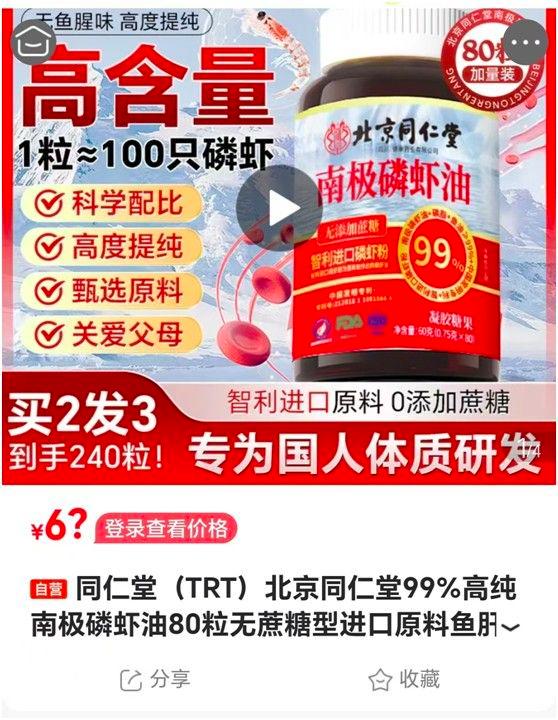
Core Viewpoint - The article discusses the significant issues surrounding the brand management and supply chain practices of Tong Ren Tang, highlighting the lack of accountability and transparency in the OEM (Original Equipment Manufacturer) model, which has led to consumer deception and quality crises [2][8][9]. Group 1: Brand Management Issues - A recent investigation revealed that a product marketed as "99% pure Antarctic krill oil" from Tong Ren Tang contained no actual krill oil, indicating severe product misrepresentation [2][4]. - The brand's authorization to a distributor, Sichuan Health Pharmaceutical, expired in March 2021, yet products under the Tong Ren Tang name continued to be sold online, exposing significant flaws in brand authorization management [4][6]. - The relationship between the involved companies is complex, with Sichuan Health Pharmaceutical being partially owned by Tong Ren Tang Health, raising questions about internal oversight and accountability [7]. Group 2: Supply Chain Accountability - The OEM model has led to a "responsibility void," where manufacturers deny knowledge of product quality issues, and brand owners refuse to take responsibility, resulting in a lack of consumer trust [8][9]. - This situation reflects a broader trend in Chinese enterprises, where supply chain ESG (Environmental, Social, and Governance) management is often neglected, leading to potential risks and consumer rights violations [9][20]. Group 3: ESG Transformation - The article emphasizes the need for a shift from traditional OEM practices to a more collaborative and sustainable supply chain model, where brands and manufacturers work together towards shared ESG goals [10][15]. - Companies like Starbucks and Nike are highlighted as examples of brands that are actively engaging in sustainable practices within their supply chains, setting new standards for accountability and environmental responsibility [10][12]. - The upcoming regulatory changes in 2025 will enforce stricter ESG compliance for companies, marking a significant shift in how businesses must approach supply chain management and sustainability [17][19][20].


众鑫股份20250708
2025-07-09 02:40
Summary of the Conference Call for Zhongxin Co., Ltd. Company Overview - **Company**: Zhongxin Co., Ltd. - **Industry**: Manufacturing, specifically in the production of packaging materials Key Points and Arguments 1. **2025 Performance Outlook**: The company expects strong performance in 2025 with sufficient orders in Q3, although the 36% tariff imposed by the U.S. on Thai products introduces uncertainty. The company believes the final tariff may be lower than 36%, and even if it remains, the impact will be limited due to capacity constraints [2][3][4] 2. **Production Capacity in Thailand**: The first phase of production in Thailand has reached full capacity with an additional 20% potential. The company has secured new important clients such as Packtive and ECO product, indicating stable demand in the U.S. market [2][5] 3. **Supply Chain Issues**: In Q2, actual shipment volumes fell short of expectations due to supply chain disruptions, particularly shortages of packaging and shipping containers. However, the situation is gradually improving, and normal operations are expected to resume within two to three months [2][6][19] 4. **Customer Inventory Levels**: Major clients maintain a safety stock of 3 to 5 months, ensuring that there will be no shortages. The company prioritizes the supply to large clients to stabilize the supply chain [7][10] 5. **New Product Development**: The company developed over 170 new sample molds in the first half of 2025, indicating that the U.S. market's demand for new products remains unaffected by tariffs [11] 6. **Cost Structure and Tariff Impact**: The company uses FOB pricing, meaning tariffs are borne by customers. Even with a 36% tariff, the cost increase is manageable and can be passed down the supply chain [12] 7. **Competitor Landscape**: Competitors are facing slow progress in overseas factory construction, which limits their total capacity and has minimal impact on Zhongxin. The company is accelerating the construction of a 100,000-ton capacity facility in Thailand to meet U.S. market demand [4][13][16] 8. **Domestic Market Development**: Efforts to develop non-U.S. markets have been slow, particularly in Europe due to regulatory restrictions. The domestic operating rate is expected to recover to 60-70% by the end of 2025 [4][17][18] 9. **Production Cost Comparison**: The production cost in Thailand is lower than in China due to reduced labor costs, despite higher raw material prices. The advanced equipment in Thailand also contributes to lower overall production costs [25] 10. **Future Expansion Plans**: The company plans to purchase land in the Pearl River Delta region for factory expansion to support business growth, as current facilities are insufficient [22] Additional Important Information - **Supply Chain Recovery**: The supply chain situation is improving, with delivery times for packaging materials decreasing significantly [19] - **Material Sourcing**: The company prioritizes using locally sourced materials in Thailand to mitigate the impact of import tariffs on raw materials [20] - **Sales Strategy**: The company plans to collaborate with downstream design firms to enhance product development and customer engagement [23] - **Product Pricing Factors**: Product prices are influenced by structural and performance requirements, with raw material price changes having minimal impact on final pricing [24] - **Production Capacity Requirements**: To meet the expected delivery of over 30,000 tons from Thailand, domestic production needs to achieve a target of 60,000 tons [28]