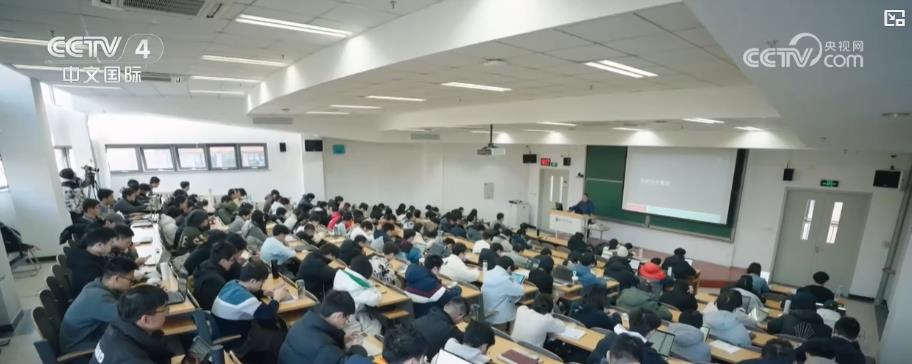
星际航行人才培养

Search documents
【人民日报海外版】我国首个星际航行学院成立
Ren Min Ri Bao Hai Wai Ban· 2026-01-30 06:07
Core Viewpoint - The establishment of the Interstellar Navigation College at the University of Chinese Academy of Sciences aims to cultivate high-quality, innovative talents in the fields of interstellar propulsion, deep space communication and navigation, and space science, responding to national strategic needs in space exploration [1] Group 1: Institutional Development - The Interstellar Navigation College was officially inaugurated on January 27, focusing on cutting-edge areas of space exploration [1] - The college is part of the "Science and Education Integration 3.0" strategy of the Chinese Academy of Sciences, aiming to integrate education, technology, and talent development [1] Group 2: National Strategic Importance - China's space industry is transitioning from "low Earth orbit" to "deep space exploration," with significant national strategic tasks such as lunar research station planning and exoplanet exploration [1] - The next 10 to 20 years are seen as a critical window for leapfrog development in the field of interstellar navigation, with original innovation and technological breakthroughs expected to reshape deep space exploration [1] Group 3: Future Aspirations - The college aims to become a high ground for basic research in aerospace, providing original support for major national tasks [1] - It seeks to cultivate high-level innovative talents capable of tackling unknown challenges and taking on significant responsibilities [1] - The college also aspires to be a hub for international academic exchange, contributing to global discourse with solid research outcomes [1]
我国首个星际航行学院成立!
Xin Lang Cai Jing· 2026-01-27 22:08
Core Viewpoint - The establishment of the Interstellar Navigation College at the University of Chinese Academy of Sciences aims to cultivate high-quality, innovative talents in the fields of interstellar propulsion, deep space communication and navigation, and space science, responding to national strategic needs in space exploration [1][2]. Group 1: College Establishment and Objectives - The Interstellar Navigation College was officially inaugurated on January 27, focusing on cutting-edge fields related to space exploration [1]. - The college aims to address the talent bottleneck in China's space industry by integrating education, technology, and talent development [1]. - The college is part of the "Science and Education Integration 3.0" strategy of the Chinese Academy of Sciences, emphasizing the cultivation of composite talents with solid foundations and strategic vision [1]. Group 2: Historical Context and Future Outlook - The foundation of the college is rooted in historical efforts dating back over 60 years, initiated by prominent scientists like Qian Xuesen and Zhao Jiu-Zhang, who held the first "Interstellar Navigation Symposium" [1]. - The next 10 to 20 years are seen as a critical window for leapfrog development in China's interstellar navigation field, with original innovation and technological breakthroughs expected to reshape deep space exploration [1]. - The college aims to become a high ground for basic research in aerospace, high-level talent cultivation, and international academic exchange, contributing to China's voice and wisdom in the global arena [2].
新建特色平台、人才专项培养 成立星际航行学院有何战略意义?
Yang Shi Xin Wen· 2026-01-27 17:17
Core Viewpoint - China's deep space exploration is entering a new phase, with the establishment of the Interstellar Navigation College at the University of Chinese Academy of Sciences aimed at fostering innovative talent for space exploration and strengthening the country's position in global technological competition [1][8]. Group 1: Establishment of the Interstellar Navigation College - The Interstellar Navigation College was officially launched on January 27, with a focus on interdisciplinary education in space science and engineering [1][8]. - The college aims to cultivate composite talents who can address the changing demands of global situations, combining engineering skills with scientific literacy [7][10]. Group 2: Curriculum and Educational Approach - The college will implement a curriculum that breaks down traditional disciplinary barriers, promoting interdisciplinary learning and collaboration among students [12][22]. - New courses will cover various aspects of planetary science, including planetary physics, chemistry, geology, and astrobiology, emphasizing a comprehensive understanding of celestial bodies [11][12]. Group 3: Strategic Importance and Future Goals - The talent cultivation initiative is designed to meet national needs for interstellar exploration, focusing on training exceptional engineers and top scientists [10][19]. - The college plans to establish six specialized platforms for immersive training, including a drone simulation platform and a space science satellite teaching platform [22]. Group 4: Challenges in Interstellar Exploration - Significant technical challenges remain for humanity to achieve true interstellar travel, including advancements in propulsion technology and sustainable life support systems [16][19]. - Future breakthroughs are expected to come from innovative technologies that can enhance propulsion efficiency and enable long-term habitation in space [18][21].

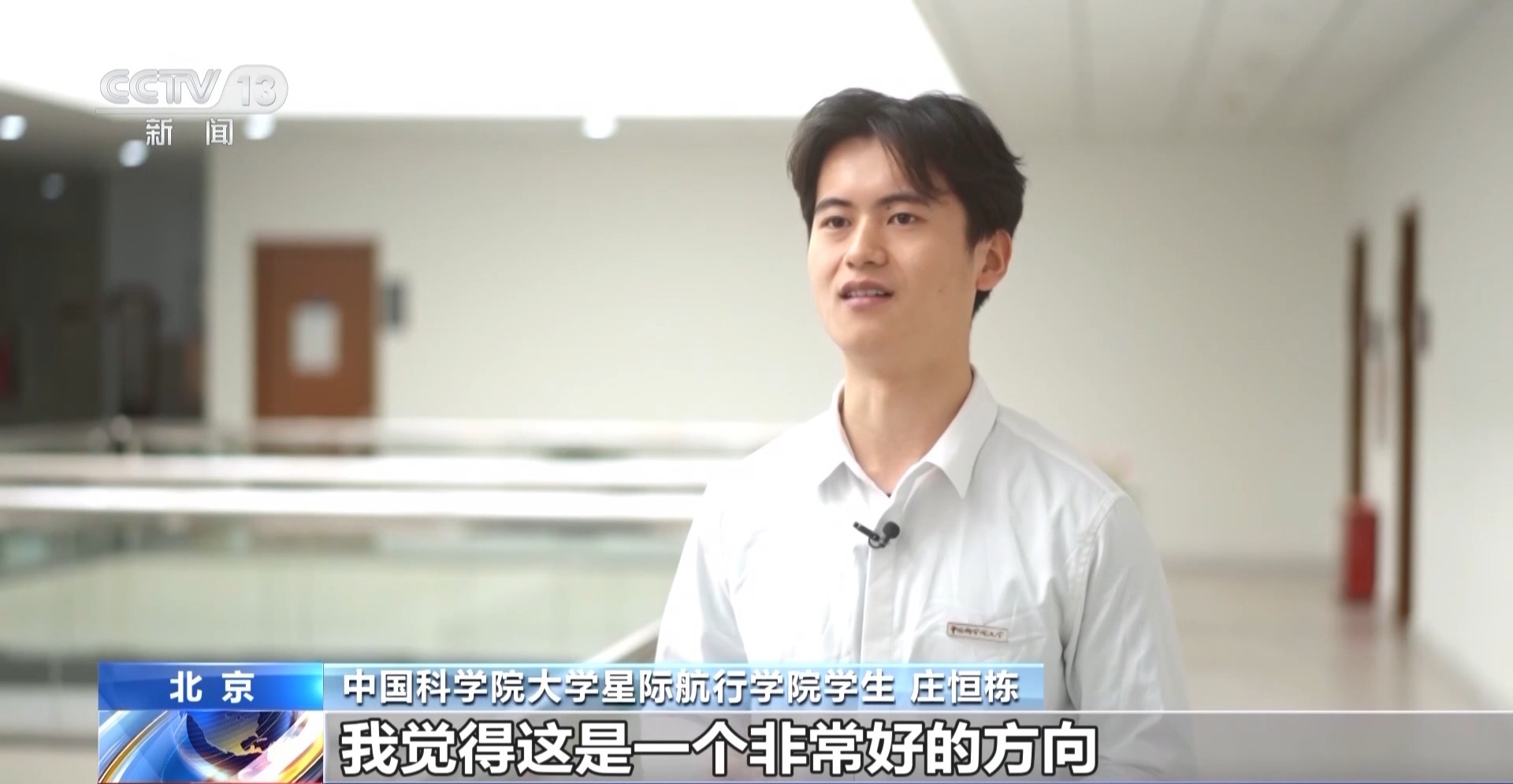
布局未来20年关键窗口期:星际航行学院点燃太空探索“人才引擎”
Yang Shi Wang· 2026-01-27 13:06
Core Perspective - The establishment of China's first Interstellar Navigation Academy aims to cultivate interdisciplinary talents needed for deep space exploration, focusing on areas such as interstellar propulsion and deep space communication [1][14]. Group 1: Academy Overview - The Interstellar Navigation Academy was officially inaugurated on January 27, focusing on cutting-edge fields like interstellar propulsion and deep space navigation [1]. - The academy will create six specialized platforms for experimental teaching and innovation, providing an immersive training environment [1]. Group 2: Academic Focus - The core discipline of the academy is Aerospace Science and Technology, with key areas including spacecraft design and intelligent control [2][4]. - The academy is structured into four departments, covering research fields such as space science, aerodynamics, and materials mechanics [4]. Group 3: Faculty and Resources - The academy boasts a faculty of six academicians and over 30 high-level national talents, supported by five major aerospace research institutes [5][7]. - It has access to various advanced national experimental platforms in areas like aerospace engines and manned space stations, providing a solid foundation for academic development and research innovation [7]. Group 4: Theoretical Framework - Qian Xuesen's work "Introduction to Interstellar Navigation" lays out a comprehensive theoretical framework for interstellar travel, distinguishing between interplanetary and interstellar navigation [10]. - The concept of interstellar navigation involves both exploring the solar system and venturing beyond it into deep space [10]. Group 5: Talent Development - The academy aims to develop versatile talents capable of addressing the full spectrum of challenges in interstellar navigation, including operating spacecraft and solving scientific and survival issues in deep space [11][13]. Group 6: Future Outlook - The next 10 to 20 years are seen as a critical window for significant advancements in the field of interstellar navigation, with original innovations and technological breakthroughs expected to profoundly impact deep space exploration and national competitiveness [14].