春茶火锅

Search documents
茶火锅:还没火,就快过气了?
3 6 Ke· 2025-09-25 03:25
Core Insights - The rise of tea hotpot has created significant queues in major cities like Beijing, Shanghai, and Wuhan, with some restaurants experiencing wait times of up to three hours [1][3] - The tea hotpot trend is characterized by a blend of traditional hotpot elements with innovative tea-infused broths, appealing to younger consumers seeking new dining experiences [4][10] Group 1: Market Trends - Tea hotpot has gained popularity in various cities, with brands like Hu Tea House and Qingting Hotpot leading the charge, often resulting in queues of over 200 tables on weekdays and nearly 600 on weekends [1][3] - Established hotpot chains are also entering the tea hotpot market, with new offerings like "Longjing Tea Hotpot" and "Spring Tea Hotpot" [3][4] Group 2: Consumer Preferences - The evolution of tea hotpot aligns with consumer demands for freshness and health, as the combination of tea and hotpot addresses the traditional concerns of greasy and heavy meals [10][12] - The trend reflects a broader shift towards experiential dining, where consumers are willing to pay for unique and visually appealing food presentations [5][15] Group 3: Industry Challenges - The hotpot industry is currently facing intense competition, with a reported net decrease of 27,126 hotpot outlets in the past year, indicating a challenging market environment [13][14] - Despite the innovative appeal of tea hotpot, the market remains limited, and brands may struggle to achieve large-scale success due to high competition and cost pressures [17][18]

排队200桌,年轻人狂打卡,网红茶火锅能火多久?
3 6 Ke· 2025-07-31 12:25
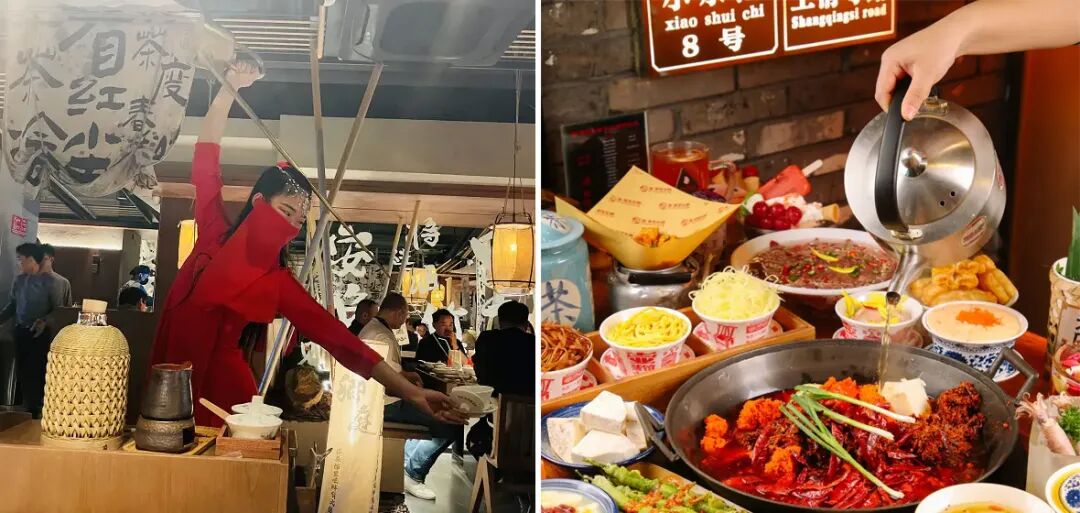
Core Insights - The emergence of "tea hotpot" restaurants across various cities in China, such as Chongqing, Beijing, and Suzhou, has gained significant popularity, blending tea culture with traditional hotpot dining experiences [1][4][8] - The trend is particularly appealing to younger consumers, with substantial social media engagement, including over 100 million views on Douyin related to "tea hotpot" [1][4] Group 1: Popularity and Market Presence - The "tea hotpot" concept has seen a surge in popularity, with notable establishments like Hu Tea House in Beijing consistently ranking high on local dining platforms since its opening in 2021 [3][4] - In Nanjing, Su Jianshan's tea hotpot has sold over 5,000 units of its popular "Su-style 18 cup tea hotpot" within just three months of opening [4][8] - Other cities are also witnessing the rise of tea hotpot restaurants, including Tea Pao Old Hotpot in Chongqing and Gonglu Tea Soup Hotpot in Wuhan, contributing to a nationwide trend [8] Group 2: Unique Features and Offerings - The design and ambiance of tea hotpot restaurants emphasize tea culture, with decor often reflecting traditional tea house aesthetics, such as large tea displays and themed furnishings [9][11] - The hotpot bases prominently feature various types of tea, including popular options like jasmine tea and lesser-known varieties like Pu'er and Longjing tea, enhancing the dining experience [13][15] - Signature dishes often incorporate tea elements, such as "tea-flavored beef" and "jasmine flower tripe," showcasing the integration of tea into both the broth and the ingredients [16] Group 3: Economic Considerations and Challenges - The operational costs for tea hotpot restaurants are elevated due to the need for elaborate decor and marketing strategies aimed at attracting social media attention, leading to higher average consumer spending [17][21] - Despite initial popularity, some establishments face challenges with customer retention, as the novelty of the experience may not justify the higher prices compared to traditional hotpot options [21][22] - Industry experts suggest that the tea hotpot trend may lack a distinct flavor profile compared to other hotpot varieties, raising questions about its long-term sustainability in the market [22]