
普惠家财险

Search documents
精耕细作金融“五篇大文章” 保险业交出高质量答卷
Jin Rong Shi Bao· 2025-12-17 04:27
Core Insights - 2025 is a pivotal year for the implementation of the financial "five major articles," with continuous policy dividends and deep integration of industry innovation practices, enhancing the quality and efficiency of financial services to the real economy [1] - The insurance industry plays a crucial role as an economic stabilizer and social stabilizer, focusing on key areas such as technology finance, inclusive finance, and green finance, thereby achieving dual improvements in scale and quality, as well as service and innovation [1] Policy Support - Multiple favorable policies are being released to facilitate the implementation of financial services, including the issuance of the "Guiding Opinions" by the State Council in March, which emphasizes the need to enrich technology insurance products and provide comprehensive financial services for technology enterprises [4] - In April, the regulatory authorities released an implementation plan for high-quality development of technology finance, encouraging insurance companies to develop insurance products covering the entire process of technological innovation activities [4] - In May, several departments proposed policies to support insurance funds in participating in equity investments and venture capital, promoting long-term investment reforms [4] Technological Innovation in Insurance - The insurance industry is focusing on developing a comprehensive risk protection network for technology innovation, launching innovative products tailored to the needs of high-risk technology sectors such as integrated circuits, biomedicine, and artificial intelligence [5] - By the third quarter of 2025, the premium income from technology insurance in China increased by 30% year-on-year, significantly outpacing the industry average, making it a core growth driver for financial services in technology innovation [5] Inclusive Insurance Development - The insurance industry is enhancing its inclusive insurance offerings to better serve small and micro enterprises, rural revitalization, and vulnerable groups, translating policy dividends into tangible benefits for the public [10] - Specific initiatives include the introduction of tailored insurance products for high-risk occupations and the development of low-threshold, affordable insurance products to meet the needs of the elderly and other vulnerable groups [11][12] Green Insurance Initiatives - The insurance industry is actively promoting green insurance and investment to support the comprehensive green transformation of the economy and society, with a focus on developing targeted risk protection solutions and enhancing the green insurance system [13] - As of mid-2025, insurance funds have invested significantly in green projects, with over 1.38 trillion yuan in debt investments and more than 700 billion yuan in equity investments directed towards green industries [14]

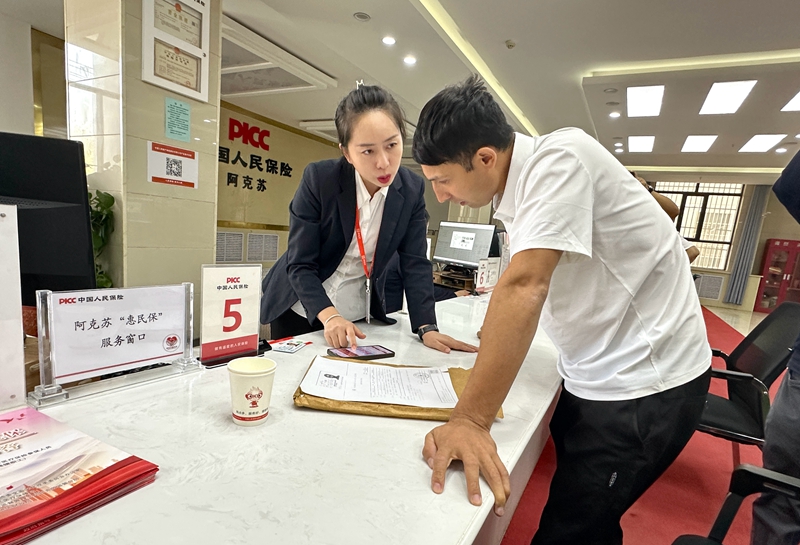
保障、投保、理赔全解答
Jin Rong Shi Bao· 2025-12-10 02:03
Core Viewpoint - The article provides a practical guide to understanding inclusive home property insurance (普惠家财险), highlighting its coverage, eligibility, and key considerations for consumers. Group 1: Coverage of Inclusive Home Property Insurance - Inclusive home property insurance generally covers both homeowners and renters, protecting against risks such as fire, explosion, water leakage, theft, and damage from pipe bursts [2] - Coverage includes family property losses and family liability for third-party injuries or property damage caused by incidents like fire or negligence [2] - Some products extend coverage to include responsibilities for falling objects, children's actions, accidents involving domestic workers, pet liabilities, and income loss insurance for new urban residents like delivery workers [2] Group 2: Eligibility and Purchase Guidelines - There are no residency restrictions for purchasing inclusive home property insurance; both owned and rented residential properties are eligible, provided they meet local housing regulations [3] - The insurance is limited to residential properties constructed with specific materials, excluding commercial properties and those made of bamboo, wood, or mixed materials [3] - Multiple policies can be purchased for the same property, with limits varying by region; for example, Shenzhen allows up to five policies while Henan permits three [4] Group 3: Policy Management and Consumer Considerations - Policyholders can cancel their insurance before the coverage starts and request a refund; however, post-coverage cancellation may incur fees [5] - Consumers can access value-added services through official channels, with variations in services offered across different regions [6] - Important considerations for consumers include carefully reading policy terms, focusing on compensation ratios, limits, deductibles, and any special requirements related to property characteristics [7]
如何打通消费者认可 “最后一公里”?
Jin Rong Shi Bao· 2025-12-10 02:03
Core Viewpoint - The article emphasizes the transformation of home property insurance from a "low-frequency high-loss" disaster compensation model to a "high-frequency low-loss" risk reduction service, positioning it as a crucial element in building resilient cities [1]. Group 1: Market Demand and Policy Support - The demand for home property insurance is rising due to increased awareness of household asset protection needs and frequent extreme weather events, creating a gap in family asset security [2][3]. - Recent policy initiatives have accelerated the development of inclusive home property insurance, with multiple new products launched in 2023, such as "惠家保" in various cities [2][3]. Group 2: Product Features and Innovations - Inclusive home property insurance products are characterized by low premiums and high coverage, with annual premiums ranging from tens to hundreds of yuan and coverage often exceeding one million yuan [2][3]. - The "惠家保" product in Shenzhen, for example, has a minimum annual premium of 58 yuan and provides coverage of up to 1.8 million yuan, demonstrating the affordability and comprehensive nature of these products [3]. Group 3: Service Enhancements and Integration - Inclusive home property insurance is innovating by integrating high-frequency services such as risk prevention, daily maintenance, and health management into their offerings, enhancing the overall value proposition [5][6]. - The "沪家保" product has created risk maps and disaster warning systems, showcasing the integration of insurance services with urban governance [5][6]. Group 4: Challenges and Optimization Needs - Despite the potential, inclusive home property insurance is still in its early stages, facing challenges such as a lack of unified data for risk assessment and low consumer awareness [7][8]. - To transition to a high-frequency service model, the industry needs to enhance channel construction, product innovation, and ecological collaboration, focusing on expanding product reach and improving consumer education [7][8][9].
北京金融监管局:结合房产价值高、楼龄长等特点,推广并优化普惠家财险
Bei Jing Shang Bao· 2025-04-03 11:56
Group 1 - The core viewpoint of the news is the release of the "Beijing Financial Regulatory Bureau's Work Plan" aimed at enhancing regulation, preventing risks, promoting reforms, and fostering high-quality development in the property insurance industry [1] - The work plan outlines 20 specific measures across five key areas: comprehensive regulation, risk prevention, reform and opening up, service to the capital's economic and social development, and creating a favorable development environment [1] Group 2 - The work plan emphasizes the need to support the development of new productive forces by urging property insurance institutions to implement insurance compensation policies and promote product innovation in technology, green, and intellectual property insurance [1] - It aims to meet diversified insurance needs by expanding agricultural insurance coverage and enhancing risk protection for new agricultural operators, as well as optimizing property insurance products tailored to Beijing's unique characteristics [2] - The plan encourages the development of insurance products that support national and capital strategic initiatives, including enhancing domestic trade credit insurance capabilities and expanding export credit insurance coverage [2] - It supports the establishment of a disaster prevention and relief system by exploring multi-layered disaster risk dispersion mechanisms and enhancing emergency services related to major disasters [3] - The work plan also promotes the integration of insurance services with social governance, encouraging the development of liability insurance closely related to social management [2]