普通指数基金

Search documents
投资进化论丨指数增强基金与普通指基有何不同?真能“多赚一点”?
Sou Hu Cai Jing· 2026-02-03 11:00
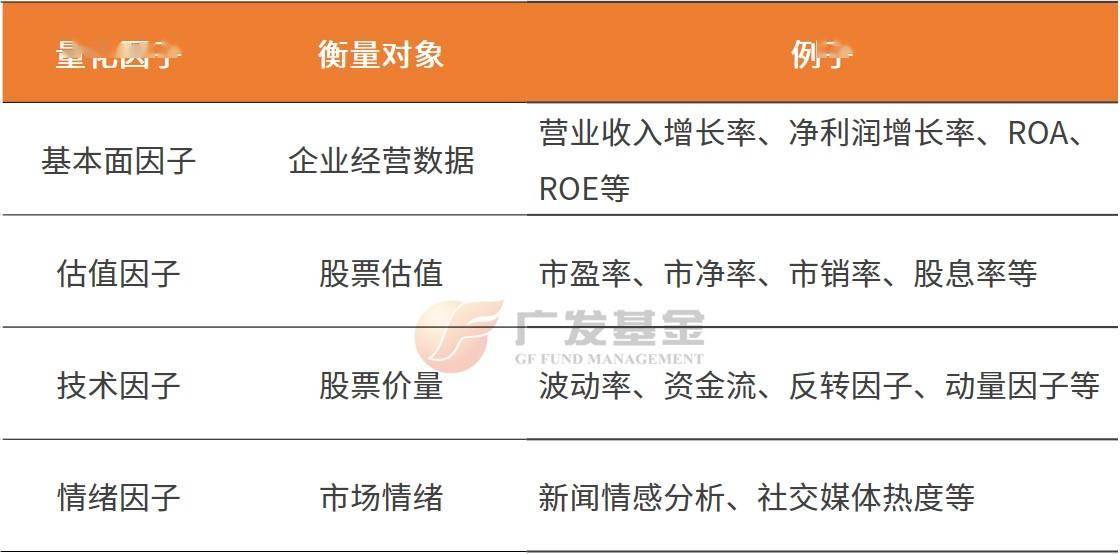
Core Viewpoint - The increasing popularity of index investing has led to a rise in interest in enhanced index funds, which have shown a trend of outperforming traditional index funds in recent years [1][7]. Group 1: Differences Between Enhanced Index Funds and Traditional Index Funds - Traditional index funds aim to closely track the performance of an index with strict control over tracking error, while enhanced index funds, although also index funds, do not fully replicate the index and allow for some active optimization to seek excess returns [2]. - Enhanced index funds are required to invest at least 80% of their non-cash assets in index constituents and their alternatives, meaning their performance is largely driven by the index itself, with some room for active management [2]. Group 2: Common Enhancement Strategies - The three main strategies for enhancing index funds include: 1. **Quantitative Model Stock Selection**: This strategy involves using quantitative factors to build enhancement models, scoring stocks across multiple dimensions to optimize expected performance [3]. 2. **Fundamental Enhancement**: Similar to active fund stock selection, this strategy involves comparing and adjusting constituent stocks based on financial quality, profitability, and valuation metrics [5]. 3. **Portfolio and Trading Optimization**: This strategy focuses on adjusting trading frequency, controlling transaction costs, and managing risks to minimize unnecessary volatility that could erode long-term returns [6]. Group 3: Performance Comparison - Over the past 5 and 10 years, enhanced index funds have consistently outperformed traditional index funds in terms of returns, with the performance gap widening over time, while maximum drawdowns have not significantly increased [7][8]. Group 4: Selection Criteria for Enhanced Index Funds - Investors are advised to adopt a "two-step" approach for selecting enhanced index funds: first, evaluate the underlying index, and then consider the enhancement strategy employed [11]. - The choice of index is crucial, as the performance of enhanced index funds largely depends on the characteristics of the benchmark index, with broader indices generally providing more opportunities for enhancement [11]. - Different enhancement strategies vary among funds, with many incorporating AI and machine learning to capture non-linear relationships between factors for excess returns [11]. Group 5: Target Audience for Enhanced Index Funds - Enhanced index funds are positioned as a hybrid investment tool suitable for investors willing to accept index volatility while seeking long-term excess returns [12]. - Conversely, traditional index funds may be more appropriate for investors who prefer to closely track an index without the risk of underperformance [13].

一年成立20余只新基金 公募为何抢这条新赛道?
Guo Ji Jin Rong Bao· 2025-12-20 14:01
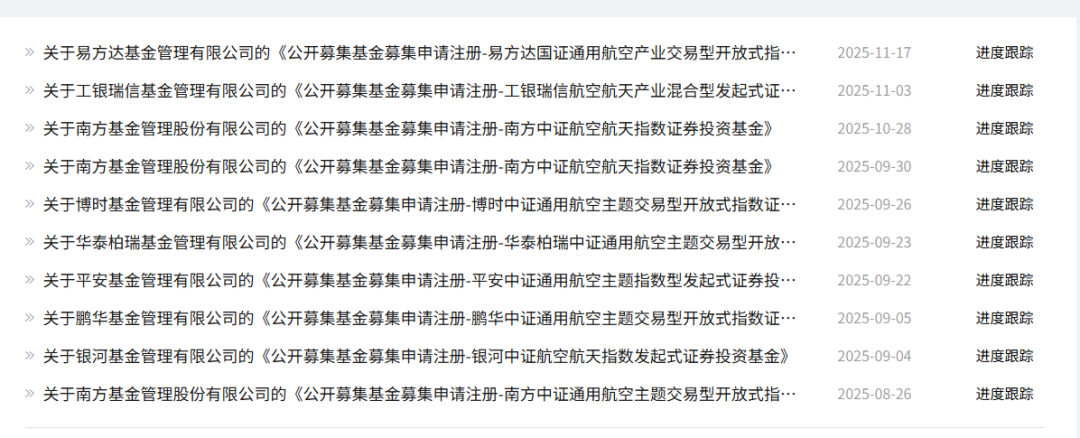
Core Insights - The commercial aerospace sector is experiencing heightened interest due to favorable policies, with the Guozheng Aerospace Index rising by 22.79% over the past year [1][2]. Group 1: Fund Establishment and Market Trends - As of October 29, 2023, a total of 23 aerospace-themed funds have been established, including 14 ETFs, 7 ETF-linked funds, and 2 ordinary index funds [2]. - The majority of the established funds are ETFs, with 14 dedicated to general aviation and aerospace, reflecting a growing interest in this sector [2]. - The total scale of the established aerospace-themed funds is nearly 6 billion yuan, with the largest single fund reaching 2.138 billion yuan [5]. Group 2: Investment Drivers and Market Outlook - The aerospace sector is expected to maintain high growth due to three main drivers: policy support, the scarcity of investment opportunities, and the need for precise allocation tools by investors [6]. - The upcoming plans for China's manned space program in 2026 are anticipated to attract significant market attention [6]. - Investment logic in the commercial aerospace sector is currently event-driven, with a shift expected towards fundamental performance in the future [7]. Group 3: ETF Selection and Investment Strategy - Investors are advised to focus on aerospace ETFs that cover both commercial and military aerospace sectors, particularly due to strong policy support and the potential for high-frequency catalysts [7]. - The commercial aerospace sector is driven by a combination of policy and technological advantages, suggesting a continued high level of market interest [7].
理财档案|指数增强如何实现超额收益?关注成分股数量和行业
Guang Zhou Ri Bao· 2025-05-08 15:29
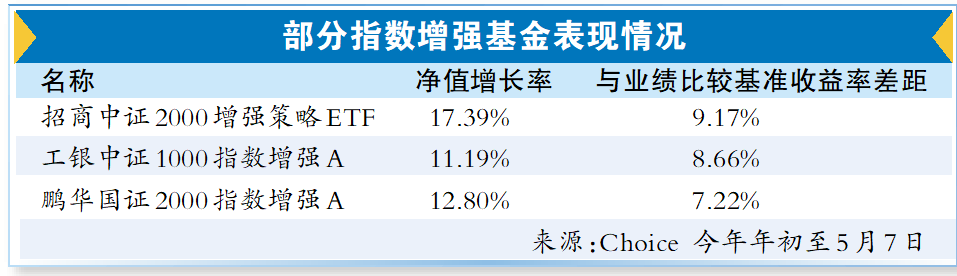
近期,指数增强基金走势火热,今年以来已有超七成指数增强基金,收益跑赢跟踪的标的指数。指数增强基金是什么?如何投资呢? 有业内人士表示,指数增强基金适合有一定风险承受能力的投资者,波动性较大的指数可能更容易获得超额收益。而指数的成分股越 少、行业区别越小,相关指数增强基金越难实现超额收益。 指数增强基金有望实现超额收益管理费相对高 普通指数基金主要是复制跟踪指数构建投资组合,而指数增强基金,会将80%的资金投资标的指数的成分股,而剩下的20%资金会由基 金经理和投资团队采用精选个股等策略,力争增厚产品收益。 成分股越少、行业区别越小越难实现超额收益 记者采访了解到,指数增强基金实现超额收益,整体成分股数量越少越难做,成分股行业区别越小越难做。"例如银行指数,由于银行 和银行之间区别较小,非常难做增强,而科技指数就相对更好做增强。"有公募基金业内人士指出。 有公募基金业内人士指出,通常情况下,中证1000指数增强型基金的平均超额收益大于中证500指数增强型基金,而中证500指数增强型 基金的平均超额收益又大于沪深300指数增强型基金。 李一鸣表示,波动性较大的指数可能更容易获得超额收益,基金经理可以通过把握个股波 ...