
晶圆产品

Search documents
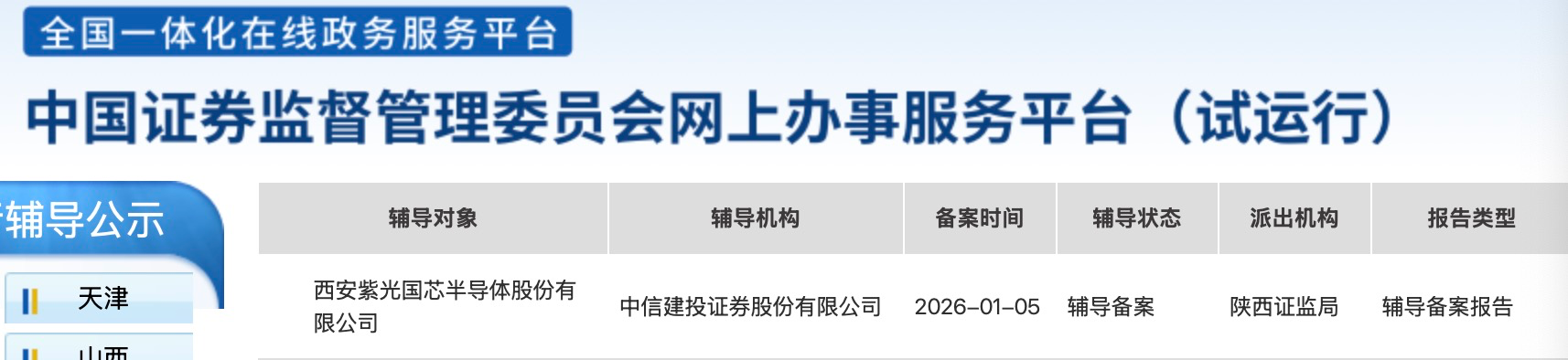
国家队站台,芯片黑马启动A股IPO
2 1 Shi Ji Jing Ji Bao Dao· 2026-01-13 02:19
Core Viewpoint - Unisoc has initiated the listing guidance for the Beijing Stock Exchange at the beginning of 2026, marking a significant step in its capital market journey after years of development and transformation from a foreign entity to a domestic player in the semiconductor industry [1][11]. Group 1: Company Background and Development - Unisoc originated from Infineon's storage R&D department in Xi'an in 2004, evolving through foreign investment, acquisition, and integration into the Unisoc system [3]. - The company has seen a shift in its shareholder structure, with significant investments from state-owned capital and industry capital, reflecting a strong "national team" presence [3][9]. - After years of losses, Unisoc achieved a profit of 5.683 million yuan in the first half of 2025, marking a turning point for the company ahead of its IPO [3][6]. Group 2: Financial Performance - In 2024, Unisoc reported revenues of 1.21 billion yuan, a year-on-year increase of 32.42%, while net losses narrowed to 24 million yuan, a reduction of 87.74% compared to the previous year [5]. - The company’s R&D expenses decreased by 22.34% year-on-year, indicating a strategic adjustment in response to market demand [5]. - In the first half of 2025, Unisoc's revenue reached 750 million yuan, with net profit increasing by over 139.54% year-on-year [6]. Group 3: Market Position and Challenges - Unisoc's business focuses on integrated circuit design, particularly in the memory sector, with products aimed at communications, IoT, and AI markets [5]. - The company is heavily reliant on the semiconductor industry's cyclical nature, which has led to significant fluctuations in its performance [5][12]. - The upcoming IPO process will be scrutinized for the sustainability of its profitability and the impact of industry cycles on its operations [12]. Group 4: Listing Strategy - Unisoc's choice to list on the Beijing Stock Exchange aligns with the current trend of domestic memory chip companies seeking capital market access [11]. - The company’s "specialized, refined, distinctive, and innovative" attributes, along with a significant R&D investment ratio, make it a suitable candidate for this market [12]. - However, the company faces challenges such as the need for audited financial reports and the uncertainty surrounding the commercialization of its AI-related products [12].

国家队站台,芯片黑马启动A股IPO
21世纪经济报道· 2026-01-13 02:00
Core Viewpoint - The article discusses the development journey of Unisoc, a semiconductor company that originated from Infineon's storage R&D department in Xi'an, China, and highlights its transition from foreign investment to local integration, culminating in a significant shift in its ownership structure towards state-owned enterprises and industry capital [1][5]. Group 1: Company Development - Unisoc was established in 2004, evolving from a foreign semiconductor entity to a local company, with significant investments from state-owned and industry capital [1][5]. - The company has experienced a narrowing of net profits over the years, finally achieving a profit of 5.683 million yuan in the first half of 2025, marking a pivotal moment before its IPO [1][4]. - The development of Unisoc serves as a microcosm for observing trends in the semiconductor industry, reflecting the broader shifts in technology and market dynamics [1]. Group 2: Financial Performance - In 2024, Unisoc reported revenues of 1.21 billion yuan, a year-on-year increase of 32.42%, while net losses narrowed to 24 million yuan, a reduction of 87.74% compared to the previous year [3][4]. - The company's R&D expenses decreased by 22.34% year-on-year, indicating a strategic adjustment based on market demand [3]. - The improvement in financial performance is attributed to a recovery in the storage market, enhanced market expansion efforts, and better product pricing and sales [4]. Group 3: Ownership Structure - The current ownership structure of Unisoc features a significant presence of state-owned enterprises, with Beijing Unisoc Storage Technology Co., Ltd. holding 59.63% of the shares [7]. - The top ten shareholders include various state-owned funds and industry capital, reflecting a strong "national team" influence in the company's capital structure [7]. Group 4: Market Position and IPO Plans - Unisoc's IPO journey aligns with the timing of its industry transformation, having completed a shareholding reform in 2023 and planning to list on the Beijing Stock Exchange in 2026 [9]. - The choice of the Beijing Stock Exchange is strategic, as it caters to innovative small and medium enterprises, which aligns with Unisoc's focus on specialized and new technologies [9]. - However, the company faces challenges in maintaining profitability and stability, particularly due to the cyclical nature of the DRAM industry and uncertainties in the commercialization of AI-related products [9].

聚焦高质量发展丨安徽蚌埠:逐梦新材料 智造新未来
Xin Hua Wang· 2025-12-02 08:04
Core Viewpoint - The new materials industry in Bengbu, Anhui, is rapidly developing, leveraging agricultural waste like straw to create innovative products and enhancing the local economy through strategic initiatives and project investments [1][6]. Group 1: Industry Development - Bengbu has positioned the new materials industry as a key emerging sector, focusing on integration with the Yangtze River Delta development strategy and promoting the "Intelligent Manufacturing Strong City, Industry-Based City" strategy [1][5]. - The city has established eight national-level innovation platforms and 42 provincial-level platforms in the new materials sector, fostering a robust industrial foundation [5]. - The new materials industry in Bengbu has seen significant growth, with 411 companies generating an annual output value exceeding 660 billion yuan [11]. Group 2: Product Innovation - Innovative products made from straw, such as biodegradable lunch boxes and polylactic acid shirts, were showcased at the International New Materials Industry Conference, highlighting the potential of agricultural waste [1]. - The China National Building Material Group has developed ultra-thin flexible glass, which is only 30 micrometers thick and has a lifespan of up to 27 years, contributing to advancements in the glass industry [3][5]. Group 3: Investment and Projects - At the recent conference, a total of 162 projects were signed, with a total investment of 701.97 billion yuan, including 79 projects in Bengbu worth 251.01 billion yuan [6]. - The city is actively optimizing its business environment to attract high-quality projects, implementing a comprehensive system for project management and resource allocation [8]. Group 4: Collaborative Development - The new materials industry in Bengbu has formed a collaborative development pattern across various sectors, including silicon-based, bio-based, chemical, and advanced non-ferrous metals [9][11]. - The city is leveraging its strengths in bio-based materials, particularly through the complete industrial chain for polylactic acid production, which utilizes non-grain biomass [11].
中芯国际集成电路制造有限公司2025年第三季度报告
Shang Hai Zheng Quan Bao· 2025-11-13 18:41
Core Viewpoint - The company reported a revenue of RMB 171.62 billion for the third quarter, reflecting a quarter-on-quarter growth of 6.9% and an 18.2% increase year-on-year for the first three quarters [3][4]. Financial Performance - The gross profit margin for the third quarter was 25.5%, up by 4.8 percentage points from the previous quarter [3]. - The capacity utilization rate increased to 95.8%, a rise of 3.3 percentage points compared to the previous quarter [3]. - For the fourth quarter, the company expects revenue to remain flat or grow by 2%, with a gross profit margin projected between 18% and 20% [4]. Asset Impairment - The company recognized a total of RMB 917.354 million in credit and asset impairment losses for the first three quarters of 2025 [13][14]. - The credit impairment loss amounted to RMB 32.123 million, while the inventory impairment loss was RMB 885.231 million [13]. Shareholder Information - As of the report date, the company had issued a total of 7,999,709,148 shares, with 75% listed on the Hong Kong Stock Exchange and 25% on the Shanghai Stock Exchange [6][7].
