8.6代OLED玻璃基板

Search documents
底盘“稳”动能“强” 新质生产力驱动产业跃迁
Zheng Quan Shi Bao· 2025-12-15 18:30
Core Insights - China's industrial economy is undergoing a historic transition from scale expansion to a focus on new quality productivity, driven by technological innovation and strategic upgrades [1][3][7] Group 1: Industrial Resilience and Transformation - The complete industrial system, large-scale market, and the courage of various business entities are fostering a fertile ground for the growth of China's industrial economy [1] - The automotive industry is a prime example of this transformation, with expected annual sales exceeding 34 million vehicles, including 16 million electric vehicles and over 6.8 million exports [2] - China's advanced manufacturing, particularly in the electric vehicle sector, is characterized by a strong market share in power batteries exceeding 60%, with companies like CATL and BYD leading globally [2] Group 2: Technological Innovation and Economic Strategy - China is at a critical juncture where technological innovation is essential for developing new quality productivity and restructuring resilient industrial chains [3] - The export growth of new energy vehicles, lithium batteries, and photovoltaic products demonstrates the resilience of China's economy in the face of external trade challenges [3] - The integration of digital and intelligent technologies is crucial for traditional manufacturing to transition into smart manufacturing, as evidenced by successful projects in cities like Bengbu [4] Group 3: Policy and Capital Support - A comprehensive industrial innovation support system is being constructed, emphasizing the need for strong internal support and effective policy alignment [6][7] - Recent policies aim to enhance the adaptability of supply and demand in consumer goods, promoting a virtuous cycle of consumption and industrial upgrading [6] - Government investment funds are evolving from mere capital amplifiers to core engines driving industrial ecosystem development and upgrades [6] Group 4: Global Engagement and Investment - International investments in China, such as the establishment of major production bases by companies like Danfoss and Medtronic, reflect global confidence in China's industrial capabilities [5] - The ongoing development of AI technologies by Chinese firms is reshaping global perceptions and creating new opportunities in the tech sector [5]
聚焦高质量发展丨安徽蚌埠:逐梦新材料 智造新未来
Xin Hua Wang· 2025-12-02 08:04
Core Viewpoint - The new materials industry in Bengbu, Anhui, is rapidly developing, leveraging agricultural waste like straw to create innovative products and enhancing the local economy through strategic initiatives and project investments [1][6]. Group 1: Industry Development - Bengbu has positioned the new materials industry as a key emerging sector, focusing on integration with the Yangtze River Delta development strategy and promoting the "Intelligent Manufacturing Strong City, Industry-Based City" strategy [1][5]. - The city has established eight national-level innovation platforms and 42 provincial-level platforms in the new materials sector, fostering a robust industrial foundation [5]. - The new materials industry in Bengbu has seen significant growth, with 411 companies generating an annual output value exceeding 660 billion yuan [11]. Group 2: Product Innovation - Innovative products made from straw, such as biodegradable lunch boxes and polylactic acid shirts, were showcased at the International New Materials Industry Conference, highlighting the potential of agricultural waste [1]. - The China National Building Material Group has developed ultra-thin flexible glass, which is only 30 micrometers thick and has a lifespan of up to 27 years, contributing to advancements in the glass industry [3][5]. Group 3: Investment and Projects - At the recent conference, a total of 162 projects were signed, with a total investment of 701.97 billion yuan, including 79 projects in Bengbu worth 251.01 billion yuan [6]. - The city is actively optimizing its business environment to attract high-quality projects, implementing a comprehensive system for project management and resource allocation [8]. Group 4: Collaborative Development - The new materials industry in Bengbu has formed a collaborative development pattern across various sectors, including silicon-based, bio-based, chemical, and advanced non-ferrous metals [9][11]. - The city is leveraging its strengths in bio-based materials, particularly through the complete industrial chain for polylactic acid production, which utilizes non-grain biomass [11].

创新答卷彰显新型举国体制优势(科技视点)
Ren Min Ri Bao· 2025-10-19 22:27
Group 1 - The core viewpoint emphasizes the importance of leveraging the advantages of a new type of national system to accelerate high-level technological self-reliance and strength in China [1] - During the 14th Five-Year Plan period, significant historical achievements and transformations in China's technological innovation have been made under the strong leadership of the central government [1][2] - The strategic goal of building a strong technological nation by 2035 is anchored on addressing major national needs through collaboration between government and market forces [1][5] Group 2 - China's space station has achieved complete domestic production of products and materials, with 100% self-control of key core components, resulting in hundreds of space science experiments conducted in orbit [4] - The Chang'e missions have successfully returned lunar samples, with Chang'e 5 collecting 1,731 grams from the moon's surface and Chang'e 6 expected to bring back 1,935.3 grams from the moon's far side [4][5] - The national strategic scientific and technological strength has been continuously strengthened, with the construction of national laboratories and the enhancement of research capabilities in institutions and universities [5][9] Group 3 - Original achievements in technology are continuously emerging, exemplified by the EAST project achieving a world record of 1 million degrees Celsius for 1,066 seconds, marking a significant leap in fusion energy research [6][7] - The total R&D expenditure in society is expected to exceed 3.6 trillion yuan in 2024, maintaining China's position as the second-largest in the world [7][9] - The proportion of corporate R&D investment is projected to exceed 77% in 2024, with over 524,000 companies holding valid invention patents, accounting for 74.4% of the total in China [9] Group 4 - The innovation capacity of enterprises has significantly improved, with the successful development of the world's first 8.6-generation OLED glass substrate in Anhui, marking a breakthrough in domestic technology [8][9] - The integration of technology innovation systems involving industry, academia, and research has been strengthened, with enterprises taking a leading role in innovation [8][9] - The "dual-directional leaderboard" mechanism has been implemented in Sichuan Province to enhance the connection between market demand and scientific research, facilitating technology transfer and commercialization [12][13]
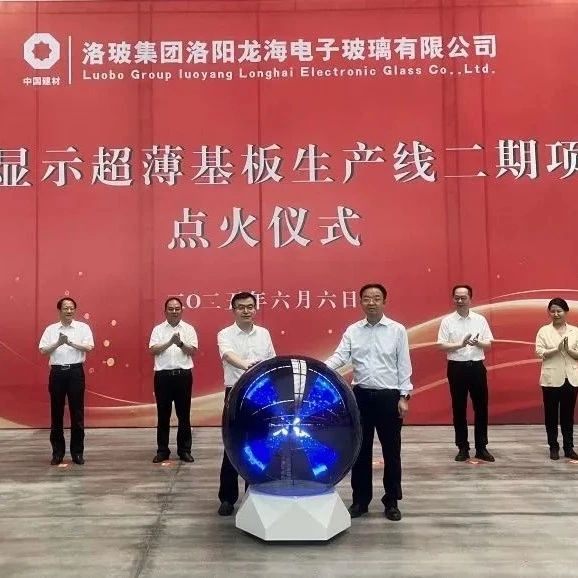
6.6亿,凯胜科技子公司超薄电子玻璃项目点火
WitsView睿智显示· 2025-06-09 14:21
Core Viewpoint - The article highlights the launch of the second phase of the ultra-thin substrate production line by Longhai Glass, which is expected to significantly contribute to the global new display industry by providing essential materials for production [1][3]. Group 1: Company Overview - Longhai Glass, a subsidiary of Kaisheng Technology, has initiated a project with a total investment of approximately 660 million yuan, aiming for an annual production capacity of 17 million square meters of ultra-thin electronic glass [3]. - Kaisheng Technology's main products include flexible foldable glass (UTG), ultra-thin electronic glass, ITO conductive film glass, and integrated touch modules, indicating a comprehensive display industry chain [3]. Group 2: Financial Performance - In 2024, Kaisheng Technology reported a revenue of 4.894 billion yuan, a year-on-year decrease of 2.32%, while the net profit attributable to shareholders increased by 30.76% to 140 million yuan [3]. Group 3: Industry Development - The successful production of the world's first 8.6-generation OLED glass substrate by the research institute under China National Building Material Group marks a significant advancement in OLED display technology, supported by national key research projects [3].