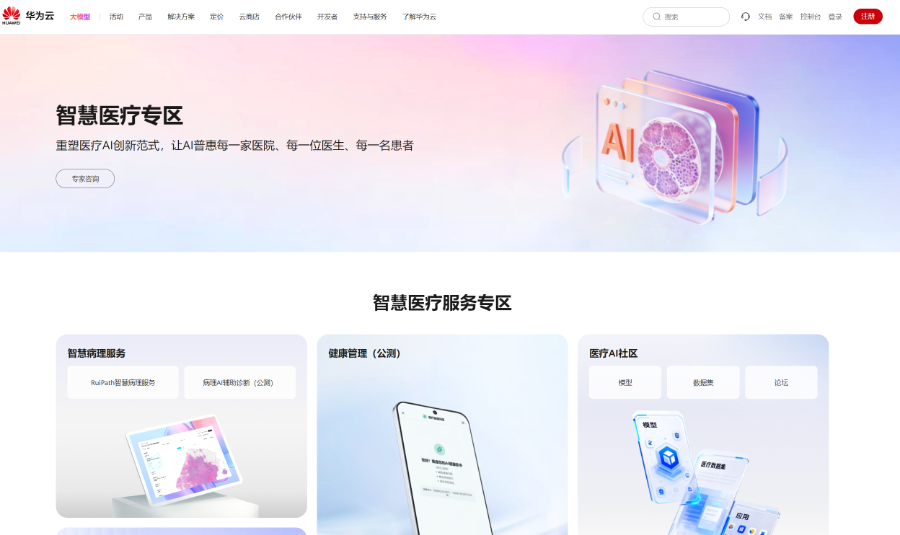
智慧医疗专区

Search documents
AI医疗概念异动,方舟健客盘初狂飙20%!港股通医疗ETF华宝(159137)冲上2%终结三连跌,医疗ETF巨量吸金
Xin Lang Cai Jing· 2026-02-03 02:35
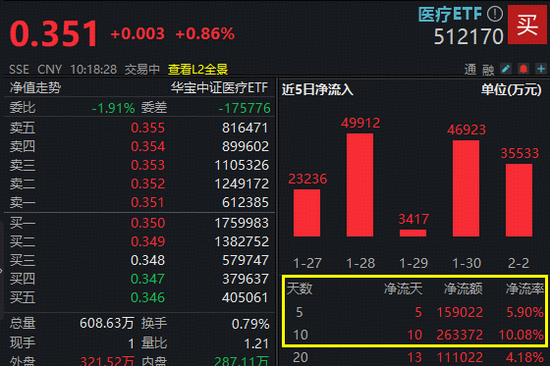
Core Viewpoint - The healthcare sector in A-shares is experiencing a significant rally, driven by AI healthcare and CXO concepts, with notable inflows into medical ETFs [1][8]. Group 1: ETF Performance - The largest medical ETF in A-shares (512170) saw an intraday increase of over 1%, recovering its annual line, with a net subscription of 2.633 billion yuan over the past 10 days as of February 2 [1][8]. - The medical ETF fund size reached 27 billion yuan, making it the largest in the market for medical ETFs [6][13]. Group 2: Individual Stock Movements - The Hong Kong medical ETF (159137) surged by 2%, ending a three-day decline, with Ark Health rising over 20% and BeiGene increasing by more than 4% [10]. - Ark Health raised approximately 144 million HKD through a placement of about 45.181 million shares, with 90% of the funds allocated to accelerate the development of an AI-driven chronic disease management platform [3][10]. Group 3: Industry Developments - Huawei Cloud launched the first section of its industry AI "Dream Factory" focused on smart healthcare, providing a collaborative pathology solution for grassroots hospitals [5][12]. - Institutions predict that by 2026, AI applications will transition from usable to highly effective, becoming a core theme in the AI industry, particularly in healthcare, finance, and education sectors [6][12].


华为云加码医疗AI 力推智慧医疗专区
2 1 Shi Ji Jing Ji Bao Dao· 2026-02-02 12:18
Core Viewpoint - Huawei is focusing on the integration of AI technology in the healthcare sector, launching the "Smart Healthcare Zone" as part of its "Industry AI Dream Factory" strategy, aiming to enhance AI applications in medical settings [1][5]. Group 1: AI Strategy and Implementation - The "Smart Healthcare Zone" is the first practical implementation of Huawei's "Industry AI Dream Factory" strategy in the medical field, designed to integrate clinical practices from top medical institutions with Huawei's core technologies in ICT, cloud, and AI [1][5]. - Huawei plans to collaborate with leading industry clients and partners to develop 30 specialized models, 10 high-quality industry datasets, and 50 ecological applications and tools in the healthcare sector within the first half of this year [1]. Group 2: Addressing Industry Challenges - This initiative aims to alleviate long-standing issues in the healthcare industry, such as slow digital progress, severe data silos, high costs of redundant development, and high barriers to AI application [5]. - The introduction of the RuiPath pathology model, which covers 90% of annual cancer cases in China, signifies a shift from laboratory research to clinical application, enhancing diagnostic capabilities in grassroots healthcare settings [5][6]. Group 3: Market Potential and Future Outlook - The market for AI-driven medical diagnostic products is projected to reach nearly 20 billion yuan in the B-end and G-end sectors from 2025 to 2029, with the C-end market potentially exceeding 70 billion yuan annually [6]. - Huawei's efforts in the healthcare AI sector aim to balance the distribution of medical resources and promote equitable access to quality healthcare services [7].