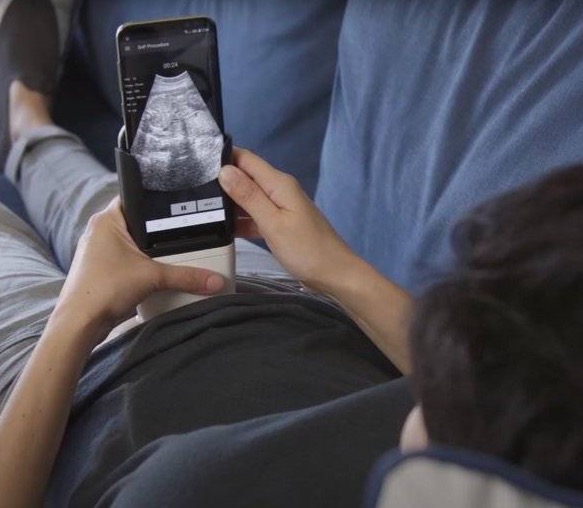
智能胎心监测仪

Search documents
让年轻人不怕生孩子的灵丹妙药来了?
虎嗅APP· 2025-08-02 13:56
Core Viewpoint - The article discusses the transformative role of AI in the field of pregnancy and childbirth, highlighting its potential to alleviate concerns and improve health outcomes for expectant mothers while also addressing the challenges and ethical considerations that arise with its use [2][6][26]. Group 1: AI's Role in Pregnancy Support - AI tools provide expectant mothers with answers to various questions related to pregnancy, offering psychological comfort and practical advice [4][5]. - AI can assist in monitoring health metrics, such as calorie intake and fetal movements, which helps in managing pregnancy-related concerns [4][5]. - The integration of AI in healthcare can bridge the communication gap between doctors and pregnant women, who often feel anxious due to limited consultation time [5][11]. Group 2: AI's Impact on Fertility and Reproductive Health - AI technologies, such as STAR, enhance the ability to identify viable sperm cells, significantly improving the success rates of assisted reproductive techniques [14][16]. - AI applications in reproductive medicine include personalized treatment plans, embryo quality assessment, and genetic risk evaluation, which can lead to healthier pregnancies [17][19]. - The use of AI in monitoring fetal health, such as through advanced heart rate monitoring, has shown to be more accurate than traditional methods [22][24]. Group 3: Market Trends and Developments - The market for pregnancy-related AI applications is rapidly expanding, with over 30 new AI models and applications launched in 2023 alone [27][30]. - Major tech companies and healthcare providers are increasingly investing in AI solutions for maternal health, indicating a growing trend in the industry [27][30]. - The development of AI products requires careful consideration of user experience and clinical accuracy to ensure effective support for expectant mothers [31]. Group 4: Ethical and Regulatory Challenges - The application of AI in reproductive health raises ethical concerns, particularly regarding the potential for "designer babies" and the need for strict regulations [33][34]. - Privacy and data reliability are significant challenges that must be addressed as AI becomes more integrated into healthcare [33][34]. - There is a need for ongoing dialogue about the implications of AI in maternal health, especially regarding the psychological impact on users who may misinterpret AI-generated information [34][36].

让年轻人不怕生孩子的灵丹妙药来了
Hu Xiu· 2025-08-02 05:17
"怀孕以后,我就成了问题制造机。"有正处在孕晚期的准妈妈在社交平台上感慨,一堆困惑找不到靠谱的答案。 "感冒吃药会不会影响宝宝""孕期体重增加多少属于正常""胎动频繁是怎么回事""孕宫缩会影响胎儿吗"……几乎是稍有异动都会焦虑不安。 相比在黑暗中孤独摸索的前辈们,当下的准妈妈们幸运地拥有了"AI顾问"。AI工具不仅可以回答孕妇们的各种问题,包括"能不能吃""能不能做""怎么做"等 问题,还可以提醒孕产妇一些重要事项,比如该数胎动了,以及提前推送科普知识,为分娩做准备等。 "AI在孕期提供的主要是心理安慰。"有使用AI工具的孕妇表示,她所展示的与AI聊天的信息显示,几乎每天都要问很多细节的问题。在她手里,AI既是全 科医生也是心理咨询师。 孕期还有一大苦恼就是控糖。"只要用手机扫一下食物,AI就能马上算出热量,还能列出需要补充的微量元素。"有孕妈按照AI的指导将白米饭换成粗粮,在 此后的产检中顺利过关。"不怕被医生'骂'了。" 除了通用模型,作为医疗AI的重要组成部分孕产相关AI产品也越来越多。 虎嗅了解到,自从今年以来,已有超过30个孕产相关的大模型、AI应用、AI智能体上线,腾讯云、支付宝医疗等大厂,宝宝树 ...