智能飞行机器人

Search documents
微分智飞高飞:我们正处于通用飞行智能爆发前夜丨GAIR 2025
雷峰网· 2025-12-19 04:55
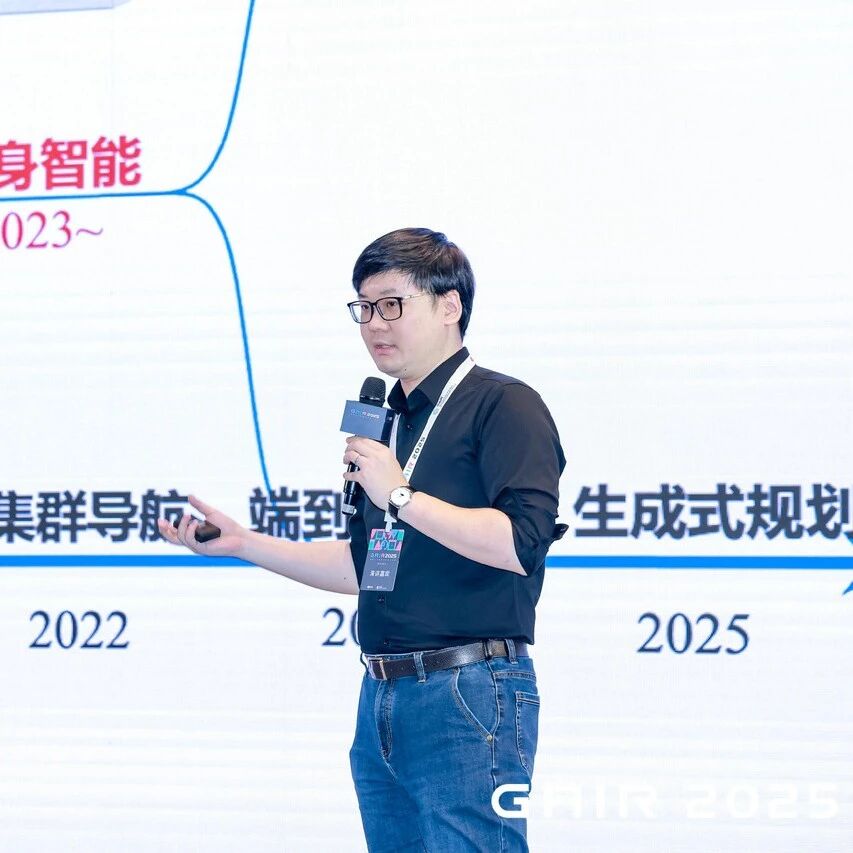
Core Viewpoint - The article discusses the advancements and challenges in the field of intelligent flying robots, emphasizing the potential of embodied intelligence and the need for decentralized systems in drone technology [2][4][22]. Group 1: Vision and Evolution of Flying Robots - The vision for intelligent flying robots is to create autonomous platforms that can operate safely and intelligently in complex environments, leveraging AI for decision-making [7][10]. - The evolution of drone technology has transitioned from manual control to autonomous capabilities, with significant milestones achieved since 2015, including obstacle avoidance and autonomous navigation [9][10]. Group 2: Challenges in Sky-End Embodied Intelligence - Unique challenges for flying robots include limited data availability for training, as collecting high-precision flight data is impractical due to safety risks and the need for skilled pilots [12][14]. - The complexity of environments where drones operate necessitates algorithms that can generalize across diverse scenarios, requiring advanced environmental modeling [14][15]. - Drones are susceptible to disturbances and have zero tolerance for errors during flight, making robust dynamic response capabilities essential [15][16]. Group 3: Team's Focus and Industry Progress - The team's work is categorized into several areas: environmental perception, control systems, decision-making, group collaboration, and integrated flight operations [18][20]. - The goal is to overcome traditional flight control limitations and achieve high dynamic limits for drone operations, enabling real-time decision-making and adaptability [20][21]. Group 4: Five-Dimensional Technology System - The development of a lightweight, multi-tasking control system is underway, utilizing simulation-to-reality techniques to enhance drone performance in real-world scenarios [25][27]. - The team is focused on creating a generalizable decision-making framework that can adapt to various drone types and operational contexts, aiming for cross-domain applicability [30][31]. Group 5: Applications and Future Directions - The article highlights the potential applications of flying robots in complex environments, such as autonomous exploration and data collection without GPS or human intervention [33][35]. - The emphasis on distributed systems allows for flexible and adaptive group behaviors, ensuring that individual drones can operate independently while contributing to collective goals [37][38]. - Future developments aim to enhance the interaction capabilities of drones, enabling them to perform tasks that require both mobility and manipulation, such as delivering items [42][43].

GAIR 2025 「数据&一脑多形」分论坛,激辩 AI 演进路径
雷峰网· 2025-12-14 06:27
Core Insights - The article emphasizes the transition of AI from "specialized" to "generalized" language understanding over the past decade, with the next key battle being the expansion of this generality from the realm of language to the physical world [1] Group 1: Data Paradigm Shift - Data is evolving from a traditional "resource" role to a more fundamental "cognitive foundation" and "value carrier" [3] - High-quality, structured, and logically coherent data is becoming essential for defining the cognitive boundaries and aligning the value of models [3][4] - The forum discussed building a more interpretable, credible, and evolutionary knowledge system amidst the data deluge, highlighting data as a core link driving intelligent evolution and harmonious coexistence with society [4] Group 2: One Brain, Many Forms - The "One Brain, Many Forms" paradigm is redefining how intelligence is constructed, moving beyond single models for specific tasks to a unified cognitive core that can dynamically generate various forms for different scenarios [5] - This approach aims to achieve a leap from "specialized intelligence" to "unified intelligence," allowing the same "brain" to understand language, interpret visuals, and manipulate entities while sharing knowledge across different forms [5] Group 3: Embodied Intelligence and Data Collection - The founder of Noitom Robotics, Dr. Dai Ruoli, highlighted the high demand for quality data in the field of humanoid robots and embodied intelligence, emphasizing the relationship between data scale, quality, and model capability [10] - Dr. Dai identified three structural challenges in remote operation as a data acquisition method, pushing the industry to explore more universal and scalable data acquisition paradigms [11][12] - The concept of a "data pyramid" was introduced, stressing the importance of understanding the core value of data at different levels to create sustainable engineering and business paths [12] Group 4: Future of Embodied Data - The CEO of Jishudai Iteration, Tong Xianqiao, predicted an explosive growth in embodied data volume in the coming years, positioning "embodied data services" as a significant opportunity in the robotics sector [15] - Current data collection methods were categorized into two paths: real machine end and simulation end, focusing on various techniques for data acquisition [16] - A platform design approach was proposed to enhance data collection efficiency and optimize deployment, introducing the concept of AI agents for automatic annotation and resource management [17] Group 5: One Brain, Many Forms Discussions - The forum on "One Brain, Many Forms" featured discussions on the development of embodied intelligence and the integration of world models, with participants emphasizing the ongoing exploration phase in the industry [45][46] - The challenges of achieving a universal controller were discussed, with insights on the differences in performance based on hardware capabilities and algorithmic approaches [47] - The panel concluded with reflections on the future of embodied intelligence, highlighting the gap between innovative ideas and practical applications in the industry [48]

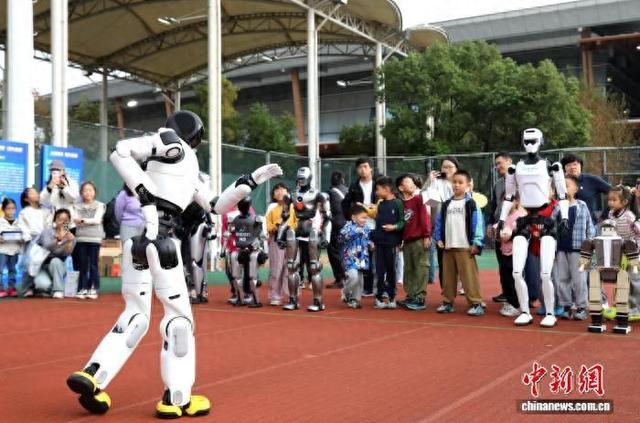
浙江湖州人工智能产业投资对接会 签约项目66.6亿元
Zhong Guo Xin Wen Wang· 2025-11-08 11:05
Core Insights - The article highlights the integration of technology and capital in the field of embodied intelligence, with a significant investment event in Huzhou, Zhejiang, where projects worth 6.66 billion yuan were signed [1] - Embodied intelligence is recognized as a future industry direction in China's 2025 government work report, enabling AI to perceive, decide, and act in the real world [1] Group 1: Industry Development - Huzhou has gathered 105 core AI enterprises, with projected core industry revenue of 11.4 billion yuan in 2024, forming a comprehensive industrial chain from computing services to data applications [3] - The city is home to eight research institutions focused on AI, having developed over 50 AI research outcomes/products, including unmanned forklifts and autonomous exploration robots [4] - Huzhou has established the first embodied intelligence industrial park in Zhejiang, with plans for a large-scale training ground for embodied intelligence robots [7][8] Group 2: Investment and Funding - Huzhou has introduced 34 AI projects with investments exceeding 20 billion yuan in the first three quarters of the year, indicating a rapid growth phase for the industry [7] - A new industrial mother fund of 30 billion yuan has been established to invest in AI projects, particularly in the embodied intelligence sector [8] Group 3: Application Scenarios - Embodied intelligence applications are prevalent in industrial manufacturing, logistics, public services, and hazardous environment inspections, supported by a mature industrial chain [9] - The integration of AI technologies in companies like Geely and the use of robots in events like the Huzhou Marathon showcase the practical applications and advancements in embodied intelligence [9] Group 4: Future Plans - Huzhou aims to cultivate over 10 leading AI enterprises and 5 publicly listed companies by the end of 2027, with a target of exceeding 50 billion yuan in core industry scale by 2030 [11] - The city plans to establish over 10 provincial-level laboratories and create more than 30 benchmark demonstration scenarios in the AI field [11]