一脑多形

Search documents
卧安机器人2025年收入增长近五成、德国市场收入增109%:AI具身智能龙头标的
IPO早知道· 2026-03-24 14:42
Core Viewpoint - The article highlights the significant growth and strategic advancements of Woan Robotics, particularly its "One Brain, Multiple Forms" strategy, which has led to impressive financial performance and product innovation in the AI-driven home robotics sector [2][10]. Financial Performance - For the fiscal year ending December 31, 2025, Woan Robotics reported a revenue of 900 million yuan, representing a year-on-year increase of 47.7%. The gross profit reached 490 million yuan, up 54.2%, with a gross margin of 54.0%. Adjusted net profit surged over tenfold to 12.77 million yuan [6]. Global Expansion - The company's globalization strategy has entered a fruitful phase, with notable growth in key overseas markets. In Germany, revenue skyrocketed by 108.9%, driving a 57.9% growth in the overall European market. In Japan, the company achieved a remarkable 54.9% year-on-year growth, showcasing its strong local operational capabilities [8]. Product Innovation - Woan Robotics has made significant strides in product development across three core scenarios: home service, sports, and companionship. The launch of the onero home service robot and the SwitchBot AI Hub marks a historic step in commercializing humanoid intelligence. Additionally, the Acemate AI tennis robot received recognition as one of Time magazine's "Best Inventions of 2025" [9]. Strategic Framework - The "One Brain, Multiple Forms" strategy focuses on building a versatile home robot brain through the integration of visual-language-action (VLA) models, enhancing task planning, semantic understanding, and dynamic perception across various robot types. This approach optimizes user interaction and prepares the company for complex home environments [11]. Cost Efficiency and Technology - Woan Robotics has reduced reliance on high-precision hardware by defining hardware through algorithms, significantly lowering deployment costs. The integration of self-developed 3D perception algorithms has replaced expensive lidar systems, while a unified framework for perception, decision-making, and control enhances the robots' performance in unstructured home environments [13]. Data Infrastructure - The company established a standardized data collection center to ensure the authenticity and consistency of high-value data, which supports the continuous evolution of its "One Brain, Multiple Forms" model. This data-driven approach is crucial for the development of intelligent home robotics [15]. Market Recognition - Woan Robotics has received positive evaluations from multiple domestic and international brokerage firms, being recognized as a leading player in the AI-driven home robotics sector. The company has penetrated over 90 countries, reaching more than 3.6 million households, with over 95% of its revenue coming from international markets [17]. Investment Outlook - Analysts from various firms have issued buy or hold ratings, emphasizing the company's technological barriers, global commercialization success, and strong profit margins above 50%. The consensus highlights Woan Robotics as a key representative of China's AI-driven robotics industry on the global stage [18].


服务机器人行业迎来增长拐点
机器人大讲堂· 2026-02-03 10:07
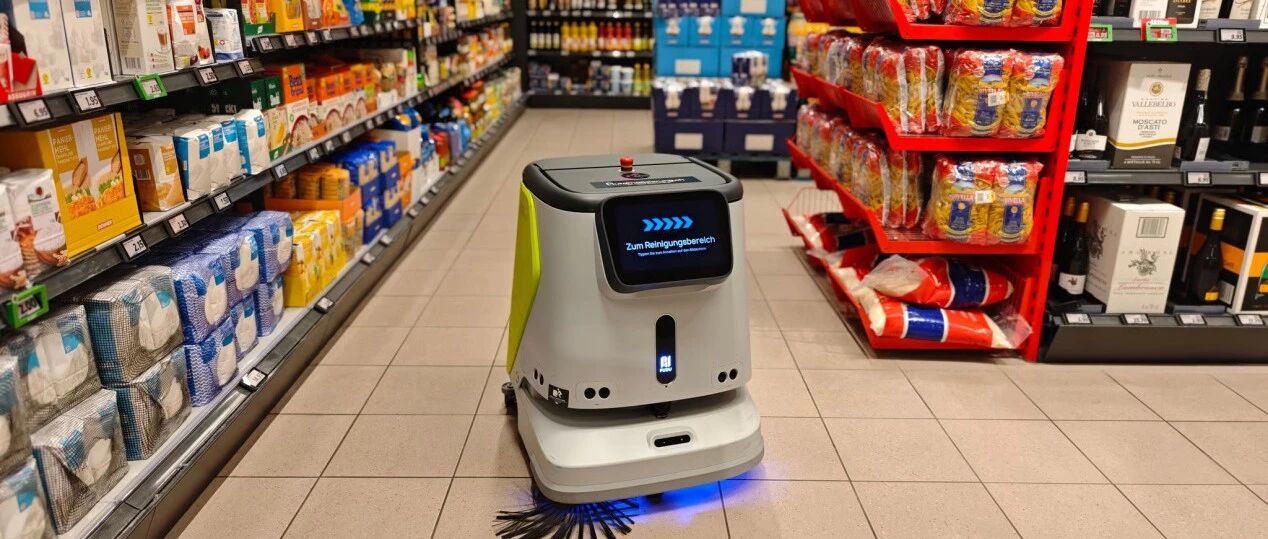
Core Viewpoint - Pudu Robotics has demonstrated significant growth in a challenging robotics industry, with a revenue increase of over 100% year-on-year as of 2025, and a cumulative shipment of 120,000 units, driven by a successful global strategy where overseas revenue constitutes over 80% of total revenue for three consecutive years [1][2]. Group 1: Technological Evolution - The success of Pudu Robotics is attributed to its continuous self-evolution as a technology-driven company, focusing on real-world commercial needs rather than remaining in the experimental phase [2][4]. - Pudu has developed a "one brain, multiple forms" technology strategy, allowing different robot types to share a unified underlying brain model and software architecture, significantly enhancing efficiency and adaptability across various applications [3][6]. - The company has established a closed-loop system for continuous data collection and model iteration, refining its algorithms through real-world challenges faced in dynamic environments [4][6]. Group 2: Product Strength - In a competitive B2B market, Pudu's product strength is a key driver of its success, focusing on creating value for customers through reliable and efficient solutions tailored to real operational environments [8][12]. - Pudu has developed a systematic product competitiveness framework that ensures each product addresses specific pain points, exemplified by the CC1 Pro cleaning robot, which innovatively combines multiple cleaning functions while minimizing deployment complexity [9][11]. - The company's understanding of product reliability has enabled it to penetrate high-end markets, with significant deployments in Europe, including over 250 CC1 robots in Swiss retail chains [9][11]. Group 3: Globalization Strategy - Pudu's globalization strategy emphasizes deep localization rather than mere product export, establishing a network of over 700 partners and providing comprehensive support to address B2B customer concerns [13][14]. - The company has successfully tailored its products for specific markets, such as the BellaBot in Japan, which resonates with local cultural preferences and has led to substantial orders from major chains [14][17]. - The CC1 series cleaning robots have achieved remarkable global sales, with over 20,000 units sold and a 60% share in the competitive European market, highlighting Pudu's ability to meet high standards of quality and reliability [17][19]. Group 4: Future Challenges and Vision - The global commercial service robot market is increasingly competitive, with Pudu holding nearly half of the market share, indicating a clear head-to-head effect among leading companies [19][20]. - Pudu aims to become a leading global robotics company with a sales target of 100 billion, focusing on addressing challenges such as cost reduction, maintaining technological leadership, and navigating complex global trade environments [20][21]. - The company's integrated barriers in technology, product reliability, and deep localization position it favorably for future growth, as it continues to leverage operational data to enhance its offerings [21].
GAIR 2025 「数据&一脑多形」分论坛,激辩 AI 演进路径
雷峰网· 2025-12-14 06:27
Core Insights - The article emphasizes the transition of AI from "specialized" to "generalized" language understanding over the past decade, with the next key battle being the expansion of this generality from the realm of language to the physical world [1] Group 1: Data Paradigm Shift - Data is evolving from a traditional "resource" role to a more fundamental "cognitive foundation" and "value carrier" [3] - High-quality, structured, and logically coherent data is becoming essential for defining the cognitive boundaries and aligning the value of models [3][4] - The forum discussed building a more interpretable, credible, and evolutionary knowledge system amidst the data deluge, highlighting data as a core link driving intelligent evolution and harmonious coexistence with society [4] Group 2: One Brain, Many Forms - The "One Brain, Many Forms" paradigm is redefining how intelligence is constructed, moving beyond single models for specific tasks to a unified cognitive core that can dynamically generate various forms for different scenarios [5] - This approach aims to achieve a leap from "specialized intelligence" to "unified intelligence," allowing the same "brain" to understand language, interpret visuals, and manipulate entities while sharing knowledge across different forms [5] Group 3: Embodied Intelligence and Data Collection - The founder of Noitom Robotics, Dr. Dai Ruoli, highlighted the high demand for quality data in the field of humanoid robots and embodied intelligence, emphasizing the relationship between data scale, quality, and model capability [10] - Dr. Dai identified three structural challenges in remote operation as a data acquisition method, pushing the industry to explore more universal and scalable data acquisition paradigms [11][12] - The concept of a "data pyramid" was introduced, stressing the importance of understanding the core value of data at different levels to create sustainable engineering and business paths [12] Group 4: Future of Embodied Data - The CEO of Jishudai Iteration, Tong Xianqiao, predicted an explosive growth in embodied data volume in the coming years, positioning "embodied data services" as a significant opportunity in the robotics sector [15] - Current data collection methods were categorized into two paths: real machine end and simulation end, focusing on various techniques for data acquisition [16] - A platform design approach was proposed to enhance data collection efficiency and optimize deployment, introducing the concept of AI agents for automatic annotation and resource management [17] Group 5: One Brain, Many Forms Discussions - The forum on "One Brain, Many Forms" featured discussions on the development of embodied intelligence and the integration of world models, with participants emphasizing the ongoing exploration phase in the industry [45][46] - The challenges of achieving a universal controller were discussed, with insights on the differences in performance based on hardware capabilities and algorithmic approaches [47] - The panel concluded with reflections on the future of embodied intelligence, highlighting the gap between innovative ideas and practical applications in the industry [48]

阿里的具身智能逻辑:广泛布局“躯体”后,终于要跟“大脑”融合了
Guan Cha Zhe Wang· 2025-10-09 10:05
Core Insights - Alibaba has officially established a "Robotics and Embodied Intelligence Group," marking a strategic shift towards becoming a core player in the embodied intelligence sector [1][2] - The move aligns with Alibaba's broader strategy to transition from being a passive investor to an active participant in the AI and robotics landscape, as highlighted by CEO Wu Yongming's endorsement at the Cloud Summit [2][3] - The competition in the embodied intelligence space is intensifying, with major players like Tesla, SoftBank, and Google DeepMind also making significant advancements [2][4] Alibaba's Strategic Moves - Alibaba's recent actions are part of a two-year strategic transformation aimed at deepening its involvement in embodied intelligence [2][10] - The establishment of the new group signifies a shift from a broad investment strategy to a focused self-research approach, integrating its AI capabilities with hardware [10][11] - The company has made several investments in robotics firms over the past two years, emphasizing the importance of practical applications in the robotics sector [6][10] Industry Context - On the same day as Alibaba's announcement, SoftBank revealed its acquisition of ABB's robotics division for nearly $5.4 billion, indicating a significant move towards integrating AI with robotics [4][5] - SoftBank's long-term strategy in AI and robotics has culminated in this acquisition, which provides a mature and profitable industrial manufacturing capability [5][6] - The simultaneous actions of Alibaba and SoftBank highlight a consensus among industry leaders that integrating AI with physical robotics presents a vast market opportunity [5][6] Technical Framework - Alibaba's approach aligns with the "one brain, multiple forms" concept, which utilizes a universal model to drive various robotic forms [11][12] - The integration of NVIDIA's simulation tools with Alibaba's AI models aims to create a unified training and testing environment for different robotic forms [12][14] - Alibaba's extensive data ecosystem, derived from its various business operations, provides a unique advantage in training AI models and reducing costs associated with data collection [14][16] Challenges Ahead - Both Alibaba and SoftBank face significant challenges in bridging the gap between AI software and hardware, which is crucial for successful implementation [15][16] - The complexity of integrating diverse hardware architectures and communication protocols poses a major hurdle for Alibaba's strategy [15][16] - The high costs associated with advanced hardware and data collection present additional barriers to commercializing AI-driven robotics [15][16]