桑茶

Search documents
乡村振兴齐鲁新实践:片区推进,协同共赢
Xin Hua Wang· 2025-12-20 02:40
Core Viewpoint - The article discusses the transformation of rural areas in Shandong Province, China, through the establishment of integrated rural revitalization zones that leverage local resources and promote industrial development, resulting in significant economic growth and improved living standards for residents [1][3][12]. Group 1: Industrial Development - Shandong has established 2,070 rural revitalization zones, covering approximately one-third of its administrative villages, creating a "Qilu model" for rural revitalization [3][11]. - The integration of industries, such as the "colorful tomato" initiative in Shouguang, has led to increased market bargaining power and significant sales growth, with one village achieving a transaction volume exceeding 60 million yuan from 500,000 jin of tomatoes [2][3]. - The development of specialized agricultural zones has resulted in substantial income increases for farmers, with average annual incomes in some villages rising from less than 50,000 yuan to over 200,000 yuan [2][3]. Group 2: Resource Optimization - The article highlights the importance of resource integration across villages to enhance efficiency and service delivery, with examples of successful collaborations leading to increased collective income [6][7]. - The establishment of cooperative models, such as the "rural revitalization partner" initiative, has facilitated the development of new business ventures and job creation in rural areas [10][11]. - The integration of cultural and natural resources in areas like Yangjiashan has attracted significant tourism, generating over 100 million yuan in annual revenue [5][11]. Group 3: Policy and Governance - Shandong's government has implemented policies to support the development of rural revitalization zones, including financial incentives and a structured policy framework to guide local initiatives [11][12]. - The establishment of a "development community" model aims to create self-sustaining rural economies by fostering collaboration among neighboring villages [11][12]. - The focus on coordinated development within rural revitalization zones addresses challenges related to infrastructure, public services, and resource management, promoting a holistic approach to rural growth [11][12].
河池宜州:推动桑蚕业向“新”向“智”
Guang Xi Ri Bao· 2025-11-11 08:03
Core Insights - The article highlights the transformation of the silkworm industry in Yizhou District, Guangxi, through the adoption of smart farming technologies and data-driven practices, enhancing production efficiency and product quality [1][2][3] Group 1: Industry Development - Yizhou District has maintained its position as the leading county in silkworm production in China for 20 consecutive years, emphasizing its significance as a quality cocoon and silk production base [1] - The district is responding to the national strategy to optimize traditional industries while fostering emerging sectors, focusing on intelligent, green, and integrated development paths [1][2] Group 2: Technological Advancements - The introduction of real-time monitoring and big data analysis allows farmers to accurately track silkworm growth and address various farming issues, ensuring the health of the silkworm population [2] - Smart farming equipment, including sensitive sensors, automatically regulates environmental conditions in silkworm houses, maintaining optimal growth conditions [2] Group 3: Economic Impact - A new smart silkworm farming model has been implemented, resulting in significant production outputs, with one base reporting 16 batches yielding 6,650 kilograms and generating sales revenue of 319,000 yuan [1] - Over 30 processing enterprises in the district are developing new products from silkworm resources, including mulberry wine and medicinal products, contributing to a circular economy [2] Group 4: Cultural Integration - The district is promoting the integration of silkworm farming with tourism, creating cultural parks and leisure projects that enhance the economic benefits of the industry [3] - This shift from traditional to data-driven farming represents a broader industrial revolution, aligning with national policies aimed at economic development and poverty alleviation [3]
宜州桑蚕产业规模连续20年位居全国县域首位
Guang Xi Ri Bao· 2025-11-10 07:19
Core Insights - The article highlights the transformation of the silkworm industry in Yizhou District, Guangxi, through the adoption of smart farming technologies and data-driven practices, enhancing production efficiency and product quality [1][2][3] Group 1: Industry Development - Yizhou District has maintained its position as the leading county in silkworm production in China for 20 consecutive years, emphasizing its significance as a quality cocoon and silk production base [1] - The district is responding to the national strategy to optimize traditional industries while fostering emerging sectors, focusing on intelligent, green, and integrated development paths [1] Group 2: Technological Advancements - The introduction of real-time monitoring and big data analysis allows farmers to accurately track silkworm growth and address various farming issues, ensuring the health of the silkworm population [2] - Smart farming equipment, including sensitive sensors, automatically regulates environmental conditions in silkworm houses, maintaining optimal growth conditions [2] - Collaborations with research institutions like Southwest University and China Sericulture Research Institute are driving technological upgrades and the establishment of smart silkworm demonstration bases [2] Group 3: Sustainable Practices - The district promotes comprehensive utilization of silkworm resources, developing over 20 new products from silkworm by-products, including mulberry wine and medicinal products [2] - The focus on green development ensures that all parts of the silkworm are utilized efficiently, contributing to a circular economy [2] Group 4: Cultural and Economic Integration - Yizhou District is advancing the integration of silkworm farming with tourism, creating cultural parks and leisure projects that enhance the economic benefits of the industry [3] - This shift from traditional to data-driven farming represents a significant industrial revolution, aligning with national policies aimed at economic development and poverty alleviation [3]
宜州区推动桑蚕业向“新”向“智”
Guang Xi Ri Bao· 2025-11-10 01:58
Core Insights - The article highlights the transformation of the silkworm industry in Yizhou District, Guangxi, through the integration of smart technology and data-driven practices, enhancing production efficiency and product quality [1][2][3] Group 1: Industry Development - Yizhou District has maintained its position as the leading county in silkworm production in China for 20 consecutive years, emphasizing its significance as a quality cocoon and silk production base [1] - The district is actively responding to the national strategy of optimizing traditional industries while fostering emerging sectors, focusing on smart, green, and integrated development paths [1][2] Group 2: Technological Advancements - The introduction of real-time monitoring and big data analysis allows farmers to accurately track silkworm growth and address various breeding issues, ensuring the health of the silkworm population [2] - Smart farming equipment, including sensitive sensors, automatically regulates the environment in silkworm houses, maintaining optimal conditions for silkworm growth [2] Group 3: Economic Impact - A new smart silkworm breeding model has been implemented, resulting in significant production efficiency; for instance, a local base has produced 6,650 kilograms of cocoons with sales revenue of 319,000 yuan as of November this year [1] - Over 30 processing enterprises in the district are developing new products from silkworm resources, including over 20 products such as mulberry wine and medicinal silkworms, promoting a circular economy [2] Group 4: Cultural Integration - The district is promoting the integration of silkworm farming with tourism, creating cultural parks and leisure projects that extend the industry beyond traditional production, thus enhancing income opportunities for local residents [3] - The shift from experience-based to data-driven silkworm farming represents a significant industrial revolution, aligning with national policies to boost economic development and improve livelihoods [3]
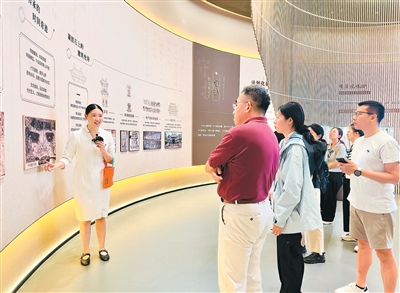
探寻历史文脉 感受发展脉搏
Ren Min Ri Bao Hai Wai Ban· 2025-10-15 22:56
Core Insights - The rapid development of rural areas in mainland China, particularly in Sichuan, is driven by strong government policies, leading to increased employment and income opportunities for local residents [1] Group 1: Cultural Exchange and Heritage - The experience of Taiwanese media personalities in Sichuan highlights the rich cultural heritage, including the historical significance of Emei Mountain and its martial arts, which date back nearly 3,000 years [2] - The cultural connection between Taiwan and mainland China is evident in shared religious sites, such as the Nezha Palace in Yibin, which has welcomed over 40 Taiwanese tour groups this year [3] - The integration of technology with cultural heritage is showcased at the Anyue Stone Carvings Digital Exhibition Center, where interactive experiences enhance understanding of ancient art [5][6] Group 2: Agricultural Development and Opportunities - The establishment of eco-farms in Sichuan, such as the "So Many Peppers" farm, illustrates the successful integration of local agricultural products with Taiwanese culinary traditions, supported by local government initiatives [6] - Taiwanese entrepreneurs are finding business opportunities in Sichuan's agricultural sector, with models that combine planting, picking, and dining experiences, fostering collaboration between Taiwanese and mainland employees [6] - The potential for rural revitalization in Sichuan is significant, with each village possessing unique characteristics that can be leveraged for economic growth [6]