
植入式脑机接口

Search documents
5位投资家喊话2026创业者:最优赛道和死亡谷
Sou Hu Cai Jing· 2026-01-10 02:14
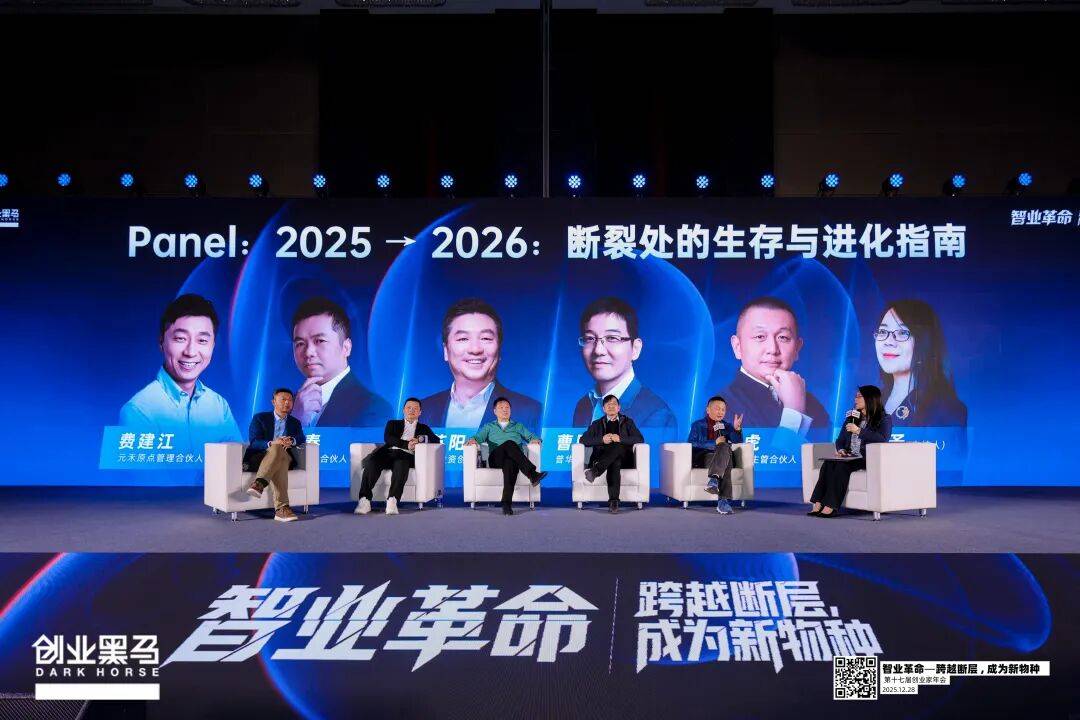
Core Insights - The 17th Entrepreneur Annual Conference emphasized the theme "Intelligent Revolution - Crossing the Fault, Becoming a New Species" and featured discussions on the future of entrepreneurship and investment opportunities in 2026 [2] Group 1: Key Themes and Predictions for 2026 - The most practical AI application in 2026 will be providing emotional value and companionship to customers, with opportunities in niche markets for entrepreneurs [2][9] - Commercial aerospace is expected to create significant excitement in the coming year, with a focus on real orders and financial health over media hype [3][15] - The survival rule for entrepreneurs in 2026 is to possess the ability to identify and solve real problems in appropriate scenarios [3][16] Group 2: Investment Opportunities and Focus Areas - Key investment areas identified include Physical AI, Industrial Intelligence, Commercial Aerospace, AI in Healthcare, and AI for Emotional Companionship [10][22] - Industrial intelligence is highlighted as a critical area due to its potential to address complex issues in the industrial sector [9] - AI in healthcare is gaining traction, with successful product launches and significant revenue generation reported [9][10] Group 3: Entrepreneurial Strategies and Advice - Entrepreneurs are advised to focus on efficiency in fundraising, prioritizing product development and real customer needs over high valuations [14][15] - It is recommended to engage in "red ocean" entrepreneurship, where government policies support the business, rather than pursuing "blue ocean" strategies [3][15] - Avoiding grand narratives at the outset is crucial; instead, entrepreneurs should concentrate on tangible outcomes and user experiences [14][22]


四川脑机接口产业爆发 倍益康连续上涨
Zheng Quan Shi Bao· 2026-01-07 18:09
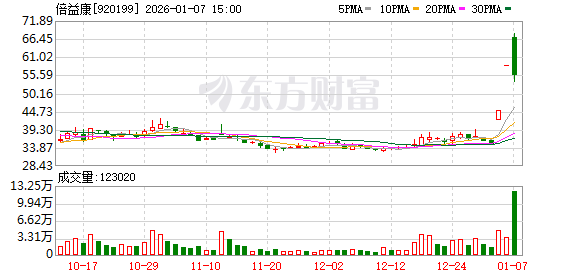
Core Insights - The brain-computer interface (BCI) sector is experiencing significant growth, particularly in Sichuan, where the establishment of the "Implantable Brain-Computer Interface Sichuan Engineering Research Center" has led to substantial stock price increases for involved companies like Beiyikang, which saw a rise of over 60% in three trading days [2] - The Sichuan BCI industry is projected to reach a scale of 1 billion yuan by 2024, with related investments of 500 million yuan and R&D expenditures of 300 million yuan, positioning it among the top in the country [2] Group 1: Industry Development - The Sichuan Provincial Economic and Information Technology Department, along with eight other departments, issued the "Sichuan Province Brain-Computer Interface and Human-Machine Interaction Industry Breakthrough Action Plan (2025-2030)," detailing 13 measures aimed at enhancing the province's competitiveness in the BCI sector by 2030 [3] - The province has established a comprehensive industrial chain ecosystem, including upstream core components, midstream system integration, and downstream application scenarios, with a steady increase in the localization rate of key components and software [4] Group 2: Technological Advancements - Sichuan has achieved international advanced levels in non-invasive BCI technologies, including cloud brain information processing and real-time decoding techniques, showcasing significant technological innovation [4] - The province is focusing on core technology breakthroughs through the establishment of innovation platforms, joint laboratories, and engineering centers, while also enhancing the verification and registration of medical devices [5] Group 3: Company Initiatives - The establishment of Gestalt Technology, the first BCI company in China focusing on ultrasound technology, marks a significant development in the sector, aiming to accelerate the clinical application of BCI technologies [6] - The company was co-founded by notable figures in the tech industry, indicating strong leadership and potential for innovation in the BCI field [6]
脑机接口专家解读电话会议
2026-01-07 03:05
Summary of Key Points from the Conference Call Industry Overview - The conference call focused on the **brain-computer interface (BCI)** technology, which is categorized into invasive, semi-invasive, and non-invasive types, each with its own advantages and disadvantages [1][3][4]. Core Insights and Arguments - **Non-invasive BCIs** are primarily used for typing communication (based on P300), device control (based on SSVEP), and rehabilitation training (based on motor imagery potentials). However, they face limitations due to skull interference, resulting in low amplitude brain waves and a need for improved decoding accuracy [1][11][13]. - **Invasive BCIs** have made progress in motor and language decoding, as well as visual and auditory reconstruction, but they carry risks such as bleeding, infection, and device reliability issues, leading to uncertainty in commercialization prospects [1][15]. - A research team is exploring a hybrid approach combining **EEG and EMG** to decode motor intentions by analyzing weak muscle signals, which has shown success in helping patients with arm injuries and strokes regain some limb function, with plans for commercial use by mid-2025 [1][16][17]. - The market potential for hand function rehabilitation in China is significant, with over **50 million** patients suffering from limb disabilities and an annual increase of **2 to 3 million** cases [1][18]. Additional Important Content - The **clinical application** of EEG differs from BCI research, requiring higher sampling rates (1,000 Hz to 20,000 Hz) for effective data quality in BCI applications compared to the lower rates used in clinical settings [2]. - The **hardware segment** of the BCI industry has high barriers to entry and substantial profit margins, making it a promising investment area, especially in the context of China's healthcare payment habits [24]. - **Neuralink**, a prominent player in the invasive BCI space, has raised questions about its valuation and the practical benefits of its technology compared to non-invasive alternatives [23][22]. - The **supply chain** for BCI products is influenced by the compatibility of cost control and healthcare payment systems, particularly for non-invasive rehabilitation and invasive surgeries [24]. - Future applications of BCI technology may extend to treating mental health disorders and cognitive enhancement, although these areas still face significant challenges in decoding complex brain functions [26]. This summary encapsulates the key points discussed in the conference call, highlighting the current state and future potential of brain-computer interface technology.
脑机接口产业发展突破有了“施工图”
Shang Hai Zheng Quan Bao· 2025-08-07 18:28
Core Insights - The Chinese government has accelerated the introduction of favorable measures for implantable brain-machine interface medical devices in 2023, including pricing guidelines for invasive procedures [1] - The establishment of pricing for invasive brain-machine interface procedures, such as a placement fee of 6,580 yuan and a removal fee of 3,150 yuan, is expected to stimulate market growth [1] - China has entered the clinical trial phase for implantable brain-machine interfaces, becoming the second country globally to do so after the United States [1] Industry Developments - The National Healthcare Security Administration issued guidelines for pricing on neuro-system medical services, which include invasive brain-machine interface procedures [1] - The successful completion of China's first prospective clinical trial for implantable brain-machine interfaces marks a significant milestone in the country's technological advancement in this field [1] Market Implications - The clarification of pricing is seen as a breakthrough that will facilitate the application of new technologies and create new market opportunities [1] - Collaboration among technology developers, clinical institutions, capital, and government is essential for the successful incubation and implementation of research outcomes in brain science [1] - Startups in the brain-machine interface sector need to balance short-term survival with long-term innovation goals to maintain investment in core technology development [1]
我国植入式脑机接口启动临床入组 数百万脊髓损伤患者迎来曙光
news flash· 2025-06-02 08:39
Core Insights - The 20th Asian Neuro-Oncology Annual Meeting revealed the initiation of patient enrollment for a clinical cohort study on brain-machine interfaces led by Huashan Hospital and Beijing Xuanwu Hospital, aimed at validating the effectiveness and safety of implanted brain-machine interface treatment solutions [1] Group 1: Clinical Research - The clinical cohort study on brain-machine interfaces is focused on key issues such as effectiveness and safety [1] - The study is part of a broader initiative to advance brain-machine interface technology in clinical settings, with 2025 identified as a critical year for the technology's clinical application in China [1] Group 2: Industry Development - A new professional subcommittee for brain-machine interfaces and neural regulation will be established in Shanghai, bringing together various sectors including academia, clinical practice, and industry to foster innovation [1] - Prior to this, cities like Beijing and Shanghai have already implemented industry plans related to brain-machine interfaces, with a goal to complete clinical trials for more than five invasive products by 2030 [1]