
椰制品

Search documents
以农业架起“连心桥”,中国与太平洋岛国的“山海情”
Zhong Guo Xin Wen Wang· 2025-11-20 06:18
Core Viewpoint - The article highlights the significance of agricultural cooperation between China and Pacific Island countries, emphasizing how such partnerships foster long-term development and strengthen bilateral relations [1][2][3]. Group 1: Agricultural Cooperation - Agricultural cooperation is a recurring theme among attendees of the China-Pacific Island Countries Political Party Dialogue, with Chinese agricultural technology assistance being a key focus [1]. - In countries like Kiribati and the Solomon Islands, Chinese agricultural projects have helped improve crop yields and employment opportunities, addressing local food supply issues [1][2]. - The training provided by China on crop preservation and processing has proven invaluable, especially in the aftermath of natural disasters like the 2024 earthquake in Vanuatu [2]. Group 2: Long-term Development Focus - China's agricultural aid is not merely reactive but aims at sustainable long-term development, with training programs on coconut cultivation and processing enhancing product quality and market access [3]. - The China International Import Expo has opened up global market opportunities for local agricultural products from the Solomon Islands, highlighting the importance of connecting these regions to larger markets [3]. Group 3: Emotional and Cultural Impact - The introduction of Chinese mushroom grass in Fiji has not only improved livelihoods but also fostered a deep cultural connection, with some families naming their children after the grass as a tribute to its benefits [4]. - The narrative of agricultural cooperation is framed as a story of friendship and mutual growth, symbolizing the broader relationship between China and Pacific Island nations [4].

海南达川食品有限公司扎根海南近20年,借自贸港建设东风创新发展
Hai Nan Ri Bao· 2025-11-11 01:56
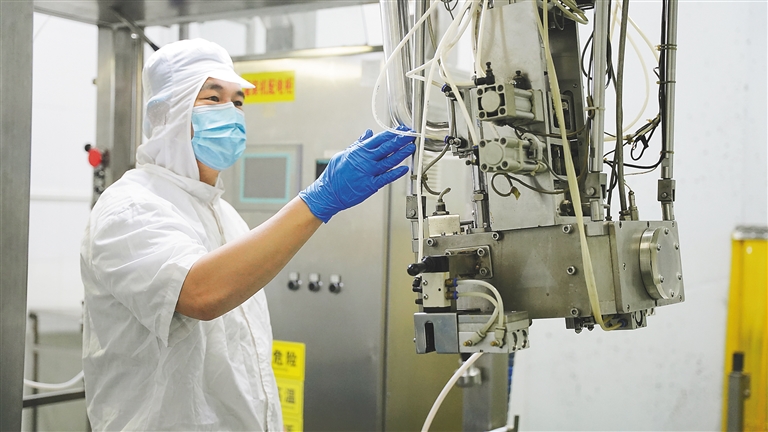
Core Insights - Hainan Dachuan Food Co., Ltd. has been deeply rooted in Hainan for nearly 20 years, leveraging the opportunities presented by the Free Trade Port (FTP) to innovate and develop into a leading enterprise in the global tropical food and ingredient sector [1][3] Group 1: Company Background and Development - Hainan Dachuan's connection with Hainan began in 2006 when it established a traditional mango processing line in the Ding'an Talin Industrial Park, later joining Tianye Innovation Co., Ltd. in 2012 [4][5] - The company aims to become a prominent supplier of tropical fruit and vegetable products in China, benefiting from Hainan's rich agricultural resources and favorable policies [4][5] Group 2: Opportunities from Free Trade Port - The construction of the FTP has provided Hainan Dachuan with opportunities such as access to global quality raw materials and tax incentives, including a "zero tariff" policy and a 15% corporate income tax rate [5][6] - The company has initiated a second-phase project for tropical specialty industry expansion in 2023, with a total investment exceeding 300 million yuan, including over 60 million yuan for advanced production equipment [6] Group 3: Technological Innovation and Digital Transformation - Hainan Dachuan has transitioned from traditional manufacturing to fully automated intelligent manufacturing, becoming a leading manufacturer in the tropical fruit and vegetable processing sector [6][7] - The company employs advanced production techniques, including high-pressure processing to enhance product quality and safety, and has implemented a digital management system for real-time monitoring of production processes [7][8] Group 4: Economic and Social Impact - Hainan Dachuan has established stable partnerships with over 6,000 farmers in Hainan and Guangxi, contributing to their income and ensuring high-quality raw materials [9] - The company has created a circular economy model by converting waste into organic fertilizer, thus promoting economic, social, and ecological benefits [9] Group 5: Future Expansion and Market Strategy - With the upcoming opening of the coconut express line from Palu Port, Indonesia to Yangpu Port, transportation efficiency for imported coconuts will significantly improve [10] - Hainan Dachuan plans to leverage FTP policies and RCEP mechanisms to expand its product lines, including high-value coconut oil and coconut shreds, aiming to become a global leader in the tropical food and ingredient sector [11]

通讯|从印尼自贸区到中国自贸港——新航线为中印尼经贸合作再添新通道
Xin Hua She· 2025-08-23 05:48
Core Viewpoint - The opening of a direct shipping route between Indonesia's Batam Island and China's Yangpu Port enhances trade connectivity and logistics efficiency between China and Indonesia, benefiting regional economic cooperation [1][2]. Group 1: Shipping Route and Logistics - The new direct shipping route reduces travel time and logistics costs, facilitating trade between China and Indonesia, and promoting regional economic integration [1][2]. - The Batam Island port has upgraded its facilities to meet international standards, enhancing its capacity for handling container shipments [1][2]. Group 2: Economic Impact on Local Industries - Local companies, such as the ecological green oil company, are expected to benefit from reduced costs and improved efficiency due to the new shipping route, enhancing their competitiveness in the Chinese market [2]. - The direct shipping route significantly shortens the transportation time for coconut products from Indonesia to Hainan, reducing spoilage and improving product quality, which directly benefits local businesses [2]. Group 3: Broader Economic Cooperation - The new shipping route is seen as a bridge for trade between China and Indonesia, and it is expected to strengthen connections between ASEAN countries and China, creating a win-win situation [2]. - China has become Indonesia's largest trading partner and a major source of investment, with ongoing cooperation in sectors like renewable energy, manufacturing, and digital economy [2].